Keyword Search Optimization: A Practical Guide for UK Businesses
Keyword Search Optimisation: A Practical Guide
Keyword search optimisation is the process of understanding the words and phrases people use in search engines, then making your website more relevant to those searches. It combines keyword research with thoughtful content and on-page improvements, helping search engines understand your pages and helping visitors find useful answers.
Effective optimisation is not about repeating a phrase as many times as possible. It is about matching the purpose behind a search with clear, helpful content.
Why keyword optimisation matters
When you understand how your audience searches, you can create pages that address their questions and needs. This can help your website attract more relevant visitors, support potential customers as they compare options, and make your products or services easier to discover.
Keyword research can also reveal what your audience cares about. Searches may highlight common problems, preferred product features, local needs or questions that your existing content does not answer.
Start with search intent
Before choosing a keyword, consider what the searcher is trying to do. Search intent generally falls into a few broad categories:
- Informational: The person wants to learn something, such as how keyword research works.
- Navigational: The person is looking for a particular website or brand.
- Commercial: The person is comparing products or services before making a decision.
- Transactional: The person is ready to take action, such as making a purchase or booking a service.
A useful page should reflect the likely intent. For example, an informational search usually calls for a clear guide, while a transactional search may be better served by a product or service page.
How to find relevant keywords
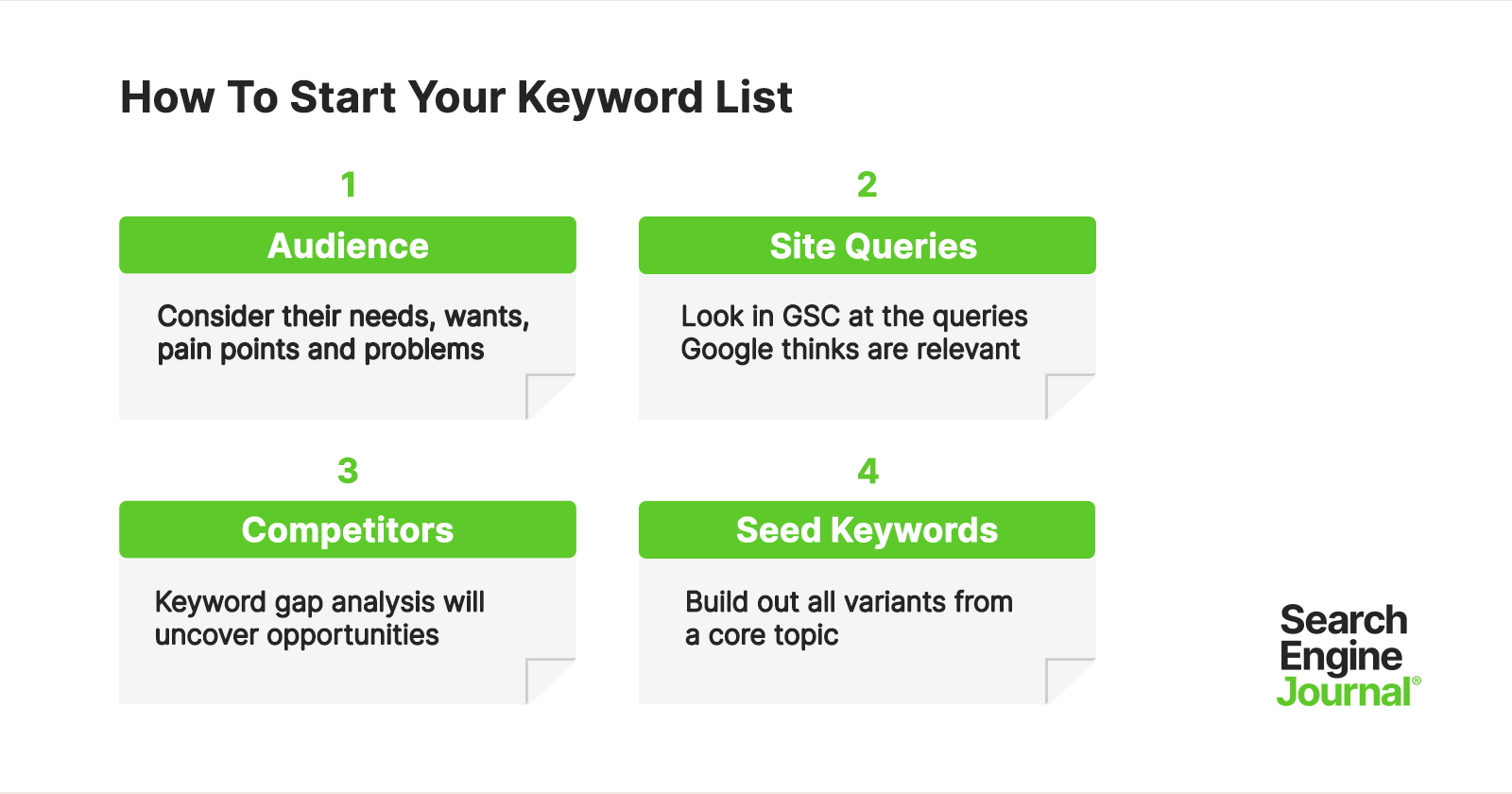
Begin with your business, audience and subject area. Write down the questions customers ask, the problems your products solve and the language people use when describing your services. These ideas provide a practical starting point for keyword research.
You can then expand your list using search suggestions, related searches, customer feedback and keyword research tools. Look beyond broad, highly competitive terms. Specific phrases, often called long-tail keywords, may have lower search volumes but can show clearer intent.
For each potential keyword, consider:
- Relevance: Does the phrase accurately describe your page and offer?
- Intent: Does the searcher’s likely goal match what the page provides?
- Demand: Are people searching for this topic?
- Competition: How strong are the pages already ranking for it?
- Value: Could attracting this visitor support a meaningful business goal?
Search volume can be a useful indicator, but it should not be the only deciding factor. A smaller, more relevant audience may be more valuable than a large number of visitors who are unlikely to engage.
Organise keywords by topic
Once you have a list, group related terms into themes. A page can naturally cover a main topic alongside relevant variations and questions. This is generally more useful than creating a separate page for every slightly different phrase.
Assign each group to the page that best meets the searcher’s needs. This helps prevent several pages on your site from competing for the same query, a problem often referred to as keyword cannibalisation. If two pages serve the same purpose, consider combining them or making their roles more distinct.
Optimise the page naturally
Use your chosen topic to guide the page, not to dictate every sentence. Include the main phrase where it makes sense, such as in the page title, main heading, introduction and URL. Add related terms and questions where they help explain the subject.
Also pay attention to the overall experience. A well-optimised page should be easy to read, logically organised and useful on mobile devices. Use descriptive subheadings, concise paragraphs and links to relevant pages. Write a clear title tag and meta description that accurately represent the content and encourage the right visitors to click.
Avoid keyword stuffing, hidden text and awkwardly repeated phrases. These tactics make content harder to read and do not create a good experience for visitors. Search engines aim to understand meaning and usefulness, so natural, accurate writing is a better foundation.
Create content that satisfies the search
Before writing or updating a page, review the questions and needs behind the target query. Make sure the content answers the main question clearly and provides enough context for the reader to take a useful next step.
That may involve explaining a process, comparing options, giving practical examples or directing readers to a relevant product or service. Original insight and first-hand expertise can make a page more valuable than a broad summary of information already available elsewhere.
Measure and refine your approach
Keyword optimisation is ongoing. Use analytics and search performance data to see which queries bring visitors to your pages, how those visitors behave and whether they complete meaningful actions. Look for pages that receive impressions but few clicks, or attract traffic that does not match your goals.
Use these findings to improve titles, clarify page content, fill information gaps or reconsider whether a page is targeting the right intent. Allow time for changes to take effect, and assess performance over a suitable period rather than reacting to short-term fluctuations.
Common mistakes to avoid
- Choosing keywords based on search volume alone.
- Targeting a phrase that does not fit the page or business.
- Repeating keywords unnaturally throughout the content.
- Creating multiple pages with little difference between them.
- Ignoring search intent and the needs of the reader.
- Publishing content without reviewing its performance over time.
Build a sustainable keyword strategy
Successful keyword search optimisation starts with your audience. Research how people search, understand what they need and create pages that meet those needs with accurate, well-organised information. When keywords guide a genuinely helpful experience, they can support better visibility and more relevant traffic over the long term.
9 Practical Tips for Keyword Search Optimisation
- Research the terms your audience actually uses.
- Target one primary keyword per page.
- Include keywords naturally in titles and headings.
- Write clear, descriptive meta descriptions.
- Use related terms without keyword stuffing.
- Match content to search intent.
- Add keywords to image alt text where relevant.
- Use descriptive, keyword-aware URLs.
- Review rankings and refresh content regularly.
Research the terms your audience actually uses.
Research the terms your audience actually uses by listening to the questions customers ask, reviewing search suggestions and exploring relevant keyword data. People may describe a product or problem differently from the way your business does, so use familiar language and real-world phrasing. This helps you create content that matches what people are looking for, attracts more relevant visitors and answers their needs more effectively.
Target one primary keyword per page.
Target one primary keyword per page to give the content a clear focus and help search engines understand its main subject. Choose a phrase that reflects the page’s purpose and the audience’s search intent, then use it naturally in key places such as the page title, main heading and introduction. You can include related terms and questions where they fit, but avoid forcing in variations or repeating the primary keyword excessively. This approach keeps the page useful and readable while reducing the risk of several pages on your site competing for the same search.
Include keywords naturally in titles and headings.
Include your target keywords naturally in page titles and headings to help readers and search engines understand what each page is about. Choose clear, descriptive wording that reflects the content and search intent, rather than forcing in exact phrases where they sound awkward. A well-written title or heading should be useful to people first, while still signalling the page’s key topic.
Write clear, descriptive meta descriptions.
Write clear, descriptive meta descriptions that accurately summarise each page and give searchers a useful reason to click. Include the page’s main topic naturally, explain what readers can expect, and keep the wording concise and specific. A well-written description can make your result more appealing in search listings, but avoid keyword stuffing or promising information the page does not provide.
Use related terms without keyword stuffing.
Use related terms and natural variations to give your content depth and help readers understand the topic, but avoid repeating the same keyword unnaturally. Focus on writing clearly and covering the subject in a way that answers your audience’s questions. Search engines can recognise context, so useful, well-written content is more effective than keyword stuffing.
Match content to search intent.
Match your content to the searcher’s intent by considering what they want to achieve when they enter a query. Someone looking for information needs a clear, helpful explanation, while someone comparing services may benefit from a detailed comparison or case study. If they are ready to buy, make it easy to find product details, pricing or a clear next step. Aligning each page with the purpose behind the search makes it more useful to visitors and more relevant to search engines.
Add keywords to image alt text where relevant.
Add keywords to image alt text when they accurately describe the image and fit naturally into its context. Alt text is primarily there to explain an image to people using screen readers, or when an image cannot be displayed, so avoid forcing in search terms or repeating keywords. Write a concise, useful description—for example, “red leather handbag with adjustable shoulder strap”—rather than a list of keywords.
Use descriptive, keyword-aware URLs.
Use clear, descriptive URLs that give visitors and search engines a good idea of what a page is about. Include the main keyword where it fits naturally, and keep the address concise—for example, /keyword-research-guide/ is more informative than /page?id=123. Use hyphens to separate words, choose simple language, and avoid unnecessary numbers or repeated keywords. A well-structured URL can improve clarity and make links easier to understand, but it should accurately reflect the page rather than try to force keywords into it.
Review rankings and refresh content regularly.
Reviewing your search rankings and refreshing content regularly helps keep your website accurate, useful and competitive. Track which keywords bring visitors to each page, and look for changes in rankings, traffic or engagement. If a page slips in search results or no longer meets users’ needs, update outdated information, strengthen relevant sections and add answers to new questions. Regular, thoughtful improvements can help maintain visibility while ensuring your content continues to serve its audience.