SEO, SEM and Social Media Marketing: A Complete Guide
SEO, SEM and Social Media Marketing: How They Work Together
Businesses have more ways than ever to reach potential customers online. Search engine optimisation (SEO), search engine marketing (SEM) and social media marketing each help build visibility, attract audiences and support growth. They work in different ways, but combining them can create a more effective digital marketing strategy.
What is SEO?
SEO is the process of improving a website so it is more likely to appear in relevant unpaid search results. It involves understanding what people search for and making a website useful, accessible and easy for search engines to understand.
SEO commonly includes:
- Keyword research: discovering the words and questions people use when looking for a product, service or information.
- On-page optimisation: improving page titles, headings, content, internal links and other elements on a website.
- Technical SEO: helping search engines access and understand a site, while supporting a fast, mobile-friendly experience.
- Content creation: publishing relevant, original material that answers audience questions and demonstrates expertise.
- Link building: earning links from credible websites that can help people discover your content and provide useful context about your site.
SEO is generally a long-term activity. Results can take time, but strong organic visibility may continue to bring visitors after individual campaigns have ended.
What is SEM?
SEM, or search engine marketing, refers to marketing through search engines. The term is sometimes used broadly to include both paid and organic search. In many marketing conversations, however, SEM refers specifically to paid search advertising, such as sponsored listings shown on search results pages.
Paid search campaigns can help businesses reach people who are actively searching for particular products or services. Advertisers may choose keywords, write adverts, set budgets and direct users to relevant landing pages. Depending on the platform and campaign, costs may be based on clicks or other forms of engagement.
SEM can generate visibility quickly, but it requires careful management. Campaigns should be monitored for spending, relevance and performance. Strong adverts alone are not enough: the landing page needs to deliver on the advert’s promise and make the next step clear.
What is social media marketing?
Social media marketing uses platforms such as Instagram, LinkedIn, Facebook, TikTok and YouTube to communicate with audiences. It can include organic posts, community management, influencer partnerships and paid social advertising.
Social media is useful for building awareness, sharing expertise, introducing products and maintaining relationships with customers. It can also help businesses understand what their audiences care about through comments, questions and engagement.
Unlike search advertising, social media often reaches people while they are browsing rather than actively looking for a specific solution. Content therefore needs to earn attention and suit the platform, audience and format.
Key differences between SEO, SEM and social media
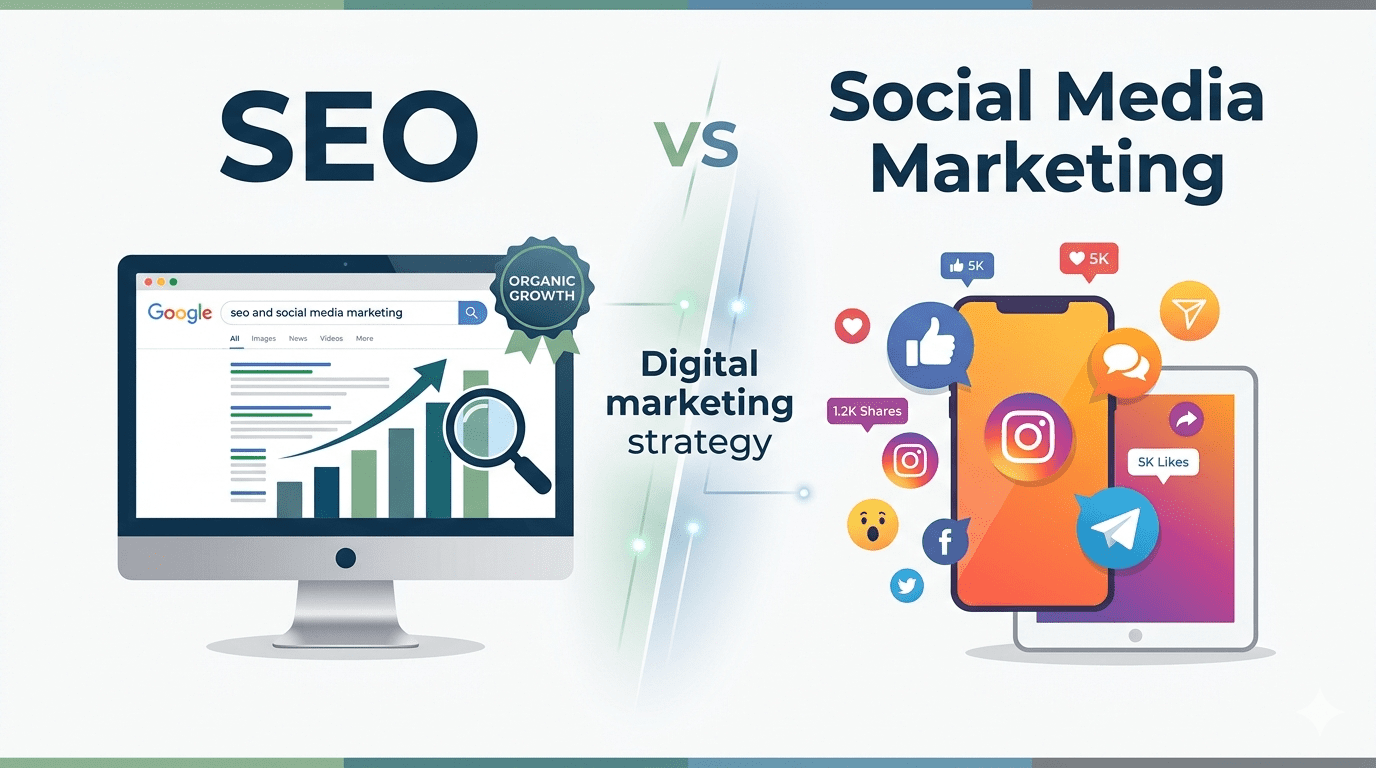
- SEO aims to improve visibility in unpaid search results over time.
- SEM can provide paid visibility on search platforms, often reaching people with clear search intent.
- Social media marketing builds awareness and engagement within social platforms, using both organic and paid activity.
These channels serve different purposes. SEO can support ongoing discovery, paid search can help capture immediate demand, and social media can introduce a brand to new audiences and keep it part of the conversation.
Why combine the three?
Using these channels together can make marketing more consistent and give businesses more ways to reach potential customers. For example, search data can reveal the questions people are asking. Those insights can inform website content and social posts. A successful organic page may also provide ideas for paid search adverts, while social campaigns can help promote useful content to a wider audience.
A combined approach can also help businesses learn. Paid campaigns may provide early feedback on which messages or search terms attract interest. SEO can build a longer-term presence around relevant topics, while social media can show how audiences respond to different ideas and formats.
How to build an integrated strategy
Start with clear objectives
Decide what the marketing activity needs to achieve. Objectives might include increasing qualified website visits, generating enquiries, supporting online sales or improving awareness among a particular audience. Clear goals make it easier to select channels and assess results.
Understand your audience
Identify the people you want to reach, the problems they need to solve and the language they use. Search queries, customer conversations, website analytics and social engagement can all provide useful insights.
Match content to intent
Someone searching for a specific service may be ready to compare providers, while someone browsing social media may be discovering a need for the first time. Create content that suits each stage, from helpful introductory advice to detailed service information and clear calls to action.
Make the website ready to convert
Marketing can bring people to a website, but the site needs to make it easy for them to take the next step. Ensure pages load reliably, work well on mobile devices and explain what the business offers. Calls to action should be clear, and landing pages should closely match the adverts or links that lead to them.
Measure performance and improve
Track results against your objectives rather than relying on a single metric. Depending on the campaign, useful measures may include organic search visibility, relevant website visits, advert clicks, enquiries, sales and cost per conversion. Use what you learn to refine targeting, content and budgets.
Common mistakes to avoid
- Expecting SEO to produce immediate results.
- Running paid search campaigns without tracking meaningful outcomes.
- Publishing the same content across every social platform without adapting it.
- Focusing on traffic numbers without considering relevance or conversions.
- Making promises in adverts or posts that the landing page does not fulfil.
- Treating SEO, SEM and social media as separate activities with no shared objectives.
Conclusion
SEO, SEM and social media marketing each offer distinct ways to connect with audiences. SEO supports organic discovery, paid search can put a business in front of people with immediate intent, and social media helps build awareness and relationships. When they share insights, messaging and objectives, these channels can contribute to a more coherent and adaptable digital marketing strategy.
Understanding SEO, SEM, and Social Media Marketing: Key FAQs for Small Businesses
- What is the difference between SEO, SEM and social media marketing?
- How do SEO, SEM and social media marketing work together?
- Which is better for a small business
- How much do SEO, SEM and social media marketing cost?
- How long does it take to see results from SEO, SEM and social media marketing?
- How can social media marketing support SEO?
- How do you measure the success of SEO, SEM and social media marketing?
- Should a business use paid search advertising as well as SEO?
What is the difference between SEO, SEM and social media marketing?
SEO (search engine optimisation) improves a website’s visibility in unpaid search results over time. SEM (search engine marketing) commonly refers to paid search advertising, which can place adverts in front of people actively searching for particular products or services. Social media marketing uses platforms such as Instagram, LinkedIn and Facebook to build awareness, share content and engage with audiences through organic posts and paid campaigns. In short, SEO attracts visitors through organic search, SEM buys visibility on search engines, and social media marketing connects with people on social platforms.
How do SEO, SEM and social media marketing work together?
SEO, SEM and social media marketing work best when they support the same goals and share insights. SEO builds long-term visibility in organic search, while SEM can deliver quicker exposure through paid search adverts. Social media helps businesses reach and engage audiences, share useful content and build brand awareness. Search trends and campaign results can guide content across all three channels, creating a consistent experience that helps attract potential customers and encourages them to take the next step.
Which is better for a small business
There’s no single best option for every small business: it depends on your goals, budget and audience. SEO can build long-term visibility in organic search, while paid search (often called SEM) may bring faster results for people actively looking for your services. Social media marketing can help you build awareness and relationships, particularly if your customers use those platforms. Start with the channel most closely aligned with your customers’ behaviour, measure the results and expand as your budget allows.
How much do SEO, SEM and social media marketing cost?
The cost of SEO, SEM and social media marketing depends on your goals, industry, competition and the amount of work involved. SEO usually requires an ongoing investment in strategy, technical improvements and content; SEM includes both the advertising budget and any campaign management fees; and social media costs can cover content creation, community management and paid promotion. A small, focused campaign may need a modest budget, while competitive markets and broader campaigns typically require more. Ask providers to explain what their fees include and how results will be measured.
How long does it take to see results from SEO, SEM and social media marketing?
The time it takes to see results varies by channel, budget, competition and the work involved. SEO is usually a longer-term investment: improvements may take several months to become noticeable, as search engines need time to discover and assess changes. SEM can generate traffic and enquiries soon after a campaign launches, although performance often improves as targeting and adverts are refined. Social media results also vary: paid campaigns may reach people quickly, while building organic engagement and a loyal audience typically takes consistent effort over time. These channels work best when progress is measured against clear goals and strategies are adjusted using performance data.
How can social media marketing support SEO?
Social media marketing can support SEO by increasing the reach of your content and helping more people discover your website. Sharing useful articles, guides and service pages may attract visits, encourage engagement and, in some cases, lead to natural links from other websites. Social activity can also help you learn which topics resonate with your audience, providing ideas for future content. Social signals such as likes and shares are not generally considered direct Google ranking factors, so social media works best as a complement to a strong SEO strategy rather than a replacement for it.
How do you measure the success of SEO, SEM and social media marketing?
The success of SEO, SEM and social media marketing is measured against clear business objectives, such as increasing qualified traffic, enquiries, sales or brand awareness. For SEO, useful measures include organic search visibility, relevant website visits and conversions; for SEM, track clicks, conversion rates, cost per acquisition and return on advertising spend; and for social media, assess reach, engagement, referral traffic and conversions. Looking at these metrics together—and reviewing them regularly—helps show which channels are contributing to your goals and where your strategy could improve.
Should a business use paid search advertising as well as SEO?
Yes, many businesses benefit from using paid search advertising alongside SEO, as the two can complement each other. Paid search can provide immediate visibility for targeted searches, while SEO builds organic presence over time. Running both can help a business reach potential customers in more places, test which keywords and messages perform well, and maintain visibility while SEO gains momentum. The right balance depends on your goals, budget and audience, so track enquiries or sales—not just clicks—to understand whether each channel is delivering value.