
h1 seo

Unlocking the Power of H1 SEO for Enhanced Website Visibility

The Importance of H1 SEO in Enhancing Your Website’s Visibility

When it comes to search engine optimisation (SEO), every element on your website plays a crucial role in determining its visibility and ranking on search engine results pages (SERPs). One such element that holds significant importance is the H1 tag.

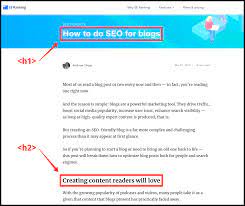
The H1 tag, also known as the heading tag, is used to define the main heading or title of a webpage. Search engines like Google use this tag to understand the context and relevance of the content on a page. Optimising your H1 tags can have a direct impact on your website’s SEO performance and can help improve your rankings.

Key Benefits of Optimising H1 Tags for SEO:

Improved Readability: By using descriptive and relevant keywords in your H1 tags, you can make it easier for both users and search engines to understand the main topic of your page. This improves readability and user experience, which are important factors for SEO.

Keyword Relevance: Including targeted keywords in your H1 tags helps search engines identify the primary focus of your content. This can increase the chances of your website appearing in relevant search queries related to those keywords.

Enhanced Crawlability: Search engine crawlers use H1 tags as an indicator of what the page is about. By optimising your H1 tags with relevant keywords, you make it easier for search engines to crawl and index your content accurately.

Increased Click-Through Rates (CTR): A well-optimised H1 tag can attract users’ attention in search results and entice them to click on your link. This can lead to higher click-through rates, ultimately driving more organic traffic to your website.

Tips for Effective H1 SEO:

– Keep it Relevant: Ensure that your H1 tag accurately reflects the main topic or keyword focus of the page.

– Use Keywords Wisely: Incorporate targeted keywords naturally within your H1 tag without overstuffing them.

– Make it Compelling: Craft engaging and descriptive headings that encourage users to click through to read more.

– Maintain Consistency: Use only one H1 tag per page and structure subsequent headings with appropriate hierarchy (H2, H3, etc.).

In Conclusion

Incorporating effective H1 SEO practices into your website’s content strategy is essential for improving its visibility and attracting organic traffic. By optimising your H1 tags with relevant keywords and compelling headings, you can enhance both user experience and search engine rankings, ultimately driving success for your online presence.


8 Essential Tips for Optimising H1 Tags for SEO Success

  1. Use relevant keywords in your h1 tags
  2. Ensure each page has a unique h1 tag
  3. Make sure your h1 tag is descriptive and concise
  4. Include the main topic or keyword of the page in the h1 tag
  5. Avoid using multiple h1 tags on a single page
  6. Optimize your h1 tags for both users and search engines
  7. Consider the user experience when crafting your h1 tags
  8. Use HTML heading hierarchy properly (h1, h2, h3, etc.)

Use relevant keywords in your h1 tags

Utilising relevant keywords in your H1 tags is a fundamental aspect of effective SEO strategy. By incorporating targeted keywords that align with the main theme of your content, you not only signal to search engines the focus of your page but also improve its chances of ranking higher in relevant search queries. This practice enhances the overall relevance and visibility of your website, making it easier for both users and search engine crawlers to understand and engage with your content.

Ensure each page has a unique h1 tag

It is essential to ensure that each page on your website has a unique H1 tag for effective SEO. By providing a distinct heading for every page, you not only help search engines better understand the content and relevance of each page but also avoid confusion or duplication of keywords. Having unique H1 tags allows you to target specific keywords and topics for individual pages, improving the overall optimisation of your website and enhancing its visibility in search engine results.

Make sure your h1 tag is descriptive and concise

Ensuring that your H1 tag is both descriptive and concise is a fundamental aspect of effective SEO strategy. By crafting a clear and succinct heading that accurately summarises the main topic of your webpage, you not only enhance readability for users but also provide search engines with valuable information about your content. A descriptive H1 tag helps set the context for the rest of the page, guiding both visitors and search engine crawlers towards understanding the relevance and significance of your content. With a concise H1 tag, you can capture attention quickly and encourage engagement, ultimately improving your website’s visibility and ranking in search results.

Include the main topic or keyword of the page in the h1 tag

Including the main topic or targeted keyword of the page in the H1 tag is a fundamental aspect of effective SEO strategy. By incorporating relevant keywords in the H1 tag, you provide search engines with a clear indication of the content’s focus, helping them understand and index your page accurately. This practice not only enhances the visibility of your website in search results but also improves user experience by guiding visitors to content that aligns with their search queries. Consistency between the H1 tag and page content reinforces the relevance of your website to both users and search engines, ultimately contributing to higher rankings and increased organic traffic.

Avoid using multiple h1 tags on a single page

It is crucial to avoid using multiple H1 tags on a single page when implementing H1 SEO strategies. Search engines rely on the H1 tag to understand the main heading or title of a webpage, and having multiple H1 tags can confuse search engine crawlers and dilute the focus of your content. By sticking to a single H1 tag per page, you maintain clarity and hierarchy in your content structure, making it easier for both search engines and users to grasp the primary topic of the page. This practice not only enhances SEO but also contributes to a better user experience by ensuring consistency and coherence in your webpage layout.

Optimize your h1 tags for both users and search engines

Optimising your H1 tags for both users and search engines is a fundamental aspect of effective SEO strategy. By crafting compelling and relevant headings that not only attract the attention of users but also incorporate targeted keywords to signal search engines about the main focus of your content, you can enhance both user experience and search engine visibility. Balancing user readability with SEO optimisation in your H1 tags ensures that your website ranks well in search results while also engaging and informing visitors effectively.

Consider the user experience when crafting your h1 tags

When optimising your H1 tags for SEO, it is crucial to consider the user experience. Crafting H1 tags that are not only keyword-rich but also relevant and engaging to users can significantly enhance the overall readability and usability of your website. By prioritising the user’s perspective and ensuring that your H1 tags accurately reflect the content on the page, you can create a seamless browsing experience that encourages visitors to explore further and increases the likelihood of conversion. Remember, striking a balance between SEO optimisation and user-centric design is key to maximising the impact of your H1 tags on both search engine rankings and user engagement.

Use HTML heading hierarchy properly (h1, h2, h3, etc.)

Ensuring proper utilisation of the HTML heading hierarchy, including H1, H2, H3 tags, is crucial for effective SEO. By structuring your content with the correct heading levels, you not only improve readability for both users and search engines but also signal the importance and relationship of different sections within your webpage. The H1 tag should be reserved for the main heading or title of the page, followed by relevant subheadings using H2, H3, and so on. This hierarchical organisation not only enhances user experience by providing a clear content structure but also helps search engines better understand and index your content, leading to improved SEO performance and visibility online.
seo h1

Unlocking the Power of SEO H1 Tags for Enhanced Website Visibility

The Importance of SEO H1 Tags in Optimising Your Website

The Importance of SEO H1 Tags in Optimising Your Website

When it comes to search engine optimisation (SEO), every element on your website plays a crucial role in determining its visibility and ranking on search engine results pages. One such element that holds significant importance is the H1 tag.

The H1 tag, also known as the heading tag, is typically used to denote the main heading or title of a webpage. Search engines like Google use this tag to understand the primary topic or theme of your content, making it an essential component for on-page SEO.

Here are some reasons why optimising your H1 tags is vital for improving your website’s SEO:

Signalling Relevance

By using relevant keywords in your H1 tags, you signal to search engines what your content is about. This helps search engines understand the context of your page and match it with user queries more effectively.

Enhancing User Experience

Clear and well-optimised H1 tags not only benefit search engines but also improve the overall user experience. Visitors to your site can quickly grasp the main topic of a page by reading its heading, which can lead to higher engagement and lower bounce rates.

Boosting Organic Search Rankings

Search engines consider H1 tags when determining the relevance and quality of a webpage. By optimising your H1 tags with target keywords and ensuring they accurately reflect your content, you increase the likelihood of ranking higher in organic search results.

Structuring Content

H1 tags help structure your content hierarchically, making it easier for both users and search engines to navigate through your website. Properly formatted headings create a logical flow that enhances readability and comprehension.

Standing Out in SERPs

A well-crafted H1 tag can make your listing stand out in search engine results pages (SERPs). An enticing and descriptive heading can attract more clicks from users searching for relevant information, ultimately driving more organic traffic to your site.

In conclusion, paying attention to SEO H1 tags is crucial for optimising your website’s performance in search engine rankings. By incorporating relevant keywords, improving user experience, and aligning with best practices, you can strengthen your on-page SEO efforts and increase visibility online.


9 Essential Tips for Optimising Your H1 Tags for Better SEO

  1. Ensure each page has only one H1 tag for the main heading
  2. Use relevant keywords in the H1 tag to improve SEO
  3. Make sure the H1 tag is descriptive and accurately represents the content
  4. Keep the H1 tag concise and clear, avoiding excessive length
  5. Place the H1 tag at the top of the page for better visibility to search engines
  6. Use CSS to style the H1 tag for better design and user experience
  7. Avoid using generic or duplicated H1 tags across multiple pages
  8. Include variations of your primary keyword in subheadings (H2, H3) for a well-structured content hierarchy
  9. Regularly review and update H1 tags to align with current SEO strategies and target keywords

Ensure each page has only one H1 tag for the main heading

It is essential to ensure that each webpage contains only one H1 tag designated for the main heading. Having multiple H1 tags on a single page can confuse search engines and dilute the significance of your primary content. By maintaining a clear hierarchy with a single H1 tag, you provide search engines with a clear signal about the main topic of your page, helping to improve SEO performance and user experience. Consistently following this best practice ensures that your content is properly structured and optimised for better visibility in search engine results.

Use relevant keywords in the H1 tag to improve SEO

Utilising relevant keywords in the H1 tag is a fundamental SEO strategy that can significantly enhance the visibility and ranking of your website. By incorporating targeted keywords into the main heading of your webpage, you provide search engines with valuable context about the content on the page. This practice not only helps search engines better understand the relevance of your content but also increases the likelihood of your site appearing in search results for those specific keywords. Ultimately, by optimising your H1 tags with relevant keywords, you can improve your website’s SEO performance and attract more organic traffic from users searching for related topics.

Make sure the H1 tag is descriptive and accurately represents the content

Ensuring that the H1 tag is descriptive and accurately represents the content of a webpage is a fundamental aspect of effective SEO strategy. By crafting a clear and relevant heading, you not only help search engines understand the context of your content but also provide users with a concise preview of what to expect. A well-optimised H1 tag sets the tone for the entire page, guiding both search engines and visitors towards the main topic or theme. This practice not only enhances organic search visibility but also contributes to a seamless user experience, ultimately leading to higher engagement and improved rankings in search results.

Keep the H1 tag concise and clear, avoiding excessive length

When implementing SEO strategies for your website, it is essential to keep the H1 tag concise and clear, avoiding excessive length. A succinct and focused H1 tag not only helps search engines understand the main topic of your page more effectively but also enhances user experience by providing a clear indication of what the content is about. By keeping your H1 tag brief and to the point, you ensure that both search engines and visitors can quickly grasp the essence of your webpage, leading to improved SEO performance and better engagement with your audience.

Place the H1 tag at the top of the page for better visibility to search engines

Placing the H1 tag at the top of the page is a strategic SEO practice that can significantly enhance visibility to search engines. By positioning the main heading of your webpage right at the beginning, you signal its importance and relevance to search engine crawlers. This placement ensures that search engines can quickly identify and understand the primary topic of your content, ultimately improving your chances of ranking higher in search results. Prioritising the H1 tag at the top of the page not only aids in SEO optimisation but also contributes to a better user experience by presenting clear and concise information right from the start.

Use CSS to style the H1 tag for better design and user experience

When implementing SEO H1 tags on your website, utilising CSS to style the H1 tag can significantly enhance both design aesthetics and user experience. By applying CSS styles such as font size, colour, spacing, and alignment to your H1 headings, you can create visually appealing and engaging content that captures users’ attention. A well-designed H1 tag not only improves the overall look of your webpage but also reinforces the hierarchy and importance of the heading, making it easier for visitors to navigate and understand your content. Incorporating CSS styling into your SEO strategy for H1 tags is a simple yet effective way to elevate the visual appeal of your website while maintaining a focus on search engine optimisation principles.

Avoid using generic or duplicated H1 tags across multiple pages

To enhance your website’s SEO performance, it is crucial to avoid using generic or duplicated H1 tags across multiple pages. Each H1 tag should be unique and tailored to the specific content of the page it represents. By creating distinct and relevant H1 tags for each page, you signal to search engines the individuality and value of your content, ultimately improving your site’s visibility and ranking in search results. Consistent use of unique H1 tags not only helps search engines better understand your content but also enhances user experience by providing clear and descriptive headings that guide visitors through your website effectively.

Include variations of your primary keyword in subheadings (H2, H3) for a well-structured content hierarchy

To enhance your website’s SEO performance, it is advisable to include variations of your primary keyword in subheadings such as H2 and H3 tags. By incorporating related keywords or long-tail variations in these subheadings, you create a well-structured content hierarchy that signals to search engines the depth and relevance of your content. This practice not only improves the readability and organisation of your webpage but also helps search engines better understand the context and themes covered within your content, ultimately contributing to a more comprehensive and effective SEO strategy.

Regularly review and update H1 tags to align with current SEO strategies and target keywords

Regularly reviewing and updating H1 tags to align with current SEO strategies and target keywords is essential for maintaining the effectiveness of your website’s optimisation efforts. By ensuring that your H1 tags reflect the most relevant keywords and align with your SEO goals, you increase the chances of ranking higher in search engine results. Keeping your headings up-to-date not only signals to search engines the relevance of your content but also demonstrates a commitment to staying competitive in the ever-evolving digital landscape. Consistent monitoring and adjustment of H1 tags will help you stay ahead of the curve and drive more organic traffic to your site.