real estate local seo

Real Estate Local SEO: A Practical Guide to Winning More Local Property Enquiries

Real Estate Local SEO: How to Attract More Property Enquiries in Your Area

For estate agents, letting agencies, property managers and other real estate businesses, visibility in local search can make a real difference. When someone searches for an estate agent, property valuation or rental service nearby, they are often looking for help in a specific location and may be ready to take action.

Real estate local SEO is the process of improving your online presence so your business is easier to find in relevant local searches. A well-planned approach can help you reach prospective clients in the areas you serve, build trust and generate more useful enquiries.

Why local SEO matters for real estate businesses

Property decisions are closely tied to location. Buyers and renters search by town, borough, postcode and neighbourhood, while sellers and landlords often want an agent with knowledge of their local market. Searches such as “estate agent in Islington” or “property management near me” show clear local intent.

Appearing prominently for relevant searches can bring your agency in front of people at the moment they are comparing local services. Local SEO also helps you communicate what you offer, where you operate and why clients should choose your business.

Optimise your Google Business Profile

Your Google Business Profile is an important part of local visibility. Keep it accurate, complete and consistent with the information on your website. Check that your business name, address, phone number, website and opening hours are correct.

Choose the most appropriate primary category and add relevant secondary categories where available. Describe your services clearly, such as residential sales, lettings, property valuations or commercial property services. Add high-quality photographs of your office, team and properties, and update the profile when your services or hours change.

If your business serves customers at their properties rather than at a public office, make sure your profile follows Google’s rules for service-area businesses. Avoid creating listings for locations where you do not have an eligible, staffed business presence.

Create useful pages for the areas you serve

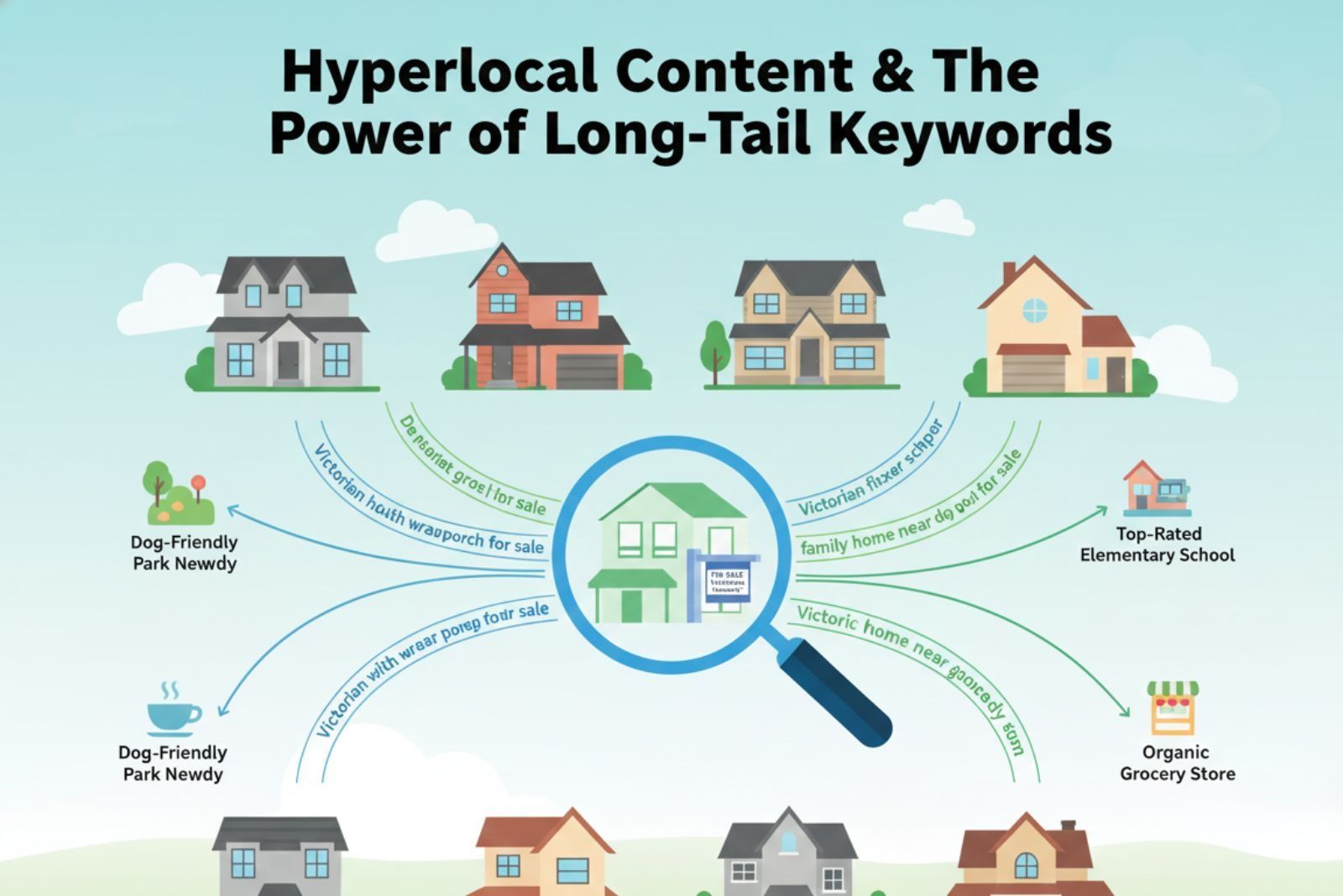
A strong website should make your service areas easy to understand. Create dedicated location pages for places where you genuinely operate, such as towns, boroughs or neighbourhoods. Each page should offer helpful local information rather than simply repeating a place name.

A useful location page might include:

  • The services available in that area
  • Local property expertise and market context
  • Relevant examples of properties or work, where appropriate
  • Clear contact details and a simple enquiry option
  • Links to related services and nearby areas

Avoid publishing many near-identical pages with only the location name changed. Thin or duplicated content provides little value to prospective clients and may weaken the quality of your site.

Target the searches your clients actually use

Keyword research can reveal how buyers, sellers, landlords and tenants search for local services. Consider combining your service with relevant locations, for example “letting agent in Richmond”, “house valuation in Hackney” or “commercial property agent in Manchester”.

Use these phrases naturally in page titles, headings and copy. Search behaviour varies, so focus on clear, useful language rather than repeating keywords unnaturally. It can also be valuable to create content that answers common questions, such as how a property valuation works, what landlords should prepare before letting a home, or how to choose an estate agent.

Build trust with reviews and local reputation

Reviews can help prospective clients assess your service and may support your local presence. Invite genuine clients to share honest feedback, and respond courteously to both positive and negative reviews. Never offer incentives in exchange for reviews or publish feedback that is not genuine.

Your reputation extends beyond Google. Consistent details across reputable local directories, professional associations and relevant property platforms can help people verify your business. Keep your name, address and phone number consistent wherever they appear, and correct outdated listings when you find them.

Make your website work well on mobile

Many people look for property services on a mobile phone, so your website should be fast, easy to navigate and simple to use on a smaller screen. Make contact details prominent, ensure forms are straightforward and make it easy to browse relevant properties or services.

Technical essentials matter too. Use secure HTTPS, fix broken links, provide descriptive page titles and headings, and ensure search engines can access important pages. Structured data, such as appropriate local business markup, can help search engines interpret information about your business. It should reflect visible, accurate details and does not guarantee enhanced search results.

Publish genuinely local content

Useful local content can demonstrate that your business understands the areas it serves. Consider writing about neighbourhood features, local property trends, moving advice or practical information for landlords and sellers. Keep claims current and use reliable sources when discussing market data.

Content should be created for people first. A thoughtful guide to selling a home in a particular area is more valuable than a page written solely to include a list of search terms.

Measure enquiries, not just rankings

Local SEO is an ongoing process, so track whether it is contributing to business goals. Useful measures include calls, contact form submissions, valuation requests, directions requests and qualified enquiries. Search visibility and website visits can provide context, but they are not the only measures of success.

Use analytics and search performance tools to understand which pages and searches are bringing visitors to your site. Review the results regularly and improve pages that attract attention but do not lead to useful actions.

A practical local SEO checklist for estate agents

  • Keep your Google Business Profile complete and accurate.
  • Use clear, location-relevant service pages on your website.
  • Make your contact details consistent across trusted platforms.
  • Encourage honest reviews and respond professionally.
  • Ensure your website is fast, secure and mobile-friendly.
  • Publish helpful content based on local knowledge.
  • Track calls and qualified enquiries as well as website traffic.

Make local SEO part of your growth plan

Real estate local SEO is not a one-off task. Profiles, reviews, local information and search behaviour all change over time. By keeping your business details accurate, creating useful area-specific content and making it easy for people to contact you, you can build a stronger local presence and give prospective clients a clearer reason to get in touch.


5 Local SEO Tips for Estate Agents to Boost Visibility

  1. Optimise your Google Business Profile with accurate details and opening hours.
  2. Create pages for each area you serve, with useful local property information.
  3. Ask happy clients to leave honest Google reviews.
  4. Use consistent business details across local directories.
  5. Add local keywords to property listings, page titles and image descriptions.

Optimise your Google Business Profile with accurate details and opening hours.

Keep your Google Business Profile accurate and up to date so local clients can quickly find and contact your estate agency. Check that your business name, address, phone number, website and services are correct, and make sure your opening hours reflect when you’re available. Update the profile promptly if anything changes, including bank holidays or temporary closures. Clear, reliable information helps set expectations and makes it easier for buyers, sellers, landlords and tenants to choose your business.

Create pages for each area you serve, with useful local property information.

Create a dedicated page for each area your real estate business genuinely serves, and make every page useful to local buyers, sellers, landlords or tenants. Include relevant details such as the property types you handle, local market insights, neighbourhood features and the services available, alongside clear contact information. Avoid simply duplicating the same copy and swapping the place name: original, helpful information gives visitors a better reason to choose your agency and helps search engines understand your local expertise.

Ask happy clients to leave honest Google reviews.

Ask happy clients to leave an honest Google review after you have helped them buy, sell, rent or manage a property. Reviews give prospective clients a better sense of what it is like to work with your agency and can strengthen your visibility in local search. Make the request politely and without offering incentives, and respond to feedback professionally. Genuine, detailed reviews are more useful than generic praise, so invite clients to share what they appreciated about your service in their own words.

Use consistent business details across local directories.

Keep your business name, address and phone number consistent across local directories, property portals and your website. Even small differences—such as an old phone number or an abbreviated address—can confuse potential clients and make it harder for search engines to confirm your business details. Review your listings regularly, update any changes promptly and remove or correct duplicates wherever possible.

Add local keywords to property listings, page titles and image descriptions.

Include relevant local keywords in your property listings, page titles and image descriptions to help search engines understand where a property is located and which searches it may suit. Use natural, accurate phrases such as the neighbourhood, town or postcode alongside details of the property—for example, “two-bedroom flat for sale in Clapham”. Add descriptive alt text to images that explains what they show, including the location where appropriate. Keep the wording useful and specific, and avoid repeating keywords unnaturally or adding locations that are not relevant.
local seo google

Local SEO on Google: A Practical Guide for UK Businesses

Local SEO on Google: A Practical Guide for UK Businesses

When people search for a nearby service, they often turn to Google to find businesses in their area. Searches such as “plumber near me” or “best café in Manchester” can show local businesses in Google Maps and in local search results. Local SEO helps your business appear in these results and makes it easier for potential customers to find and contact you.

This guide explains how local SEO works on Google and outlines practical steps you can take to improve your local visibility.

What is local SEO?

Local SEO is the process of improving your online presence so your business is more likely to appear when people search for relevant products or services in a particular location. It can help businesses with physical premises, as well as service-area businesses that visit customers at their homes or workplaces.

Google’s local results commonly include a map and a selection of business profiles. The businesses shown can vary depending on the search, the searcher’s location and other factors. There is no guaranteed way to secure a particular position, but clear, accurate and useful information can help Google understand your business and help customers choose it.

Set up and improve your Google Business Profile

Your Google Business Profile is a key part of local SEO. It lets you manage how your business appears on Google Search and Maps. Claim and verify your profile, then check that the details are accurate and complete.

  • Use your real business name. Avoid adding extra keywords or locations unless they are genuinely part of your name.
  • Choose the most relevant categories. Select a precise primary category and add other relevant categories where appropriate.
  • Keep your contact details current. Check your phone number, website address and opening hours, including holiday hours.
  • Add useful photos. Show your premises, products, team or completed work, where relevant.
  • Describe your services clearly. Use the profile features available to your business to provide helpful information to potential customers.

If you serve customers at their location and do not receive them at a business premises, set up your profile as a service-area business and follow Google’s eligibility and address guidelines.

Keep business information consistent

Your business name, address and phone number should be accurate wherever they appear online. Check your website, Google Business Profile, social media accounts and relevant business directories. Inconsistent information can confuse customers and make it harder to verify which details are correct.

Consistency does not mean creating listings everywhere. Focus on reputable, relevant directories and local organisations, and keep existing listings up to date.

Build useful location pages on your website

Your website should clearly explain what you offer and where you offer it. If you have several locations, create a dedicated page for each genuine branch, with accurate contact details, opening hours, directions and information about the services available there.

For service-area businesses, explain the areas you genuinely cover. Avoid creating large numbers of near-identical pages for towns where you have no meaningful presence. Pages should answer real customer questions and provide useful local information, rather than simply repeating place names.

Earn and respond to customer reviews

Reviews can help people assess your business before they contact you. Invite customers to leave honest feedback, without offering rewards in exchange or asking only satisfied customers to review you. Follow Google’s review policies and never buy or fabricate reviews.

Respond to reviews professionally and courteously. Thank customers for positive feedback, and address concerns calmly. Do not share private customer information in a public reply.

Create helpful local content

Useful content can demonstrate your knowledge and help potential customers make informed decisions. Depending on your business, this might include guides to choosing a service, answers to common questions, project examples or information about local regulations and conditions.

Write for people first. Include location details naturally where they help explain your service, but avoid forcing the same keyword or town name into every heading and paragraph.

Make your website easy to use

A good local SEO strategy also depends on a website that works well for visitors. Make sure pages load reliably on mobile devices, contact details are easy to find and important actions—such as calling, booking or requesting a quote—are straightforward.

Use clear page titles and headings that accurately describe each page. Add structured data where appropriate to help search engines interpret information about your business, but make sure the information on your site matches what customers can see.

Measure your local SEO progress

Use Google Business Profile performance data, Google Search Console and website analytics to monitor activity. Useful measures may include calls, website visits, direction requests, search impressions and enquiries. Look at changes over time, rather than judging success by a single ranking check: local results can differ according to where and how someone searches.

Connect these measures to business outcomes where possible. More visibility is valuable, but the aim is to attract relevant visitors and turn them into customers.

A steady approach to local SEO

Local SEO on Google is not a one-off task. Review your business information regularly, keep your website helpful and current, and make it easy for customers to share genuine feedback. By combining an accurate Google Business Profile with a useful website and a trustworthy online presence, you can improve your chances of being found by people searching for local services.


Top 8 FAQs About Enhancing Your Local SEO on Google in the UK

  1. What is local SEO on Google?
  2. How do I improve my local SEO on Google?
  3. How do I set up a Google Business Profile for local SEO?
  4. How does Google decide which businesses appear in local search results?
  5. How long does local SEO take to work on Google?
  6. Are Google reviews important for local SEO?
  7. How can I rank higher on Google Maps?
  8. How much does local SEO cost in the UK?

What is local SEO on Google?

Local SEO on Google is the process of improving your business’s online presence so it is more likely to appear when people nearby search for relevant products or services. It includes keeping your Google Business Profile accurate and complete, maintaining consistent contact details across the web, earning genuine customer reviews and creating useful location-focused website content. These steps can help local customers find and choose your business in Google Search and Maps.

How do I improve my local SEO on Google?

To improve your local SEO on Google, claim and verify your Google Business Profile, then keep your business name, address, phone number, opening hours and services accurate and up to date. Choose the most relevant business categories, add genuine photos and encourage customers to leave honest reviews—responding to them professionally. Make sure your website is mobile-friendly and clearly explains what you offer and which areas you serve. Consistent business details across trusted directories and useful, location-relevant website content can also help customers—and Google—understand your business.

How do I set up a Google Business Profile for local SEO?

To set up a Google Business Profile for local SEO, sign in to Google with the account you want to manage the business, then create or claim the profile and complete Google’s verification process. Enter your real business name, choose the most relevant category, and add accurate contact details, opening hours, website address and service areas. If customers visit your premises, provide the correct address; if you travel to them and do not receive customers at your address, set the profile up as a service-area business and follow Google’s guidelines. Add useful photos and keep all details up to date so customers can find reliable information about your business.

How does Google decide which businesses appear in local search results?

Google generally considers three main factors when deciding which businesses to show in local search results: relevance, distance and prominence. Relevance is how well a business profile matches the search; distance is how far the business is from the person searching or the location they specify; and prominence reflects how well-known or established the business appears to be, informed by factors such as reviews and information across the web. Results can vary depending on the search and the user’s location, and there is no way to pay Google for a better local ranking.

How long does local SEO take to work on Google?

Local SEO can take several weeks to several months to show noticeable results on Google; the timescale depends on factors such as your location, competition, website condition and the accuracy of your business information. Updating your Google Business Profile may lead to quicker improvements, while building local authority, earning genuine reviews and improving website rankings usually takes longer. Results aren’t guaranteed, so track calls, enquiries and website visits over time, and keep your information accurate and your content useful.

Are Google reviews important for local SEO?

Yes, Google reviews can support local SEO by helping potential customers assess your business and giving Google useful information about your prominence and reputation. Reviews do not guarantee higher rankings, but earning genuine feedback consistently and responding professionally can strengthen trust and encourage more people to choose your business. Never buy reviews or offer incentives in exchange for them; follow Google’s review policies and invite customers to share honest feedback.

How can I rank higher on Google Maps?

To improve your chances of ranking higher on Google Maps, claim and verify your Google Business Profile, then keep your business details accurate and complete. Choose the most relevant categories, add current opening hours, services and high-quality photos, and make sure your website clearly explains what you offer and where you operate. Encourage customers to leave honest reviews and respond to them professionally. Google considers factors such as relevance, distance and prominence, so rankings can vary by searcher location and query; there’s no guaranteed shortcut or way to pay for a better organic position.

How much does local SEO cost in the UK?

The cost of local SEO in the UK varies depending on your location, competition, business needs and the amount of work required. A basic package may cover your Google Business Profile and local listings, while more comprehensive support can include website optimisation, content, link building and ongoing reporting. Some providers charge a monthly retainer, while others offer one-off projects or hourly work. Ask for a clear breakdown of services, timescales and measures of success, and be cautious of anyone promising guaranteed rankings.