seo consultant specialist

SEO Consultant Specialist: A Guide to Growing Your Search Visibility

What Does an SEO Consultant Specialist Do?

A strong online presence can help a business reach new customers, build credibility and grow over time. But appearing in search results is not simply a matter of adding a few keywords to a website. Search engine optimisation (SEO) involves a range of technical, creative and analytical tasks. An SEO consultant specialist helps businesses understand those tasks and develop a practical plan to improve their visibility in organic search.

What is an SEO consultant specialist?

An SEO consultant specialist is a professional who reviews a website’s search performance and recommends or carries out improvements. Their work may cover technical SEO, content, keyword research, local visibility and link-related activities. The exact role varies: some consultants provide strategic advice, while others work alongside a client’s team to implement changes and measure the results.

The aim is not just to attract more visitors. Effective SEO focuses on reaching relevant people and making it easier for them to find useful information, products or services.

What services can an SEO specialist provide?

SEO audits

An audit examines how well a website is performing from a search perspective. It may identify issues such as slow-loading pages, broken links, duplicate content, poor internal linking or pages that search engines struggle to access. An audit should prioritise findings according to their likely impact and the effort needed to address them.

Keyword and search-intent research

Keyword research helps reveal the words and questions people use when looking for a business, product or service. A specialist also considers search intent: what someone is hoping to achieve when they make a particular search. This helps shape pages that answer the right questions rather than simply repeating popular phrases.

Technical SEO

Technical SEO concerns the foundations that help search engines discover, crawl and understand a website. This can include site structure, mobile usability, page speed, indexing, redirects and structured data. Technical recommendations should take account of how the website is built and the resources available to maintain it.

Content strategy and on-page optimisation

An SEO consultant may advise on new content or improvements to existing pages. This can involve refining page titles and headings, improving internal links, making information easier to understand and identifying gaps in the site’s coverage. Good content should be useful to readers first, with optimisation supporting its clarity and discoverability.

Local SEO

For businesses serving a particular area, local SEO can help improve visibility in location-based searches. Work may include reviewing business listings, strengthening location pages and ensuring that key business details are accurate and consistent across relevant platforms.

Reporting and measurement

SEO takes time, so regular reporting is important. A specialist can help monitor indicators such as organic traffic, search visibility, enquiries, sales and the performance of important landing pages. The most useful measures depend on a business’s goals; rankings alone do not show whether a campaign is delivering value.

When might a business need an SEO consultant?

A consultant may be useful when a website receives little organic traffic, when search performance has declined, or when a business is planning a redesign or entering a new market. They can also provide specialist knowledge to a marketing team that needs support with a particular challenge.

SEO may not be the right immediate priority for every organisation. A consultant should be prepared to discuss expected timescales, limitations and alternative priorities, rather than promising instant results.

How to choose the right SEO specialist

Look for a consultant who takes time to understand your business, audience and goals. Before hiring someone, consider asking:

  • What would you review first, and why?
  • How will you prioritise recommendations?
  • What work will you carry out, and what will our team need to do?
  • How will progress and business outcomes be reported?
  • Can you explain your methods and share relevant examples?

Be cautious of guarantees of a number-one ranking or claims that results are certain by a fixed date. Search performance depends on many factors, including competition, website changes and search engine updates. A trustworthy specialist will explain what can be influenced, what cannot, and how success will be assessed.

Building a productive working relationship

SEO works best when it is treated as an ongoing part of a business’s digital strategy. The consultant needs access to accurate information and, where appropriate, collaboration with developers, writers and marketing staff. In return, the business should expect clear advice, realistic recommendations and transparent communication.

A capable SEO consultant specialist combines technical understanding with sound judgement and a focus on the customer. By connecting a clear strategy with useful content and a well-structured website, they can help a business build sustainable search visibility and make its online presence more effective.


Essential FAQs About Hiring an SEO Consultant Specialist in the UK

  1. What does an SEO consultant specialist do?
  2. How can an SEO consultant specialist help my business?
  3. How much does it cost to hire an SEO consultant specialist in the UK?
  4. How long does it take to see results from SEO?
  5. What should I look for when choosing an SEO consultant specialist?
  6. What is the difference between an SEO consultant and an SEO agency?
  7. How can I measure the success of an SEO consultant’s work?

What does an SEO consultant specialist do?

An SEO consultant specialist helps businesses improve their visibility in organic search results. They assess a website, identify opportunities and issues, and recommend or carry out work such as keyword research, technical improvements, content optimisation and local SEO. They also monitor performance and report on progress, with the aim of attracting more relevant visitors and supporting business goals.

How can an SEO consultant specialist help my business?

An SEO consultant specialist can help your business improve its visibility in search results and attract people who are looking for your products or services. They assess your website, research relevant search terms, identify technical and content improvements, and create a strategy tailored to your goals. They can also monitor performance and explain what is working, helping you make informed decisions and build sustainable organic traffic over time.

How much does it cost to hire an SEO consultant specialist in the UK?

The cost of hiring an SEO consultant specialist in the UK varies according to their experience, the scope of work and the complexity of your website. Some charge an hourly rate, while others offer a fixed-fee audit, monthly retainer or project-based pricing. A small, focused piece of work will generally cost less than ongoing support for a large or highly competitive website. Ask for a clear proposal outlining the work, deliverables, timescales and reporting, and be wary of guaranteed rankings or unusually low prices that promise quick results.

How long does it take to see results from SEO?

SEO is a long-term process, and the time it takes to see results depends on factors such as your website’s current condition, the level of competition and the work required. Some improvements, such as fixing technical issues, may have an impact sooner, while stronger gains in visibility, traffic and enquiries often take several months. An SEO consultant specialist should set realistic expectations, track progress against meaningful goals and refine the strategy as results develop.

What should I look for when choosing an SEO consultant specialist?

When choosing an SEO consultant specialist, look for someone who takes time to understand your business, audience and objectives, and can explain their recommendations in clear, practical terms. Ask about their experience, approach to technical SEO, content and reporting, and how they will measure progress against your goals. A reliable consultant sets realistic expectations, communicates transparently and avoids guarantees of specific rankings or instant results. It is also helpful to check relevant case studies or references and agree upfront on the work, timescales and responsibilities.

What is the difference between an SEO consultant and an SEO agency?

An SEO consultant is usually an individual specialist who provides focused advice and may also carry out SEO work, while an SEO agency is a team that can offer a broader range of services, such as technical SEO, content creation and digital PR. A consultant may give you direct, one-to-one support and suit a business with a specific SEO need; an agency may be better if you need several areas of expertise or a larger campaign. However, services vary, so compare each provider’s experience, approach, communication and fees rather than relying on the title alone.

How can I measure the success of an SEO consultant’s work?

Measure an SEO consultant’s success against clear business goals, not rankings alone. Track relevant indicators over time, such as organic traffic, visibility for target searches, qualified leads, enquiries, sales and revenue, alongside improvements to the website’s technical health and content. Agree on a baseline, realistic timescales and regular reporting with your consultant, and consider how results compare with seasonal changes or other marketing activity. SEO often takes time, so look for sustained progress and transparent explanations rather than promises of instant results.

seo and social media marketing

SEO and Social Media Marketing: A Guide to Growing Your Online Presence

SEO and Social Media Marketing: How They Work Together

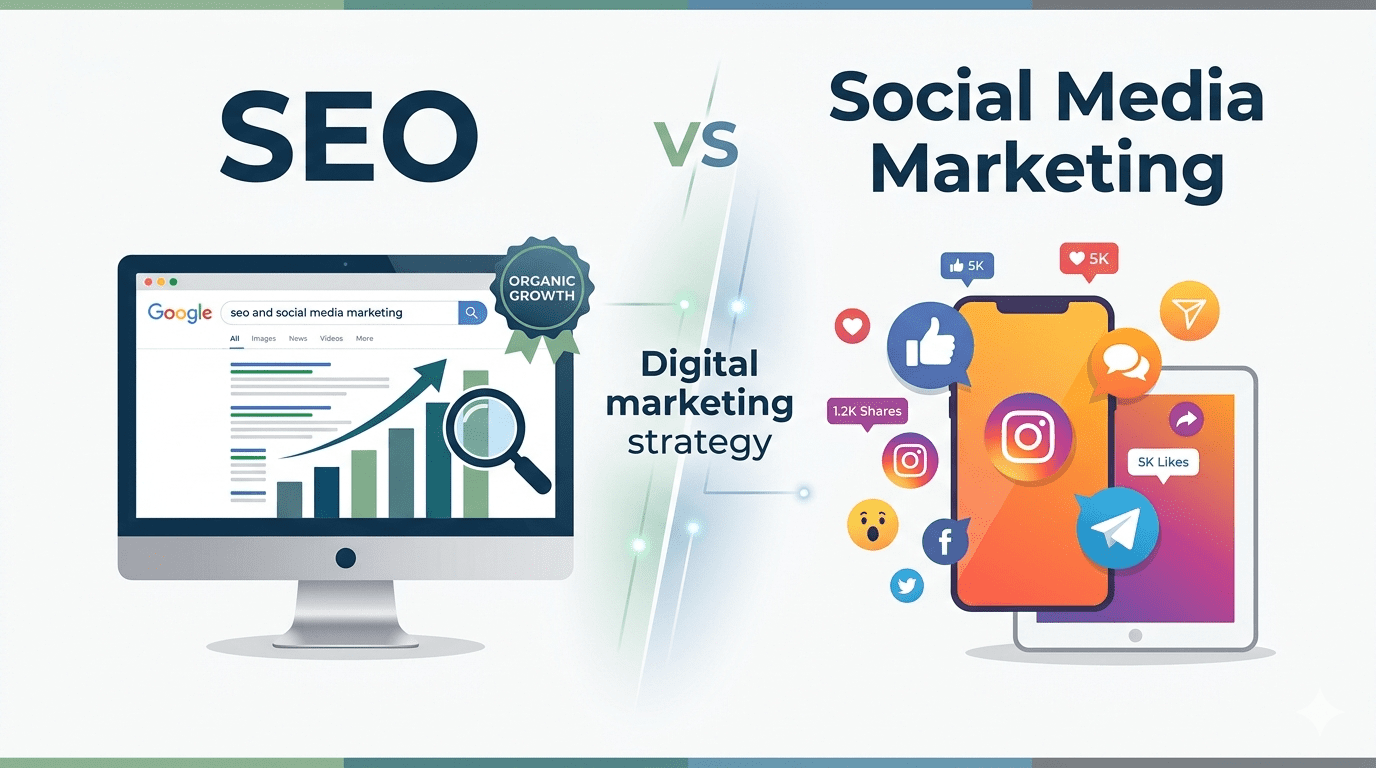
Search engine optimisation (SEO) and social media marketing are often treated as separate parts of a digital strategy. In practice, they can support one another. SEO helps people find your website through search engines, while social media helps you reach, engage and build relationships with audiences across social platforms.

Neither channel is a quick fix. But when they share clear goals and useful content, they can help your business become more visible online and create more opportunities to connect with potential customers.

What is SEO?

SEO is the process of improving a website so that it is easier for search engines and people to understand. It can involve researching the terms your audience uses, creating helpful pages, improving site structure and making sure the website works well on mobile devices.

SEO is about more than appearing in search results. A successful page should match the visitor’s needs, provide reliable information and make it easy to take the next step, whether that is making an enquiry, buying a product or reading more.

What is social media marketing?

Social media marketing uses platforms such as Instagram, LinkedIn, Facebook, TikTok and Pinterest to share content and communicate with an audience. Depending on your business and objectives, this might include publishing organic posts, responding to comments, working with creators or running paid campaigns.

Social media can help a brand stay connected with its community, showcase its expertise and direct people to useful resources on its website.

How SEO and social media can support each other

Social media can bring more people to your content

Sharing a useful article, guide or product page on social media can introduce it to people who may not have found it through search. If they visit the website, explore other pages or share the content with others, social activity may contribute to broader awareness and engagement.

Social media shares are not generally treated as a direct ranking factor by search engines. However, sharing content can help it reach more people, which may lead to natural links, mentions and further visits over time.

SEO can help you understand what your audience wants

Keyword research reveals the questions and topics people search for. These insights can inform social media content, helping you create posts that answer genuine questions rather than relying on guesswork.

Social media conversations can also reveal common concerns, customer language and emerging interests. These insights may inspire new website content or help you improve existing pages.

Consistent messaging strengthens your brand

When your website and social channels share a consistent tone, message and visual identity, people are more likely to recognise your brand. Clear, consistent communication can build familiarity and trust, whether someone discovers you through a search result, a social post or a recommendation.

Social profiles can appear in search results

Social media profiles and public posts may appear in search engine results, especially when someone searches for a brand by name. Complete profiles with accurate information, links and recent activity can make it easier for people to learn about your business and find your official channels.

Practical ways to combine SEO and social media

  • Start with your audience. Identify who you want to reach, what they need and which platforms they use.
  • Use search insights to plan content. Research relevant queries and turn them into useful articles, videos, short posts or FAQs.
  • Make content easy to share. Use clear headlines, helpful summaries and suitable images or video. Include social sharing options where they improve the user experience.
  • Adapt content for each platform. A detailed website guide might become a LinkedIn post, a short video, an Instagram carousel or a series of tips.
  • Keep profiles accurate. Use consistent business details, descriptions and links across your website and social channels.
  • Engage with your audience. Respond to relevant questions and comments, and use recurring feedback to improve your content.
  • Measure meaningful outcomes. Track organic search visibility, website visits, enquiries, sales and engagement against your business goals.

Measure each channel appropriately

SEO and social media have different performance indicators. For SEO, useful measures can include organic traffic, search visibility, rankings for relevant queries, conversions and the quality of visits. For social media, consider reach, engagement, referral traffic, audience growth and actions such as enquiries or purchases.

Use analytics tools to understand how the channels contribute to your objectives. Avoid judging success by follower numbers or rankings alone: the most valuable results are those that help your organisation meet its goals.

A joined-up strategy takes time

SEO is usually a long-term activity, while social media can provide quicker feedback on how people respond to ideas and content. Neither guarantees immediate results. Search performance depends on many factors, and social reach can vary by platform, audience and format.

By planning the channels together, businesses can create content that is useful to their audience, easier to discover and more consistent across the customer journey. The aim is not simply to post more or target more keywords. It is to provide the right information in the right places, and make it easy for people to take the next step.

Conclusion

SEO and social media marketing serve different purposes, but they can work well as part of a connected digital strategy. SEO helps people discover relevant website content through search, while social media helps that content reach and engage wider communities. With a clear understanding of your audience, consistent messaging and thoughtful measurement, both channels can contribute to stronger online visibility and lasting customer relationships.


Top 8 FAQs on Integrating SEO with Social Media Marketing

  1. How do SEO and social media marketing work together?
  2. Does social media activity directly affect SEO rankings?
  3. Can social media help increase organic website traffic?
  4. Which social media platforms are best for SEO?
  5. How can I use keyword research to plan social media content?
  6. What types of content work well for both SEO and social media?
  7. How should I measure the results of SEO and social media marketing?
  8. How long does it take to see results from SEO and social media marketing?

How do SEO and social media marketing work together?

SEO and social media marketing work together by helping your content reach people in different ways. SEO makes your website easier to find through search engines, while social media helps you share content, engage with your audience and bring visitors to your site. Social media activity is not generally a direct search ranking factor, but it can increase awareness and encourage visits, shares and natural links. Insights from search queries and social conversations can also help you create more relevant content for both channels.

Does social media activity directly affect SEO rankings?

Social media activity does not directly affect SEO rankings: likes, shares and follower numbers are not considered direct ranking factors by search engines. However, social media can support SEO indirectly by helping your content reach more people, attract website visits and earn natural links or brand mentions. It can also offer useful insights into the topics and questions your audience cares about, helping you create more relevant content.

Can social media help increase organic website traffic?

Yes, social media can help increase organic website traffic by promoting your content to a wider audience and encouraging people to visit your site. Sharing useful articles, products or resources can attract visitors who may not have found you through search, while audience feedback can help you create content that better answers their questions. Social media activity is not generally a direct Google ranking factor, so focus on sharing relevant, engaging content and making it easy for people to find and explore your website.

Which social media platforms are best for SEO?

No social media platform directly improves your search rankings, so the best choice depends on where your audience spends time and what you want to achieve. LinkedIn can suit B2B businesses and professional content, while Instagram, TikTok and Pinterest may work well for visual products and inspiration; Facebook can help businesses build communities and reach local audiences. Choose platforms you can maintain consistently, share useful content that links back to relevant pages on your website, and make sure your profiles include accurate business details. Social activity may increase awareness and visits, and can help your content reach people who may later link to or mention it.

How can I use keyword research to plan social media content?

Use keyword research to discover the questions, phrases and topics your audience is searching for, then turn those insights into useful social media posts. Group related keywords into themes and adapt them to each platform—for example, create a short video answering a common question, a carousel explaining a topic or a post linking to a more detailed guide on your website. Treat keywords as clues to audience interests rather than terms to squeeze into every caption, and use natural language that suits the platform. Review engagement and website visits to see which topics resonate and shape future content.

What types of content work well for both SEO and social media?

Content that answers your audience’s questions tends to work well for both SEO and social media. Practical guides, how-to articles, FAQs, original research, case studies, infographics and short videos can attract search visitors while also giving people something useful to share or discuss. Start with a clear topic based on audience needs and relevant search queries, then adapt the format for each platform—for example, turn a detailed guide into a short video or a series of social posts. Ensure the content is accurate, easy to understand and genuinely helpful, rather than created solely to include keywords or encourage clicks.

How should I measure the results of SEO and social media marketing?

Measure SEO and social media against clear business goals, such as increasing relevant website visits, enquiries or sales. For SEO, track organic traffic, visibility for relevant search terms, conversions and the quality of visits. For social media, monitor reach, engagement, referral traffic and actions such as enquiries or purchases. Use analytics tools to see how each channel contributes over time, and review results regularly. Follower counts and rankings can offer useful context, but they matter most when they support meaningful outcomes for your business.

How long does it take to see results from SEO and social media marketing?

The time it takes to see results from SEO and social media marketing varies according to your industry, competition, budget and the consistency of your activity. SEO is usually a longer-term investment: improvements in rankings and organic traffic may take several months, particularly for a new website or a competitive search term. Social media can generate engagement and reach sooner, but building a loyal audience and achieving steady enquiries or sales also takes time. Regular, useful content, a clear strategy and ongoing measurement can help both channels deliver more sustainable results.

best seo marketing

Best SEO Marketing: A Practical Guide to Growing Your Online Visibility

Best SEO Marketing: A Practical Guide to Growing Your Online Visibility

The best SEO marketing helps the right people find your business through search engines. It combines useful content, technical improvements and a clear understanding of what potential customers are looking for. Rather than relying on quick fixes, effective SEO builds lasting visibility and supports measurable business goals.

There is no single SEO strategy that works for every organisation. The right approach depends on your audience, industry, website and resources. However, the strongest campaigns tend to share a few fundamentals: they focus on users, use evidence to guide decisions and improve consistently over time.

What is SEO marketing?

Search engine optimisation (SEO) is the process of improving a website so that it can appear more prominently in relevant, unpaid search results. SEO marketing applies this process to wider marketing objectives, such as increasing brand awareness, attracting qualified visitors and generating enquiries or sales.

SEO usually includes several connected activities:

  • Keyword and audience research: discovering what people search for and what information they need.
  • Content optimisation: creating and improving pages to answer those needs clearly.
  • Technical SEO: helping search engines access, understand and index your website.
  • On-page optimisation: improving page titles, headings, internal links and other elements.
  • Authority building: earning relevant mentions and links from credible websites.
  • Measurement: reviewing performance and refining the strategy.

Start with your audience and business goals

Successful SEO begins with a clear idea of who you want to reach and what you want them to do. A rise in website traffic may look encouraging, but it is more valuable when that traffic comes from people who are likely to become customers.

Define your priorities before choosing keywords. You might want to increase online sales, attract more local enquiries, promote a particular service or build awareness in a new market. These goals help shape the pages you need and the results you should measure.

Choose keywords based on intent

Keyword research is not simply about finding phrases with high search volumes. It is about understanding the purpose behind a search. Someone searching for “how to improve website rankings” may be looking for advice, while someone searching for “SEO consultant in London” may be closer to choosing a provider.

Consider the different types of search intent:

  • Informational: the searcher wants to learn or solve a problem.
  • Commercial: the searcher is comparing options before making a decision.
  • Transactional: the searcher is ready to buy, book or enquire.
  • Navigational: the searcher is looking for a particular brand or website.

Map relevant search terms to suitable pages. A detailed guide may suit an informational query, while a service page is better for a search with commercial or transactional intent. Avoid creating several pages that compete for the same topic without a clear reason.

Create genuinely useful content

High-quality content is central to the best SEO marketing. It should answer the reader’s question accurately, be easy to follow and offer something of real value. This could be specialist knowledge, practical instructions, original research or a clear explanation of a complex subject.

Before writing, review the needs of your audience and the information already available. Then create a page that is more helpful, clearer or more complete. Use descriptive headings, concise paragraphs and examples where appropriate. Include keywords naturally, but never at the expense of readability.

Content also needs to stay current. Review important pages regularly to check that details are accurate, links work and recommendations remain relevant. Update, combine or remove pages where necessary rather than publishing new content simply to increase volume.

Make your website easy to use

A search result is only the start of the customer journey. Once visitors reach your site, they should be able to find information and take the next step without unnecessary effort. Clear navigation, readable text, helpful calls to action and a consistent design all contribute to a better experience.

Mobile usability is especially important because many people browse and search on mobile devices. Check that pages display correctly on smaller screens, buttons are easy to tap and important information is not difficult to find.

Address technical SEO essentials

Technical SEO helps search engines discover and interpret your pages. It also supports a reliable experience for visitors. Begin with the essentials:

  • Make sure important pages can be crawled and indexed.
  • Use a logical site structure and descriptive URLs.
  • Fix broken links and redirect outdated pages appropriately.
  • Provide a secure HTTPS connection.
  • Use a sitemap and maintain a suitable robots.txt file.
  • Check page speed and improve performance where practical.
  • Add structured data when it accurately describes the page.

Technical work should be prioritised according to its impact. A complicated website change is not automatically more valuable than fixing a small issue that prevents important pages from appearing in search.

Strengthen local SEO where relevant

For businesses serving a particular area, local SEO can help connect them with nearby customers. Keep your business name, address and phone number accurate across relevant platforms, and maintain a complete business profile on Google. Add up-to-date opening hours, services and photographs where appropriate.

Encourage genuine customer reviews and respond to them professionally. Local landing pages can also be useful when they provide specific information for each area served. Avoid creating near-identical pages that merely swap one location name for another.

Build authority naturally

Links from other websites can help search engines understand that your content is useful and credible. The most sustainable way to earn them is to publish material worth referencing and build genuine relationships within your industry.

Useful approaches may include sharing original research, contributing expert commentary, creating practical resources or partnering with relevant organisations. Be cautious of services that promise large numbers of links quickly. Manipulative link schemes can put a website’s long-term performance at risk.

Measure outcomes, not just rankings

Rankings can help you understand visibility, but they are only one part of performance. Use analytics and search performance tools to monitor a broader set of measures, such as:

  • Organic visits to important pages
  • Search impressions and clicks
  • Qualified enquiries, bookings or purchases
  • Conversion rate and revenue from organic search
  • Performance across priority topics and locations

Set a baseline before making major changes and allow enough time to assess the results. SEO is usually a gradual process, and performance can be affected by competition, seasonality, website changes and search engine updates.

Common SEO marketing mistakes to avoid

  • Choosing keywords only because they have high search volumes.
  • Publishing thin or repetitive pages to target more phrases.
  • Overusing keywords in a way that makes content unnatural.
  • Ignoring mobile usability and page experience.
  • Buying links or using tactics designed to manipulate rankings.
  • Expecting immediate results from a long-term channel.
  • Reporting rankings without connecting them to business outcomes.

How to choose an SEO marketing partner

If you work with an agency or consultant, look for a partner who takes time to understand your business, explains their recommendations clearly and sets realistic expectations. Ask how progress will be measured, what work will be carried out and how often results will be reviewed.

Be wary of guaranteed rankings or vague promises. No provider can control search engine results, but a responsible SEO partner can explain the strategy, prioritise the work and report honestly on progress.

Building an effective SEO strategy

The best SEO marketing is not a collection of tricks. It is a coordinated effort to understand your audience, create useful pages, maintain a technically sound website and earn trust over time. Start with the improvements most closely connected to your business goals, measure their impact and keep refining your approach.

With consistent work and realistic expectations, SEO can become a valuable source of relevant visitors and long-term business growth.


Top 26 Frequently Asked Questions About the Best SEO Marketing Practices

  1. Is SEO best or digital marketing?
  2. Who is the best SEO in the world?
  3. Which platform is good for SEO?
  4. Which SEO service is best?
  5. Is SEO the best marketing?
  6. Which is the 1 SEO company in the world?
  7. Which SEO company is best?
  8. What is an SEO in marketing?
  9. What is the best strategy for SEO?
  10. What is the most powerful SEO in the world?
  11. What are the 3 types of SEO?
  12. How is SEO good for marketing?
  13. What is SEO in marketing?
  14. Does SEO marketing really work?
  15. Is SEO worth it 2022?
  16. Is SEO the best form of marketing?
  17. What is SEO Best Practices 2022?
  18. Is SEO a waste of money?
  19. Is SEO dead or evolving in 2026?
  20. Can ChatGPT do SEO?
  21. Can you do SEO yourself?
  22. What is the best SEO service in the UK?
  23. Is SEO worth it in 2022?
  24. Can I do SEO on my own?
  25. What are SEO tools in marketing?
  26. What SEO company is best?

Is SEO best or digital marketing?

SEO is one part of digital marketing, so the best choice depends on your goals. SEO can help your website attract relevant visitors from unpaid search results over time, while digital marketing also includes channels such as paid advertising, email and social media, which may deliver faster or broader reach. For many businesses, the strongest approach is a combination: use SEO to build sustainable visibility and other digital marketing channels to support immediate campaigns and customer engagement.

Who is the best SEO in the world?

There is no single “best SEO in the world”, as the right expert depends on your industry, goals, budget and market. SEO is also constantly changing, so look for a professional or agency with relevant experience, a clear and ethical approach, transparent reporting and evidence of meaningful results. Be cautious of anyone promising guaranteed rankings; a trustworthy SEO partner will explain what they can influence and set realistic expectations.

Which platform is good for SEO?

The best platform for SEO depends on your website’s needs, but WordPress is a popular choice thanks to its flexibility and range of SEO tools. Shopify can work well for online shops, while Wix and Squarespace also offer useful SEO features for many small businesses. No platform guarantees strong rankings, however: results depend on factors such as useful content, a well-structured and technically sound website, and a good user experience. Choose a platform that suits your goals and makes it straightforward to manage and improve your site.

Which SEO service is best?

The best SEO service depends on your business goals, audience and current website. A local business may benefit most from local SEO, while an online shop might prioritise e-commerce SEO, technical improvements and product-page optimisation. Look for a service that starts with research, explains its recommendations clearly, focuses on sustainable practices and measures success through meaningful outcomes such as qualified enquiries or sales—not rankings alone.

Is SEO the best marketing?

SEO can be one of the most effective marketing channels for building long-term visibility and attracting people who are actively searching for your products or services, but it is not always the best choice on its own. Results can take time, and the right mix depends on your goals, audience and budget. For many businesses, SEO works best alongside channels such as paid advertising, social media and email marketing.

Which is the 1 SEO company in the world?

There is no universally recognised “number one” SEO company in the world, as the right choice depends on your goals, industry, budget and target markets. Rather than relying on rankings or bold claims, look for an SEO partner with relevant experience, transparent reporting, clear communication and a strategy tailored to your business. Check independent reviews and case studies, and be cautious of anyone guaranteeing specific rankings or overnight results.

Which SEO company is best?

There is no single SEO company that is best for every business; the right choice depends on your goals, budget, industry and target audience. Look for a company with relevant experience, clear and realistic recommendations, transparent reporting and an ethical approach to SEO. Ask how it will measure success and make sure its strategy focuses on meaningful outcomes—such as qualified enquiries or sales—not just rankings. Before committing, compare proposals and choose a team that takes the time to understand your business and explain its work clearly.

What is an SEO in marketing?

In marketing, SEO (search engine optimisation) is the practice of improving a website so it is more visible in unpaid search engine results. It involves understanding what people are searching for, creating useful and relevant content, and making sure the website is easy for search engines and visitors to use. The aim is to attract the right audience and support goals such as enquiries, sales or brand awareness.

What is the best strategy for SEO?

The best SEO strategy starts with understanding your audience and the searches they make, then creating accurate, useful content that meets their needs. Support this with a technically sound, mobile-friendly website, clear page structure, relevant internal links and trustworthy links earned from reputable sources. Track meaningful results—such as qualified enquiries, sales and organic traffic—not rankings alone, and refine your approach regularly as your business and search behaviour change.

What is the most powerful SEO in the world?

The most powerful SEO is not a single tool or tactic; it is a well-planned strategy that combines helpful, trustworthy content with strong technical foundations and a positive user experience. Understanding what people are searching for, then meeting those needs better than competing pages, can build lasting visibility. The right approach depends on your audience and goals, so focus on relevant traffic and meaningful results rather than quick fixes or guaranteed rankings.

What are the 3 types of SEO?

The three main types of SEO are on-page SEO, off-page SEO and technical SEO. On-page SEO covers improvements made to your website’s content and pages, such as useful information, headings and internal links. Off-page SEO focuses on building your site’s reputation beyond its own pages, particularly through relevant, trustworthy links and brand mentions. Technical SEO helps search engines crawl, understand and index your website, with work on areas such as site structure, mobile usability and page speed. Together, these three areas support stronger organic visibility and a better experience for visitors.

How is SEO good for marketing?

SEO is good for marketing because it helps your business appear when people search online for products, services or information you offer. By improving your website’s content, visibility and user experience, SEO can attract relevant visitors, build trust in your brand and generate enquiries or sales over time. Unlike paid advertising, organic search traffic does not require a fee for each click, although effective SEO does require ongoing effort and investment.

What is SEO in marketing?

SEO in marketing is the process of improving a website so it appears more prominently in unpaid search engine results. It involves understanding what your audience searches for, creating useful and relevant content, and making sure your website is easy for both visitors and search engines to use. As part of a wider marketing strategy, SEO can help attract qualified traffic, build brand visibility and support enquiries or sales over time.

Does SEO marketing really work?

Yes, SEO marketing can work by helping your website appear in relevant search results and attracting people who are actively looking for your products or services. Results usually take time and depend on factors such as your competition, website quality and the consistency of your efforts. While SEO cannot guarantee specific rankings, a well-planned strategy can increase qualified traffic, enquiries and sales over the long term.

Is SEO worth it 2022?

Yes, SEO was worth considering in 2022 for businesses looking to attract relevant visitors and build visibility in search results over the long term. It could help bring in customers who were actively searching for related products or services, but results were rarely immediate and depended on factors such as competition, website quality and the consistency of the work. SEO was most worthwhile when it supported clear business goals and was treated as an ongoing investment rather than a quick fix.

Is SEO the best form of marketing?

SEO can be one of the most effective forms of marketing, particularly for reaching people who are actively searching for products, services or information. It can attract relevant visitors over time and support lasting online visibility, but it is not always the best choice on its own. The right marketing mix depends on your goals, audience, budget and timescale; combining SEO with channels such as paid advertising, social media or email marketing may deliver stronger results.

What is SEO Best Practices 2022?

SEO best practices in 2022 meant using sustainable, user-focused techniques to improve a website’s visibility in search results. This included creating useful, trustworthy content that matched search intent, making pages mobile-friendly and fast, maintaining sound technical SEO, using clear page titles and headings, and earning relevant links naturally. Rather than relying on keyword stuffing or other shortcuts, the focus was on making a website genuinely helpful and easy for both visitors and search engines to understand.

Is SEO a waste of money?

No, SEO is not inherently a waste of money, but its value depends on the strategy, execution and expectations. A well-planned campaign can help your website attract relevant visitors and generate enquiries or sales over time. However, SEO is rarely an instant fix: results can take months, and no provider can guarantee specific rankings. Before investing, set clear business goals, ask how progress will be measured and make sure the proposed work is transparent, ethical and suited to your audience.

Is SEO dead or evolving in 2026?

As of 2026, SEO is far from dead; rather, it continues to evolve in response to changing technologies and user behaviours. While some traditional tactics may have become obsolete, the core principles of SEO remain vital for online visibility. Search engines are increasingly sophisticated, using advanced algorithms and AI to understand user intent and deliver more relevant results. This evolution means that businesses must adapt by focusing on high-quality content, user experience, and technical optimisation. Additionally, the rise of voice search, mobile-first indexing, and AI-driven search features are reshaping how SEO strategies are developed and implemented. Therefore, staying informed about these changes is crucial for maintaining a competitive edge in the digital landscape.

Can ChatGPT do SEO?

Yes, ChatGPT can support SEO by helping with tasks such as brainstorming keywords, outlining articles, drafting or refining content, and explaining SEO concepts. However, it cannot replace expert judgement: its suggestions need to be checked for accuracy, originality, search intent and alignment with your business, and it cannot guarantee rankings or independently manage every technical aspect of a campaign. Use it as a productivity tool alongside reliable data, human expertise and regular performance reviews.

Can you do SEO yourself?

Yes, you can do SEO yourself, particularly if you have time to learn the basics and your website is relatively small. Start by researching the phrases your audience uses, creating helpful content, improving page titles and headings, and making sure your site works well on mobile devices. Free tools can help you monitor performance and identify technical issues. SEO takes ongoing effort, though, and more complex websites or competitive markets may benefit from professional support.

What is the best SEO service in the UK?

The best SEO service in the UK is one that understands your business, audience and goals, then builds a tailored strategy around them. Look for a provider with a transparent approach, proven experience, clear reporting and a focus on sustainable techniques such as technical optimisation, useful content and relevant link-building. The right choice will measure success by meaningful outcomes—such as qualified enquiries or sales—not rankings alone, and will avoid guaranteeing specific positions in search results.

Is SEO worth it in 2022?

Yes, SEO was worth investing in during 2022 for businesses seeking to attract relevant visitors and build long-term online visibility. While it typically takes time to deliver results, well-planned SEO can bring qualified traffic without paying for every click and help a website remain discoverable over time. Its value depends on your goals, competition and the quality of your strategy, so success should be measured by meaningful outcomes such as enquiries, sales and leads—not rankings alone.

Can I do SEO on my own?

Yes, you can do SEO yourself, particularly if you have the time to learn the basics and make regular improvements. Start by researching the terms your customers use, creating helpful content, improving page titles and headings, and making sure your website works well on mobile. Free tools can help you monitor search performance and identify technical issues. SEO takes time, and more complex websites may need specialist support, but a steady, informed approach can make a worthwhile difference.

What are SEO tools in marketing?

SEO tools in marketing help businesses research, plan and measure their search engine optimisation (SEO) activity. They can be used to find relevant keywords, check website health, analyse competitors, monitor search rankings, identify content opportunities and track website traffic. Examples include Google Search Console and Google Analytics, alongside specialist SEO platforms. The best tools depend on your goals, but they should support informed decisions rather than replace useful content, sound strategy and a good experience for visitors.

What SEO company is best?

The best SEO company is one that understands your business, audience and goals, then builds a clear strategy around them. Look for a provider with relevant experience, transparent reporting and a focus on sustainable practices, such as useful content and sound technical SEO. Ask how they measure success and be cautious of anyone promising guaranteed rankings or instant results, as search performance takes time and no company can control Google’s results.

what is seo

What Is SEO? A Simple Guide to Search Engine Optimisation

What Is SEO?

SEO stands for search engine optimisation. It is the process of improving a website so that search engines can understand its content and people can find it more easily in unpaid, or organic, search results.

When someone searches online for a product, service or answer, search engines such as Google aim to show the most useful and relevant results. SEO helps your website communicate what it offers and makes it easier for visitors to use. It does not involve paying for a higher position in the organic results.

How do search engines work?

Search engines generally follow three stages:

  • Crawling: Automated programmes, often called crawlers or bots, discover pages by following links and reading sitemaps.
  • Indexing: Search engines analyse the information they find and may store a page in their index.
  • Ranking: When someone searches, the search engine selects and orders pages that it considers relevant and helpful.

A page is not guaranteed to be crawled, indexed or shown prominently. SEO helps remove obstacles and make a website more useful, but search engines decide how and where pages appear.

What does SEO involve?

SEO is made up of several connected activities. The right priorities depend on a website, its audience and its goals.

On-page SEO

On-page SEO focuses on the content and elements of individual pages. This can include writing clear page titles and headings, answering visitors’ questions, using relevant search terms naturally and linking related pages together. The aim is to make each page easy to understand for both people and search engines.

Technical SEO

Technical SEO helps search engines access and interpret a website. It may involve improving page speed, making the site work well on mobile devices, fixing broken links, organising the site structure and providing an XML sitemap. Secure connections and clear page addresses can also contribute to a better website experience.

Off-page SEO

Off-page SEO refers to signals beyond your own website. Links from other relevant, trustworthy websites can help people discover your content and may contribute to how search engines assess its reputation. Building these links should focus on creating value and earning genuine recommendations, rather than using manipulative schemes.

Local SEO

Local SEO helps businesses reach people searching in a particular area. It can include keeping business details accurate across online listings, creating useful location-specific pages and managing a business profile on relevant platforms. Local visibility can be especially important for businesses with a shop, office or service area.

Why is SEO important?

SEO can help a website attract visitors who are already looking for information, products or services like yours. It can also improve the overall experience by making pages clearer, faster and easier to navigate. Unlike paid advertising, organic search traffic does not incur a charge for every click, although SEO still requires time and investment.

SEO is not only about getting more visitors. Useful traffic matters more than traffic that does not match your offer. A good strategy considers what people need, what your business can provide and which pages are most likely to help them take the next step.

How long does SEO take?

SEO is a long-term process, not an instant fix. The time it takes to see results varies according to factors such as your website’s current condition, the competitiveness of your market, the quality of your content and the work involved. Improvements may take weeks or months to become visible, and rankings can change over time.

No reputable SEO provider can guarantee a specific ranking. Search engines regularly update how they assess pages, and results also depend on competitors and the search itself.

How can you get started?

Start by making sure your website clearly explains what you offer and who it is for. Check that important pages can be accessed, work well on mobile and provide helpful, original information. Then research the questions and phrases your audience uses, and create or improve pages that answer those needs.

Measure progress using relevant indicators, such as organic visits, enquiries, sales and the visibility of important pages. Rankings can be useful to monitor, but they are only one part of the picture.

In summary

SEO is the ongoing work of making a website easier to find, understand and use through organic search. It combines helpful content, sound technical foundations and a trustworthy online presence. Done thoughtfully, SEO can connect a business or organisation with people looking for what it has to offer.


Five Key Benefits of SEO: Boosting Visibility, Credibility, and Organic Traffic

  1. Helps people find your website through search engines.
  2. Attracts visitors actively looking for your products or services.
  3. Can build your brand’s visibility and credibility.
  4. Improves website content, structure and usability.
  5. Can generate lasting organic traffic without paying per click.


Challenges of SEO: Time, Uncertainty, Competition, and Continuous Effort

  1. SEO can take months to show results.
  2. Search rankings can change without warning.
  3. Competition for popular searches can be tough.
  4. Ongoing optimisation takes time and resources.

Helps people find your website through search engines.

One of the main benefits of SEO is that it helps people find your website through search engines. By improving your site’s content and structure, you make it easier for search engines to understand what you offer and show your pages to people searching for relevant information, products or services.

Attracts visitors actively looking for your products or services.

One of the main benefits of SEO is that it can attract visitors who are already searching for the products or services you offer. By creating relevant, helpful content around the terms your potential customers use, you make it easier for them to find your website at the moment they need you. This can bring more qualified traffic to your site and increase the likelihood of enquiries, bookings or sales.

Can build your brand’s visibility and credibility.

SEO can help build your brand’s visibility and credibility by making your website easier to find when people search for relevant products, services or information. Appearing consistently in useful search results can introduce your brand to more potential customers, while clear, helpful content can demonstrate your knowledge and reliability. Over time, this can help people become more familiar with your brand and feel more confident choosing it.

Improves website content, structure and usability.

SEO can improve more than a website’s visibility in search results. It encourages you to create clear, useful content, organise pages in a logical way and make information easy to find. SEO improvements can also support a better user experience, helping visitors navigate the site, use it on mobile devices and find what they need with less effort.

Can generate lasting organic traffic without paying per click.

One of the key benefits of SEO is its potential to generate lasting organic traffic without paying for every click. While building visibility takes time and ongoing effort, a well-optimised page can continue attracting visitors from relevant searches long after it is published. This can make SEO a cost-effective way to reach people who are actively looking for your products, services or expertise.

SEO can take months to show results.

One drawback of SEO is that it can take months to show noticeable results. Search engines need time to discover and assess website changes, while competition and regular algorithm updates can affect progress. This means SEO is rarely a quick fix; businesses need patience, consistent effort and realistic expectations as they build organic visibility over time.

Search rankings can change without warning.

Search rankings can change without warning, even when you have not made any changes to your website. Search engines regularly update their algorithms, while competitors may improve their own pages and users’ search habits can shift. As a result, a page that performs well today may receive less visibility tomorrow, making SEO results difficult to predict and requiring ongoing monitoring and adjustments.

Competition for popular searches can be tough. Many businesses may be targeting the same keywords, making it difficult for a newer or smaller website to reach the top of search results. Building visibility can take time and usually requires useful content, a well-optimised website and consistent effort.

Ongoing optimisation takes time and resources.

One drawback of SEO is that it takes ongoing time and resources. Content needs to be reviewed and updated, technical issues may need fixing, and strategies must adapt as search trends and algorithms change. This means results rarely come overnight, and businesses need to commit to consistent effort, specialist expertise or both to maintain and improve their visibility.

best local seo companies

Best Local SEO Companies: How to Choose the Right Partner

Best Local SEO Companies: How to Choose the Right Partner

For a business serving a particular town, city or region, appearing in local search results can make a real difference. A strong local SEO strategy can help potential customers find your business on Google Search and Maps, understand what you offer and get in touch.

The best local SEO company for your business will depend on your location, budget, goals and the support you need. Some providers are full-service digital agencies, while others specialise in local search or offer tools to help you manage the work yourself. The companies below are a useful starting point—not a definitive ranking or guarantee of results.

Local SEO companies to consider

LocaliQ UK

LocaliQ UK offers digital marketing services for businesses, including services intended to help improve local visibility. It may suit organisations looking for support across several areas of digital marketing rather than SEO alone. Ask how its local SEO work is tailored to your locations and how results are reported.

The SEO Works

The SEO Works is a UK digital marketing agency offering SEO and related services. It may be worth considering if you want an agency partner that can look at organic search as part of a wider online growth strategy. Discuss your service areas, competition and expectations before agreeing a campaign.

Hallam

Hallam is a UK digital agency with search marketing expertise. Businesses considering a broader strategy—including SEO and other digital channels—may find its approach relevant. Ask whether the proposed team has experience with businesses like yours and with the locations you want to target.

Blue Array

Blue Array is a UK SEO consultancy that works with organisations on search strategy. It may be suitable for businesses seeking strategic advice or specialist SEO support. If local visibility is your priority, check that the proposal specifically covers local rankings, Google Business Profile and location-specific pages.

Whitespark

Whitespark is a Canada-based local SEO provider known for local search tools and services. Its resources may be useful to businesses looking to manage parts of local SEO themselves, as well as those seeking specialist support. UK businesses should confirm that the service and advice fit their market and locations.

Sterling Sky

Sterling Sky is a Canada-based agency focused on local SEO. It may be of interest to businesses looking for specialist local search expertise. As with any provider based overseas, check its experience in your country, how communication and reporting will work, and whether its recommendations reflect local search practices.

What does a local SEO company do?

Local SEO focuses on helping a business appear in search results for relevant services and places. Depending on the provider and your needs, work may include:

  • Reviewing and improving your Google Business Profile
  • Checking that your business name, address and phone number are consistent online
  • Researching local search terms and competitors
  • Improving location and service pages on your website
  • Supporting a genuine customer review strategy
  • Finding relevant local directories and citation opportunities
  • Monitoring local visibility, website enquiries and other agreed outcomes

Not every business needs every service. A single-location tradesperson, for example, may need different support from a multi-location healthcare group or a chain of shops.

How to choose the best local SEO company

Look for relevant experience

Ask for examples of work with businesses in your sector and in markets similar to yours. Case studies should explain the work carried out and the results measured, rather than relying only on broad claims about rankings.

Understand the proposed strategy

A reputable provider should explain what it plans to do, why those activities matter and how they relate to your goals. Be cautious of vague packages that promise a set number of links or rankings without first reviewing your website and competition.

Ask how success is measured

Rankings can be useful, but they are only one part of the picture. Ask how the company will track relevant calls, enquiries, bookings or visits, and how it will distinguish meaningful leads from general website traffic.

Check who will do the work

Find out who your main contact will be, who carries out the work and how often you will receive updates. If several locations are involved, ask how the provider will manage the workload and maintain consistency.

Clarify costs and ownership

Request a clear breakdown of fees, services and contract terms. Make sure your business retains access to its website, analytics accounts and Google Business Profile, and ask what happens to any work or content if the agreement ends.

Warning signs to watch for

  • Guaranteed first-place rankings or instant results
  • Unclear descriptions of the work being delivered
  • Pressure to sign a long contract before an audit or discussion
  • Recommendations to create misleading listings or reviews
  • Reports that show activity but do not connect it to business outcomes

Final thoughts

The best local SEO company is one that understands your customers and service area, explains its work clearly and measures progress against outcomes that matter to your business. Compare several providers, ask specific questions and choose a partner whose approach is realistic, transparent and suited to your goals.


Essential FAQs for Choosing the Best Local SEO Companies in the UK

  1. What are the best local SEO companies in the UK?
  2. How do I choose the right local SEO company for my business?
  3. How much do local SEO companies charge in the UK?
  4. What services should a local SEO company provide?
  5. How long does it take for a local SEO company to deliver results?

What are the best local SEO companies in the UK?

The best local SEO companies in the UK depend on your business, budget and service area, so there is no single provider that suits everyone. When comparing agencies, look for proven experience with businesses like yours, a clear plan for improving local search visibility, transparent reporting and realistic expectations. Ask how they’ll support your Google Business Profile, local website pages and customer reviews, and check that you’ll retain access to your accounts. Compare proposals and case studies before choosing a partner.

How do I choose the right local SEO company for my business?

Choose a local SEO company that understands your industry, customers and service area, and can explain clearly how its strategy will support your goals. Ask for relevant case studies, details of the work included, and how it measures outcomes such as calls, enquiries or bookings—not just rankings. Check the costs, contract terms and reporting arrangements, and make sure you retain access to your website and business listings. Be wary of guaranteed rankings or promises of instant results; a trustworthy provider will set realistic expectations and tailor its recommendations to your business.

How much do local SEO companies charge in the UK?

Local SEO costs in the UK vary depending on your location, competition, number of branches and the work required. Smaller businesses may pay a few hundred pounds a month for ongoing support, while more competitive campaigns or multi-location businesses can cost considerably more; one-off audits and consultancy are often priced separately. Ask for a clear breakdown of the services, reporting and contract terms, and compare proposals by the value and scope of work—not just the monthly fee.

What services should a local SEO company provide?

A local SEO company should provide services that help your business appear in relevant local search results and attract nearby customers. These may include optimising your Google Business Profile, researching local keywords, improving location and service pages, checking that your business details are consistent across online directories, and supporting a genuine customer review strategy. The company should also monitor local visibility and meaningful outcomes, such as calls, enquiries or bookings, and provide clear reports explaining the work completed and its impact. The right services will depend on your business, locations and goals, so expect a tailored plan rather than a one-size-fits-all package.

How long does it take for a local SEO company to deliver results?

A local SEO company can often make initial improvements within a few weeks, but noticeable results typically take several months. The timeframe depends on factors such as your website’s starting point, local competition, the condition of your Google Business Profile and how consistently recommended changes are made. A reputable company should set realistic expectations, explain which early indicators it will track and report on progress towards meaningful outcomes such as enquiries, calls or bookings.

best seo company for small businesses

How to Choose the Best SEO Company for Small Businesses

How to Choose the Best SEO Company for Small Businesses

For a small business, appearing in search results can make a real difference. A strong SEO strategy can help potential customers find your products or services, bring relevant visitors to your website and support steady growth. But with so many agencies promising higher rankings, finding the best SEO company for small businesses takes careful research.

The right partner will understand your goals, explain its work clearly and focus on sustainable improvements—not quick fixes or guaranteed rankings.

What should a small-business SEO company offer?

SEO is not a single task. It brings together several areas of work, and the right mix depends on your business, customers and competition. Look for a company that can assess your needs and recommend a practical plan, rather than selling the same package to every client.

SEO strategy tailored to your business

A good agency should take time to understand what you offer, who your customers are and which areas you serve. It should consider your budget and priorities before recommending a strategy. For a local tradesperson, for example, local search visibility may be more valuable than a broad national campaign. An online shop may need greater attention to product pages and site structure.

Technical SEO

Technical issues can make it harder for search engines to crawl, understand or index your website. An SEO company may review page speed, mobile usability, site structure, redirects, broken links and indexing. It should explain which issues matter most and how they can be resolved.

Keyword research and useful content

Keyword research helps identify the terms potential customers use when looking for your services. Those findings can inform your website pages, product descriptions and articles. Good SEO content answers real questions and gives readers a clear reason to choose your business; it should not simply repeat keywords.

Local SEO

If your business serves a particular town, city or region, local SEO may be essential. This can include improving your Google Business Profile, building consistent business information across relevant directories, earning genuine customer reviews and creating useful location pages. A responsible agency will focus on accurate information and authentic reputation-building.

Clear reporting

Reports should make progress understandable. Rankings can be useful, but they are only part of the picture. Ask how the company tracks organic traffic, enquiries, sales and other outcomes that matter to your business. Reports should also explain what has been done, what has changed and what comes next.

How to compare SEO companies

Before choosing an agency, speak with a few providers and compare more than their prices. The following questions can help you assess whether a company is a good fit:

  • What would you prioritise for a business like mine, and why?
  • Who will carry out the work and who will be my main contact?
  • How will you measure success?
  • How often will you report on progress?
  • What will be included in the fee, and what may cost extra?
  • Will I retain ownership of my website, content and accounts?
  • Can you explain your approach to link building?

Case studies and references can be helpful, particularly when they relate to businesses of a similar size or type. Look for specific information about the work and its outcomes, while remembering that results vary depending on the website, market and competition.

Understand SEO pricing

SEO fees vary according to the scope of work, the competitiveness of your market and the experience and resources of the provider. Some companies offer a monthly retainer, while others charge for a one-off audit or defined project.

The cheapest option is not always the best value. Check what the fee covers, how much work is expected each month and whether the proposal sets out clear priorities. Be cautious of vague packages that promise “unlimited SEO” without explaining the activities involved.

Red flags to watch for

No company can control Google’s search results, so guaranteed rankings or promises of instant success should be treated with caution. Other warning signs include:

  • Unclear explanations of the work being carried out
  • Pressure to sign a long contract before an audit or discussion
  • Promises of a specific ranking by a set date
  • Large numbers of low-quality links or automated content
  • Reports that show rankings but no meaningful business outcomes
  • Requests for account access without explaining how it will be used

SEO usually takes time. A trustworthy company will set realistic expectations, explain risks and avoid tactics that could put your website’s reputation at risk.

Is an SEO company right for your business?

Hiring an SEO company can be worthwhile if you lack the time or in-house expertise to improve your website. It may also help when your site has technical issues, your business is entering a competitive market or you want a more organised approach to attracting customers through search.

However, an agency cannot replace a clear offer, a useful website or a good customer experience. SEO works best when it supports the wider goals of your business and is part of a joined-up marketing plan.

Choosing the best SEO company for your small business

The best SEO company for small businesses is not necessarily the largest or the least expensive. It is the company that understands your objectives, proposes work suited to your needs and communicates openly about progress, costs and limitations.

Take time to compare proposals, ask questions and check what you will own at the end of the engagement. A dependable SEO partner should help you make informed decisions and build a stronger online presence through practical, sustainable work.


9 Essential Tips for Choosing the Best SEO Company for Small Businesses in the UK

  1. Choose a company with proven small-business results.
  2. Ask for relevant case studies and references.
  3. Check what work is included in the fee.
  4. Look for clear, jargon-free reporting.
  5. Prioritise sustainable, white-hat SEO practices.
  6. Make sure they understand your local market.
  7. Agree on realistic goals and timescales.
  8. Avoid guaranteed rankings or overnight results.
  9. Compare value, not just the lowest price.

Choose a company with proven small-business results.

Choose an SEO company that can demonstrate proven results with small businesses similar to yours. Ask for relevant case studies or references, and look for clear evidence of how its work improved outcomes such as qualified website traffic, enquiries or sales—not just search rankings. Results will vary by business and market, but practical examples can help you judge whether the company understands the challenges small businesses face and can deliver work that supports your goals.

Ask for relevant case studies and references.

Ask potential SEO companies for case studies and references from businesses similar to yours in size, sector or location. These can give you a clearer picture of the agency’s approach and the results it has achieved, such as improvements in relevant traffic, enquiries or sales. Look for specific details about the work carried out, rather than broad claims, and speak to past or current clients if possible. Keep in mind that every business and market is different, so previous results are useful evidence—not a guarantee of what your business will achieve.

Check what work is included in the fee.

Before hiring an SEO company, check exactly what work is included in the fee. Ask for a clear breakdown of the services, such as technical audits, keyword research, content recommendations, local SEO, link building and performance reports, and confirm how often each task will be carried out. Find out whether there are extra charges for additional work, so you can compare providers fairly and make sure the package fits your business goals and budget.

Look for clear, jargon-free reporting.

Look for an SEO company that provides clear, jargon-free reports showing what work has been completed, what has changed and what will happen next. The figures should relate to your business goals—such as relevant website visits, enquiries or sales—not just rankings and technical metrics. A good company will explain the results in plain English, answer your questions and be open about what is and isn’t working.

Prioritise sustainable, white-hat SEO practices.

Choose an SEO company that prioritises sustainable, white-hat practices designed to improve your website over the long term. This means following search engine guidelines, creating genuinely useful content and earning relevant links naturally, rather than relying on shortcuts such as link schemes, keyword stuffing or automatically generated pages. These tactics may promise quick gains, but they can damage your site’s visibility and reputation. Ask potential providers to explain how they work and how their recommendations support lasting growth for your small business.

Make sure they understand your local market.

Choose an SEO company that understands your local market, including how people in your area search, which competitors they consider and what makes your business distinctive. Local knowledge can help shape more relevant keyword research, useful location pages and an effective Google Business Profile, so your business is easier for nearby customers to find. Ask the company how it would tailor its approach to your town or region, rather than relying on a generic strategy.

Agree on realistic goals and timescales.

Before appointing an SEO company, agree on realistic goals and timescales that reflect your business, market and budget. SEO usually takes time, so be wary of promises of instant results or guaranteed rankings. Instead, set clear milestones—such as fixing technical issues, improving key pages, increasing relevant website traffic or generating more enquiries—and decide how progress will be measured and reported. This gives both sides a shared understanding of what success looks like while allowing enough time for sustainable improvements to take effect.

Avoid guaranteed rankings or overnight results.

Avoid SEO companies that guarantee specific rankings or promise overnight results. Search engines regularly update their algorithms, and no agency can control exactly where a website appears or how quickly it gets there. Sustainable SEO takes time, involving research, technical improvements and useful content. Choose a company that sets realistic expectations, explains its approach clearly and measures progress using outcomes that matter to your business, such as relevant traffic, enquiries and sales.

Compare value, not just the lowest price.

When choosing an SEO company, compare the value each provider offers rather than simply opting for the lowest price. Look at what is included, who will carry out the work, how the strategy will support your business goals and how progress will be measured. A clear proposal with realistic priorities and regular reporting may deliver better long-term value than a cheap package with vague promises or little accountability.

top seo agencies

Top SEO Agencies in the UK: How to Choose the Right Partner

Top SEO Agencies in the UK: How to Find the Right Partner

Choosing an SEO agency can be a significant decision for any business. The right partner can help improve your visibility in search results, attract more relevant visitors and support sustainable growth. The wrong fit, however, may leave you with unclear reports, unsuitable tactics or expectations that were never realistic in the first place.

There is no single agency that is best for every organisation. The right choice depends on your goals, budget, sector and in-house resources. This guide introduces several established UK agencies and explains what to look for when comparing SEO providers.

What makes a top SEO agency?

A strong SEO agency should begin by understanding your business, audience and commercial objectives. Rather than promising a quick ranking boost, it should explain how its recommendations connect to meaningful outcomes, such as qualified enquiries, online sales or increased visibility for important services.

Look for an agency that can demonstrate:

  • A clear strategy: Recommendations should reflect your website, market and priorities, rather than relying on a generic checklist.
  • Sound technical knowledge: The team should be able to identify issues affecting crawling, indexing, site structure, page experience and performance.
  • Useful content expertise: Effective SEO involves creating and improving content that answers genuine customer needs.
  • Transparent reporting: Reports should explain progress in plain language and distinguish activity from results.
  • Ethical practices: Be cautious of guaranteed rankings, secret methods or link-building promises that sound too good to be true.
  • Relevant experience: Experience with businesses of a similar size, business model or sector can be valuable.

Notable SEO agencies in the UK

The agencies below are examples of established providers operating in the UK. This is not a definitive ranking: services, teams and areas of specialism can change, so check each agency’s current offering and speak with its team before making a decision.

Impression

Impression is a digital marketing agency with SEO among its services. It may be worth considering if you want to explore SEO alongside other digital channels, such as paid media or digital PR. Ask how its teams coordinate activity and how performance is measured across channels.

The SEO Works

The SEO Works provides search marketing services to businesses across different sectors. When assessing the agency, ask about its approach to technical SEO, content and link acquisition, and request examples that are relevant to your own business goals.

Blue Array

Blue Array focuses on SEO and organic search consultancy. A specialist provider may suit organisations looking for dedicated search expertise or support alongside an existing marketing team. Clarify whether you need strategic advice, implementation or a combination of both.

Reboot Online

Reboot Online offers SEO and digital marketing services, including work connected with digital PR and content. If these areas are important to your strategy, ask how campaigns are planned, how quality is assessed and how outcomes are reported.

Rise at Seven

Rise at Seven works across search, content and digital PR. It may be relevant to brands looking for creative campaigns designed to build awareness as well as organic visibility. Discuss how campaign ideas will support your target audience and longer-term search performance.

Aira

Aira is a digital marketing agency offering services that include SEO and content-related work. Businesses considering an integrated approach can ask how SEO fits with their wider marketing activity and which specialists would be involved in their account.

Hallam

Hallam provides digital marketing services, including SEO. It may be a useful option for businesses comparing agencies that can support several areas of digital marketing. Make sure the proposed scope gives SEO enough attention if organic search is a main priority.

Brainlabs

Brainlabs is a digital marketing company with services spanning multiple channels. Larger organisations or brands with more complex marketing requirements may wish to explore whether its capabilities match their needs, team structure and budget.

How to choose the right SEO agency

Define your goals first

Be clear about what you want SEO to achieve. You might be looking to increase online sales, generate local leads, grow non-branded traffic or improve the visibility of a particular service. Clear objectives make it easier to compare proposals fairly.

Ask what the work will involve

Request a straightforward explanation of the proposed work during the first few months. This might include a technical review, keyword and competitor research, content recommendations, improvements to existing pages or digital PR. The plan should be specific enough to understand, while allowing for findings to shape priorities.

Understand how success is measured

Rankings can be useful indicators, but they do not tell the whole story. Ask how the agency will report on traffic quality, enquiries, conversions and revenue where suitable tracking is in place. Agree how progress will be reviewed and what information you will need to provide.

Check the contract and account team

Before signing, review the contract length, notice period, fees and any additional costs. Find out who will manage your account, how often you will meet and who will carry out the work. Make sure the arrangement suits your organisation’s pace and internal capacity.

Look for realistic expectations

SEO is an ongoing process, and results depend on factors such as competition, website condition, budget and the time required to implement changes. A trustworthy agency will discuss uncertainty and likely priorities rather than guarantee a particular position in search results.

Questions to ask before hiring an SEO agency

  • What would you prioritise for a business like ours, and why?
  • Which parts of the work will your team deliver, and which will require our input?
  • How do you approach technical SEO, content and link acquisition?
  • How will you measure and report on progress?
  • Who will be responsible for our account?
  • Can you share relevant examples or references?
  • What would you consider a realistic timeframe for our objectives?

Final thoughts

The top SEO agency for your business is not necessarily the biggest or most widely known. It is the one that understands your objectives, communicates clearly and can provide a credible plan for improving your organic search performance. Compare several proposals, ask detailed questions and choose a partner whose approach is transparent, realistic and suited to your needs.


Top SEO Agencies: 9 Benefits to Boost Your Online Presence and Drive Sales

  1. Improve visibility in search results
  2. Attract more relevant website visitors
  3. Build a tailored SEO strategy
  4. Strengthen technical website performance
  5. Create useful, search-focused content
  6. Support sustainable organic growth
  7. Provide clear performance reporting
  8. Offer specialist industry expertise
  9. Help turn traffic into enquiries and sales


Considerations When Choosing Top SEO Agencies: Cost, Timing, and Specialisation

  1. Top agencies can be expensive.
  2. Results may take months to appear.
  3. Some specialise in certain industries or services.

Improve visibility in search results

Top SEO agencies can help improve your visibility in search results by making your website easier for search engines to understand and more useful to potential customers. Through careful keyword research, technical improvements and relevant, high-quality content, they can help your pages appear for searches related to your products or services. Greater visibility can bring more qualified visitors to your website and help your business reach people who are actively looking for what you offer.

Attract more relevant website visitors

Top SEO agencies help attract more relevant website visitors by making it easier for people actively searching for your products or services to find you. Through careful keyword research, useful content and technical improvements, they help your website appear for searches that match your audience’s needs. This can bring in visitors who are more likely to engage, make an enquiry or become customers—not simply increase traffic for its own sake.

Build a tailored SEO strategy

A key advantage of working with a top SEO agency is the development of a strategy tailored to your business. Rather than relying on a standard checklist, experienced specialists consider your goals, audience, industry, competitors and website to identify the most valuable opportunities. This helps ensure that technical improvements, content and other SEO activity are prioritised around your needs, making your investment more focused and measurable.

Strengthen technical website performance

Top SEO agencies can strengthen your website’s technical performance by identifying and addressing issues that make it harder for search engines to crawl, index and understand your pages. This may include improving site speed and mobile usability, fixing broken links and redirect errors, refining site structure and resolving duplicate-content or indexing problems. A technically sound website can make it easier for visitors to find and use your content, while giving search engines clearer signals about what each page offers.

Create useful, search-focused content

Top SEO agencies create useful, search-focused content that meets the needs of both your audience and search engines. They research the questions, topics and search terms relevant to your customers, then use those insights to shape clear, informative pages. This helps potential customers find answers and understand your products or services, while giving search engines a better picture of what your website offers. The result is content designed to attract relevant visitors and support your wider business goals—not simply pages written to include keywords.

Support sustainable organic growth

Top SEO agencies support sustainable organic growth by building a strong foundation for long-term visibility, rather than relying on short-lived tactics. Through technical improvements, useful content and a clear understanding of what your audience is searching for, they can help your website attract relevant visitors over time. This steady approach can strengthen your online presence and generate valuable enquiries or sales well beyond a single campaign.

Provide clear performance reporting

Top SEO agencies provide clear performance reporting, helping you understand what is being done and whether it is making a difference. Regular reports should explain key measures such as organic traffic, search visibility, enquiries and conversions in straightforward language, with context on what has changed and why. This transparency makes it easier to track progress, spot opportunities and agree on the next steps with your agency.

Offer specialist industry expertise

Top SEO agencies often bring specialist industry expertise, helping them understand the customers, competition and search trends that shape your market. This insight can inform more relevant keyword research, content recommendations and SEO strategies, while helping avoid a one-size-fits-all approach. An agency familiar with your sector may also identify opportunities and challenges more quickly, although it is still important to check that its experience matches your business and goals.

Help turn traffic into enquiries and sales

Top SEO agencies look beyond increasing website traffic: they focus on attracting people who are more likely to become customers. By targeting relevant searches, improving landing pages and making it easier for visitors to take the next step, they can help turn organic visits into enquiries and sales. Regular performance analysis also helps identify what is working and where the customer journey could be improved.

Top agencies can be expensive.

Top SEO agencies can be expensive, particularly for small businesses or organisations with limited marketing budgets. Their fees may reflect specialist expertise, larger teams and a broad range of services, but that does not always mean they are the right fit for every company. Before committing, compare proposals, check exactly what is included and consider whether a smaller specialist agency or consultant could provide the support you need at a more manageable cost.

Results may take months to appear.

One drawback of working with a top SEO agency is that results may take months to appear. SEO involves research, technical improvements, content development and earning authority over time, while search engines need time to assess and reflect those changes. This means businesses seeking immediate leads or sales may find the wait challenging, and should agree realistic milestones with their agency rather than expect overnight results.

Some specialise in certain industries or services.

Some top SEO agencies specialise in particular industries or services, which can limit their suitability for businesses with different needs. Their experience may not translate directly to your market, and they may lack the knowledge required for your audience, competitors or regulatory requirements. Before choosing an agency, check that its expertise matches your sector and goals, and ask how it would adapt its approach to your business.

affordable seo companies

Affordable SEO Companies: How to Choose the Right Partner

Affordable SEO Companies: How to Find the Right Partner

For many small businesses, search engine optimisation (SEO) is an important way to reach potential customers online. But with limited budgets, finding an affordable SEO company can feel like a balancing act: you want to keep costs manageable without compromising on quality.

The good news is that affordable SEO does not have to mean ineffective SEO. The key is to understand what a provider offers, how its work supports your goals and whether its approach is transparent and sustainable.

What Does “Affordable SEO” Mean?

There is no single price for SEO. Costs vary according to factors such as the size of your website, the competitiveness of your industry, your target locations and the work required. A local service business may need a different level of support from a large online retailer or a company competing nationally.

An affordable SEO company should offer a service that fits your priorities and budget, with clear information about what is included. Rather than choosing solely by the lowest fee, consider the value of the work and whether it addresses the challenges your business actually faces.

What Should an SEO Company Include?

SEO is made up of several connected activities. Depending on your needs, a provider may offer:

  • SEO audits: Reviewing your website to identify technical issues and opportunities.
  • Keyword research: Finding relevant search terms used by your prospective customers.
  • On-page optimisation: Improving page titles, headings, content and internal links.
  • Technical SEO: Addressing issues that may affect how search engines access and understand your site.
  • Content guidance: Planning or improving useful pages that match your audience’s needs.
  • Local SEO: Helping a business improve its visibility in relevant local searches.
  • Reporting: Tracking agreed measures, such as organic traffic, rankings or enquiries.

You may not need every service at once. A good provider should explain what matters most, prioritise the work and be clear about any tasks that remain your responsibility.

How to Assess an Affordable SEO Provider

Look for a clear plan

Before work begins, ask what the company intends to do and why. The plan should relate to your business, audience and website, rather than relying on a generic list of activities. You should also understand how progress will be reviewed.

Ask for transparent reporting

Reports should explain what has been done and what the results mean. Rankings can be useful to monitor, but they are only one part of the picture. Depending on your objectives, you may also want to review relevant website visits, enquiries, sales or visibility in local search results.

Check how the company earns links

Links from other websites can contribute to SEO, but link-building methods matter. Be cautious of providers promising large numbers of links quickly or refusing to explain their approach. Ask how they assess the relevance and quality of websites they work with.

Understand the contract

Check the proposed contract length, cancellation terms and ownership of accounts, content and website access. Make sure you retain control of your website and analytics accounts, and that the provider explains any additional costs before work is carried out.

Warning Signs to Watch For

Some claims may sound attractive, but no company can guarantee a particular position in Google’s organic search results. Be wary of promises of instant rankings, secret techniques or a fixed number-one result.

Other reasons to ask further questions include:

  • Unclear pricing or vague descriptions of the work involved.
  • Pressure to sign a long contract before the company has understood your needs.
  • Reports that show activity but do not explain outcomes.
  • Advice to publish large amounts of low-quality content.
  • Practices that appear manipulative or conflict with search engine guidelines.

Questions to Ask Before You Choose

  • What work would you prioritise for my website, and why?
  • How will you measure progress against my business goals?
  • Who will carry out the work and who will be my main contact?
  • What information or access will you need from me?
  • Are there any costs beyond the quoted fee?
  • How do you approach link-building and content creation?
  • What happens if I decide to end the agreement?

Getting More from Your SEO Budget

If your budget is limited, focus on the work most likely to address your current needs. This could mean fixing important technical issues, improving key service pages or making your business information more consistent across local listings. A focused project may be a better starting point than paying for a broad package that includes work you do not need.

It can also help to agree on realistic priorities and timescales. SEO is generally a longer-term activity, and results depend on factors such as competition, website condition and the quality of implementation. Regular communication and practical reporting can help you judge whether the work remains worthwhile.

Choose Value, Not Just the Lowest Price

The right affordable SEO company will be open about its methods, realistic about what it can achieve and focused on work that supports your business. Compare providers based on their understanding of your needs, the clarity of their proposals and the quality of their communication—not price alone.

With clear goals and a well-defined plan, SEO can be a considered investment for businesses of different sizes. Take time to ask questions, review the details and choose a partner whose approach you understand and trust.


27 Common Questions About Affordable SEO Companies: Costs, Value, and DIY Options

  1. Can I do SEO for free?
  2. What is affordable vs cheap SEO?
  3. What is a good budget for SEO?
  4. Is it worth it to pay for SEO?
  5. How much does an average SEO consultant cost?
  6. How much does it cost to hire a SEO?
  7. Which SEO company is best?
  8. Which is the best company for SEO services?
  9. How much should SEO cost?
  10. How much does it cost to have someone do SEO?
  11. How much is SEO for small business?
  12. How much does small business SEO cost?
  13. How much is SEO per month?
  14. How much does SEO cost Philippines?
  15. How much it will cost for SEO?
  16. How can I do SEO for cheap?
  17. What is the most affordable SEO tool?
  18. Can I do SEO by my self?
  19. What is the best SEO for a small business?
  20. What do you mean by affordable SEO services?
  21. How much does SEO cost per month?
  22. Is SEO worth it for small businesses?
  23. What is a reasonable price for SEO?
  24. Is it worth paying for SEO services?
  25. How much does SEO cost in South Africa 2022?
  26. What are SEO services for small business?
  27. Can ChatGPT do SEO?

Can I do SEO for free?

Yes, you can do some SEO for free. Tasks such as researching search terms, improving page titles and content, setting up a Google Business Profile and checking your site’s performance with free tools can all help. However, SEO takes time and ongoing effort, and more complex work—such as technical fixes, content production or link-building—may require specialist skills or paid tools. If you have the time and confidence, start with the basics; otherwise, an affordable SEO company can help you prioritise the work and avoid costly mistakes.

What is affordable vs cheap SEO?

Affordable SEO offers a clear, tailored service at a price that fits your budget, with realistic goals, ethical methods and transparent reporting. Cheap SEO may cost less upfront but can rely on generic work, unclear promises or risky tactics that waste money and potentially harm your website’s visibility. When comparing providers, look beyond the price and check what’s included, how success will be measured and whether the proposed approach supports your business goals.

What is a good budget for SEO?

A good SEO budget depends on your goals, industry, website and level of competition. Small businesses may start with a focused monthly budget for essentials such as technical improvements, local SEO and key-page optimisation, while more competitive markets often require greater investment. Rather than choosing the cheapest package, ask providers to explain what the fee covers, how they will prioritise work and how progress will be measured. A suitable budget should be affordable for your business and support consistent, worthwhile activity over time.

Is it worth it to pay for SEO?

Paying for SEO can be worthwhile if it helps your business attract relevant visitors, enquiries or sales over time. A reputable company will explain what work it plans to do, how it will measure progress and what results are realistic—without guaranteeing specific rankings. Before committing, compare the cost with your goals, check the provider’s methods and make sure the proposed service suits your budget. SEO is a longer-term investment, so it may take time to see meaningful results.

How much does an average SEO consultant cost?

In the UK, an SEO consultant typically charges around £50–£150 per hour, while ongoing support may cost roughly £500–£2,000 or more per month. Fees vary depending on the consultant’s experience, the competitiveness of your industry and the work required, so ask for a clear breakdown of services and costs before agreeing to a package.

How much does it cost to hire a SEO?

The cost of hiring an SEO professional or company varies depending on your website, goals, location and the level of support required. Some charge an hourly rate, while others offer a fixed-price project or a monthly retainer. A smaller business may need only a focused audit or local SEO support, whereas a larger or more competitive website may require ongoing work. Ask for a clear breakdown of what’s included, any additional fees and how progress will be measured, rather than choosing based on price alone.

Which SEO company is best?

There is no single SEO company that is best for every business. The right choice depends on your goals, budget, industry and the support you need. Look for a company that explains its approach clearly, recommends work tailored to your website, provides transparent reporting and sets realistic expectations—rather than guaranteeing instant rankings or results. Compare proposals, ask about contract terms and choose a provider whose methods and communication you trust.

Which is the best company for SEO services?

There is no single best company for SEO services; the right choice depends on your goals, industry, location and budget. Look for an affordable SEO company that takes time to understand your business, explains its recommendations clearly, uses ethical methods and provides transparent reporting. Compare proposals and case studies, ask what work is included and be wary of guaranteed rankings or promises of instant results.

How much should SEO cost?

SEO costs vary depending on your website, industry, competition and the amount of work required. A small business may need a modest monthly budget for focused local SEO, while a larger or more competitive website may require a greater investment. Ask what the fee includes, how the work will be prioritised and how progress will be reported. Rather than choosing the cheapest option, look for a clear, tailored proposal and be wary of guaranteed rankings or unusually low prices paired with vague promises.

How much does it cost to have someone do SEO?

The cost of hiring someone to do SEO varies depending on your website, industry, goals and the level of support you need. Some providers charge an hourly rate or a one-off fee for an SEO audit, while ongoing services are often billed monthly. A smaller local business may need a more focused package than a large or highly competitive website. Ask for a clear breakdown of the work, fees and any additional costs, and compare providers on the value and suitability of their approach rather than price alone.

How much is SEO for small business?

The cost of SEO for a small business depends on your website, industry, location and the level of support you need. In the UK, ongoing SEO services may range from a few hundred pounds to over £1,000 per month, while one-off audits or projects are priced separately. Ask providers for a clear breakdown of what’s included, how they’ll measure progress and whether any additional costs apply; the cheapest option may not offer the work your business needs.

How much does small business SEO cost?

The cost of SEO for a small business varies depending on your goals, industry, location and the amount of work required. A focused local SEO campaign may cost less than a national campaign or a project involving a large, technically complex website. Providers may charge a monthly retainer, a one-off project fee or an hourly rate, so compare what each quote includes rather than focusing only on the price. Ask for a clear scope of work, transparent reporting and realistic expectations, and be cautious of unusually cheap offers that promise guaranteed rankings.

How much is SEO per month?

The cost of SEO per month varies depending on your website, industry, goals and the level of support required. A small local business may need a focused, lower-cost service, while a competitive industry or larger website may require a bigger investment. Ask for a clear breakdown of what is included, how progress will be measured and whether there are any extra fees. Be cautious of unusually cheap packages that promise guaranteed rankings, as SEO takes time and no company can guarantee a specific position in search results.

How much does SEO cost Philippines?

SEO costs in the Philippines vary according to your website, industry, competition and the amount of work required. As a rough guide, smaller local SEO campaigns may cost around ₱10,000–₱30,000 per month, while broader or more competitive campaigns can range from ₱30,000 to ₱100,000 or more. One-off services, such as an SEO audit, may be priced separately. When comparing affordable SEO companies, check exactly what is included, how results will be measured and whether there are extra fees; the cheapest package may not offer the right support for your goals.

How much it will cost for SEO?

The cost of SEO varies depending on your website, industry, goals and the level of support you need. A small local business may require a more focused service than a larger company competing in a crowded market. When comparing affordable SEO companies, ask for a clear breakdown of what is included, any additional fees and how progress will be measured. Rather than choosing by price alone, look for a plan that fits your budget and prioritises work that supports your business goals.

How can I do SEO for cheap?

You can keep SEO costs down by starting with practical tasks you can manage yourself: research the phrases your customers use, improve your page titles and headings, create useful content, make sure your website works well on mobile and keep your business details consistent across local listings. Free tools from search engines can help you check performance and spot basic issues. Focus on the pages and improvements most relevant to your goals, and avoid shortcuts such as buying bulk links or promising instant rankings. If you need professional support, consider a one-off audit or a clearly scoped project before committing to an ongoing package.

What is the most affordable SEO tool?

The most affordable SEO tool depends on what you need it for. Google Search Console and Google Analytics are free and provide useful insights into search performance and website traffic, while tools such as Google Keyword Planner offer basic keyword research at no cost. For more advanced features, many SEO platforms provide free plans or limited trials, with paid options varying in price. Start with free tools and consider upgrading only when you need specific features that support your SEO goals.

Can I do SEO by my self?

Yes, you can do SEO yourself, particularly if you have a small website and are willing to learn. You can start with the basics: researching the phrases your customers use, writing useful and original content, improving page titles and headings, and keeping your website easy to use on mobile. Free tools and guides can help you monitor performance and spot issues. However, SEO takes time, and technical problems or a highly competitive market may require specialist support. An affordable SEO company can help with a specific task or provide ongoing guidance, while you handle the work that suits your skills and schedule.

What is the best SEO for a small business?

The best SEO for a small business is a focused, sustainable strategy built around its customers, services and location. This usually includes researching relevant search terms, improving key website pages, ensuring the site works well on mobile and loads reliably, and keeping business details accurate across local listings. Helpful, original content and genuine customer reviews can also strengthen visibility and trust. An affordable SEO company should prioritise the work most likely to support your goals, explain its approach clearly and report on meaningful outcomes such as relevant visits and enquiries—without promising guaranteed rankings.

What do you mean by affordable SEO services?

Affordable SEO services are search engine optimisation solutions designed to fit a business’s budget while focusing on the work most likely to improve its online visibility. They may include an SEO audit, keyword research, on-page improvements, technical recommendations, content guidance or local SEO. The exact services and price will vary according to your website and goals, so it is important to check what is included and choose a clear, realistic plan rather than judging by cost alone.

How much does SEO cost per month?

The cost of SEO per month varies depending on your website, industry, competition and the level of support you need. A small local business may need a more focused service than a large online shop targeting customers nationwide. When comparing affordable SEO companies, check exactly what the monthly fee includes, how results will be reported and whether there are any extra costs. Rather than choosing the cheapest option, look for a clear, tailored plan that fits your budget and business goals.

Is SEO worth it for small businesses?

Yes, SEO can be worthwhile for small businesses, particularly when potential customers use search engines to find local services or products. A focused strategy can help improve your visibility, attract relevant visitors and generate enquiries over time. Results are not instant or guaranteed, so it’s important to set realistic goals and choose affordable SEO support that fits your budget, targets your audience and reports clearly on progress.

What is a reasonable price for SEO?

A reasonable price for SEO depends on your website, competition, location and the amount of work required. In the UK, small businesses may pay a few hundred pounds a month for focused support, while more competitive campaigns can cost considerably more. One-off audits or projects are often priced separately. Compare what each quote includes—such as technical improvements, content, local SEO and reporting—rather than choosing on price alone. Be cautious of unusually cheap offers or guaranteed rankings, as effective SEO takes time and no provider can promise a specific position in search results.

Is it worth paying for SEO services?

Paying for SEO services can be worthwhile if they help your business attract relevant visitors, enquiries or sales over time. A reputable provider can identify opportunities, improve your website and develop a strategy suited to your goals—but SEO is rarely an instant fix, and results are not guaranteed. Before committing, ask what work is included, how progress will be measured and whether the approach fits your budget. Look for clear communication and realistic expectations, rather than promises of guaranteed rankings.

How much does SEO cost in South Africa 2022?

In 2022, SEO costs in South Africa varied according to the website’s size, competition, goals and the services required. As a rough guide, small businesses might have paid around R3,000–R10,000 per month for ongoing SEO, while more competitive campaigns or broader agency services could cost R10,000–R30,000 or more per month. One-off audits and projects were priced differently. These figures are indicative rather than fixed, so it was worth comparing clear proposals and checking exactly what each provider included.

What are SEO services for small business?

SEO services for small businesses help improve a website’s visibility in search engine results and attract relevant potential customers. They may include keyword research, on-page and technical optimisation, useful content, local SEO and performance reporting. The right services depend on the business’s goals, location, website and budget, so a provider should explain what work is recommended and how progress will be measured.

Can ChatGPT do SEO?

While ChatGPT can assist with various aspects of SEO, such as generating content ideas, suggesting keywords, and providing guidance on best practices, it is not a substitute for a comprehensive SEO strategy or the expertise of an SEO professional. ChatGPT can help draft blog posts or optimise meta descriptions, but effective SEO typically requires a nuanced understanding of technical elements, ongoing analysis, and strategic planning that involves human insight and experience. Therefore, while AI tools like ChatGPT can support certain SEO tasks, they should be used in conjunction with expert advice from affordable SEO companies to achieve optimal results.

online seo service

Online SEO Service: A Practical Guide to Growing Your Business Visibility

Online SEO Services: How They Help Your Business Grow

When people search online for a product, service or answer, appearing prominently in search results can make a real difference to which businesses they consider. An online SEO service helps improve a website’s visibility in search engines, making it easier for potential customers to find and explore your business.

SEO, or search engine optimisation, is the process of improving a website so that it can attract relevant organic traffic. Unlike paid advertising, organic search listings are not charged per click. However, SEO takes time, expertise and ongoing work to deliver sustainable results.

What does an online SEO service include?

SEO is not a single task. A good service takes a considered approach to the different factors that influence how search engines understand and rank a website. The work may include:

  • SEO audits: Reviewing a website’s structure, content and technical health to identify issues and opportunities.
  • Keyword research: Finding the search terms potential customers use, and understanding what they want when they search.
  • On-page optimisation: Improving page titles, headings, copy, internal links and other elements so pages are clear and relevant.
  • Technical SEO: Addressing factors such as site speed, mobile usability, indexing, redirects and structured data.
  • Content planning: Creating or improving useful pages that respond to real questions and support the customer journey.
  • Local SEO: Helping businesses appear in location-based searches through accurate business details and relevant local content.
  • Performance reporting: Tracking visibility, website traffic and other agreed measures to understand progress.

Why use an online SEO service?

Search engine optimisation brings together technical, creative and analytical skills. Working with an experienced provider can help businesses build a clear plan, prioritise the most important improvements and avoid spending time on changes that are unlikely to make a difference.

An online service can also make collaboration straightforward. Businesses can discuss goals, share information and review progress remotely, without needing to be in the same location as their SEO provider. This can be useful for companies serving customers across a city, the UK or international markets.

Choosing the right SEO provider

SEO providers vary in their methods, experience and approach to communication. Before choosing a service, consider whether the provider:

  • Explains its recommendations in clear, straightforward language.
  • Tailors its approach to your website, audience and business objectives.
  • Sets realistic expectations and does not promise guaranteed rankings.
  • Uses ethical, search-engine-compliant techniques.
  • Provides clear reporting and explains what the results mean.
  • Agrees the scope of work, timescales and fees in advance.

Be cautious of claims that a website can reach the top of search results overnight. Rankings depend on many factors, including competition, the condition of a website and changes in search behaviour. Responsible SEO focuses on steady improvements and long-term value rather than shortcuts.

How to measure SEO progress

Rankings are one part of the picture, but they do not tell the whole story. Useful measures may include organic traffic, visibility for relevant searches, enquiries, sales and the performance of key landing pages. The right measures depend on what the business wants its website to achieve.

It is also important to allow enough time for SEO work to take effect. Some technical improvements may be noticed relatively quickly, while building visibility for competitive searches can take longer. Regular reviews help show what is working and where the strategy may need to adapt.

Make SEO part of your wider digital strategy

SEO works best when it supports a useful, accessible website and a positive customer experience. Clear information, helpful content, simple navigation and a mobile-friendly design can all contribute to making a site more effective for visitors as well as search engines.

Whether you run a local business, an online shop or a growing service company, an online SEO service can help you identify opportunities to improve your search visibility. Start with clear business goals, choose a provider you trust and focus on delivering genuine value to the people you want to reach.


7 Essential Tips for Choosing the Right Online SEO Service

  1. Set clear SEO goals before choosing a service.
  2. Check the provider’s reviews and case studies.
  3. Ask for a tailored strategy, not a one-size-fits-all package.
  4. Prioritise useful content and relevant keywords.
  5. Make sure technical SEO and mobile usability are covered.
  6. Request regular reports with clear results.
  7. Avoid providers promising instant rankings.

Set clear SEO goals before choosing a service.

Before choosing an online SEO service, decide what you want SEO to achieve for your business. You might aim to increase relevant website visits, attract more local enquiries, improve sales from organic search or build visibility for specific products and services. Clear goals make it easier to compare providers, agree on the right strategy and measure progress using meaningful results—not just rankings or traffic alone.

Check the provider’s reviews and case studies.

Before choosing an online SEO service, take time to check the provider’s reviews and case studies. Reviews can offer insight into how the company communicates and works with clients, while case studies may show how it has approached challenges and measured results. Look for examples relevant to your industry or goals, and consider whether the outcomes are explained clearly and credibly. Remember that past performance cannot guarantee future results, so use this information alongside a conversation about your own needs and expectations.

Ask for a tailored strategy, not a one-size-fits-all package.

Ask for a tailored SEO strategy rather than a one-size-fits-all package. Every business has different goals, customers, competitors and website needs, so an effective plan should reflect your specific situation. A reputable provider will take time to understand your business, assess your website and explain which activities are most likely to support your objectives. This helps ensure your budget is focused on relevant work, with clear priorities and measures of progress.

Prioritise useful content and relevant keywords.

Prioritise useful content and relevant keywords by creating pages that answer your audience’s questions and address their needs. Research the terms potential customers actually use, then include them naturally in headings, page titles and copy. Avoid keyword stuffing: clear, helpful content is more valuable to readers and gives search engines a better understanding of each page.

Make sure technical SEO and mobile usability are covered.

Make sure your online SEO service covers both technical SEO and mobile usability. A technically sound website is easier for search engines to crawl and index, while fast loading times, secure connections and a clear site structure help create a better experience for visitors. As many people browse on smartphones, your site should also be responsive, easy to navigate and simple to use on smaller screens. Regular checks can uncover problems early and help ensure your website works well for both search engines and potential customers.

Request regular reports with clear results.

Request regular SEO reports that clearly show what work has been completed and how it is performing. Look for meaningful measures such as organic traffic, visibility for relevant search terms, enquiries and sales—not just rankings. A good report should explain the results in plain English, highlight progress and challenges, and set out the next steps so you can see how the service is contributing to your business goals.

Avoid providers promising instant rankings.

Avoid SEO providers that promise instant rankings or guaranteed positions in search results. Search performance depends on many factors, including your website, competition and ongoing changes to search engines, so meaningful improvements usually take time. A trustworthy provider will set realistic expectations, explain their approach clearly and focus on sustainable progress—such as attracting relevant visitors and generating more enquiries—rather than quick fixes.

seo ranking service

SEO Ranking Service: A Practical Guide to Improving Your Search Visibility

SEO Ranking Service: A Practical Guide to Improving Your Search Visibility

A strong presence in search results can help potential customers discover your business when they are looking for products or services like yours. An SEO ranking service aims to improve that visibility by making a website more useful, accessible and relevant to both search engines and visitors.

SEO is not a quick fix or a guarantee of a particular position. It is an ongoing process that combines research, technical improvements and high-quality content. Understanding what a service should include can help you choose the right approach for your business.

What is an SEO ranking service?

An SEO ranking service is a set of activities designed to help a website perform better in organic search results. Organic results are the unpaid listings shown by search engines in response to a query.

Rather than focusing only on rankings, a good service considers the wider purpose of SEO: attracting relevant visitors, helping them find what they need and supporting meaningful business outcomes. This may include enquiries, bookings, sales or other valuable actions.

What does an SEO ranking service include?

The exact work depends on a website’s condition, industry and goals. A tailored service may include the following:

  • SEO audit: A review of a website’s technical health, content, structure and current search performance.
  • Keyword research: Identifying the searches that matter to your audience, including the intent behind those searches.
  • On-page optimisation: Improving page titles, headings, internal links, content and other elements to make pages clearer and more relevant.
  • Technical SEO: Addressing issues that can affect crawling, indexing, site speed, mobile usability and website structure.
  • Content planning: Creating or improving useful pages that answer customers’ questions and reflect their needs.
  • Local SEO: Helping a business improve its visibility in location-based searches, where appropriate.
  • Performance reporting: Tracking progress through measures such as organic traffic, search impressions, enquiries and conversions.

Why rankings are only part of the picture

Search positions can provide a useful indication of visibility, but they do not tell the whole story. A page may rank well for a search that brings few relevant visitors, while another page may generate valuable enquiries from a more specific query.

For this reason, SEO should be measured against business objectives as well as rankings. Useful reporting explains what has changed, what the results mean and what work is planned next. It should also distinguish between increased visibility and outcomes such as leads or sales.

How long does SEO take?

SEO usually takes time. Results depend on factors such as competition, the age and condition of a website, the quality of existing content and the scale of work required. Some technical improvements may have an impact sooner, while building authority and earning stronger visibility can take longer.

A trustworthy provider will avoid promising instant results or guaranteed rankings. Instead, they should explain the likely priorities, how progress will be assessed and why the proposed work is suitable for your website.

Choosing an SEO ranking service

Before choosing a provider, ask how they will assess your website and what their recommendations are based on. A dependable service should be transparent about its methods, communicate in clear language and tailor its work to your goals.

It is also worth asking:

  • What work will be carried out, and who will carry it out?
  • How will success be measured?
  • How often will you receive updates and reports?
  • Will you retain access to your website, analytics and search accounts?
  • Are any proposed tactics risky or against search engine guidelines?

Be cautious of guaranteed first-page rankings, unexplained link packages or promises of a large number of backlinks in a short period. SEO should support a website’s long-term quality rather than rely on tactics that could put its visibility at risk.

Make SEO work for your business

An effective SEO ranking service begins with understanding your audience and your business. It then uses research, practical improvements and consistent measurement to help your website become more visible for relevant searches.

With realistic expectations and a clear strategy, SEO can become a valuable part of your wider digital marketing. The goal is not simply to climb the rankings, but to make it easier for the right people to find your business and take the next step.


7 Essential Tips for Choosing an SEO Ranking Service

  1. Choose a service that follows search engine guidelines.
  2. Check for transparent methods and regular reports.
  3. Avoid guaranteed rankings or instant results.
  4. Prioritise useful content for your audience.
  5. Make sure technical SEO is included.
  6. Review real case studies and references.
  7. Track traffic, leads and rankings over time.

Choose a service that follows search engine guidelines.

Choose an SEO ranking service that follows search engine guidelines and focuses on sustainable, ethical techniques. This means improving your website’s technical performance, creating useful content and earning relevant links naturally, rather than relying on shortcuts such as link schemes or misleading tactics. Following these guidelines can help protect your site from search penalties and build lasting visibility, although no reputable provider can guarantee a particular ranking.

Check for transparent methods and regular reports.

When choosing an SEO ranking service, look for a provider that explains its methods clearly and gives you regular, easy-to-understand reports. You should know what work is being carried out, how progress is measured and what the results mean for your business. Transparent communication helps you spot genuine improvements, ask informed questions and avoid vague promises or risky tactics.

Avoid guaranteed rankings or instant results.

Be wary of any SEO ranking service that guarantees a specific position or promises instant results. Search rankings are influenced by many factors, including competition and search engine updates, so no reputable provider can guarantee where a website will appear or exactly when changes will take effect. SEO takes time, and a trustworthy service will set realistic expectations, explain its approach and measure progress through meaningful improvements in visibility, relevant traffic and enquiries.

Prioritise useful content for your audience.

Prioritise useful content that addresses your audience’s questions, needs and search intent. Rather than writing simply to include keywords, offer clear, accurate information that helps readers make decisions or solve problems. Well-organised content that is easy to understand can improve the visitor experience, encourage people to explore your website and support your SEO efforts over time.

Make sure technical SEO is included.

Make sure technical SEO is included in any SEO ranking service you choose. It helps search engines crawl and understand your website, while making it easier for visitors to use. A technical review should consider factors such as site speed, mobile usability, indexing, broken links and website structure. Fixing these issues can support your wider SEO work and help ensure that useful content has the best chance of appearing in search results.

Review real case studies and references.

Reviewing real case studies and references can help you judge whether an SEO ranking service delivers meaningful results. Look for examples from businesses with similar goals or challenges, and check how performance was measured—not just whether rankings improved, but whether relevant traffic, enquiries or sales increased. Ask for client references where possible, and be wary of vague claims or results without context.

Track traffic, leads and rankings over time.

Track traffic, leads and rankings over time to understand whether your SEO ranking service is delivering meaningful results. Search positions can fluctuate, so look at longer-term trends alongside organic visits, enquiries and sales. Reviewing these measures regularly helps you identify what is working, spot areas that need attention and make informed decisions about your next SEO priorities.