local seo ahrefs

Local SEO with Ahrefs: A Practical Guide for UK Businesses

Local SEO with Ahrefs: A Practical Guide for UK Businesses

Local search engine optimisation (SEO) helps a business appear when people nearby search for its products or services. For example, a London plumber may want to reach people searching for “emergency plumber in Camden”, while a café in Bristol may want to show up for “coffee shop near me”.

Ahrefs can support many parts of a local SEO campaign, from researching search terms to checking your website and finding link opportunities. It is not a complete local listings platform, however. You’ll also need to manage your Google Business Profile and keep your business information accurate across relevant directories.

What Ahrefs can do for local SEO

Ahrefs is an SEO toolkit that helps you understand search demand, assess websites and investigate links. For local businesses, its tools can help answer practical questions:

  • What are people in your area searching for?
  • Which local competitors are attracting organic traffic?
  • Are there technical issues affecting your website?
  • Which local websites might be worth approaching for a link?
  • How are your target pages performing in search results?

These insights can inform your local strategy, but they work best alongside accurate business details, helpful local content and a well-maintained Google Business Profile.

Find local keywords with Keywords Explorer

Start by listing the services or products you offer and the areas you serve. Then use Ahrefs’ Keywords Explorer to investigate relevant searches. Add location modifiers such as a town, borough, neighbourhood or postcode area, and consider searches that show local intent, including “near me”, “open now” or “best”.

For example, a London electrician might research phrases such as:

  • electrician in Hackney
  • emergency electrician East London
  • consumer unit replacement London
  • electrician near me

Look beyond search volume. A keyword with modest demand may still be valuable if it reflects a clear need and is closely related to a service you provide. Check the search results, too: if they feature local businesses and map results, that is a useful sign of local intent.

Use your research to plan useful service and location pages. Avoid creating near-identical pages for every neighbourhood. Each page should offer information that genuinely helps people in that area, such as relevant services, travel coverage, local project examples or clear details about availability.

Analyse local competitors with Site Explorer

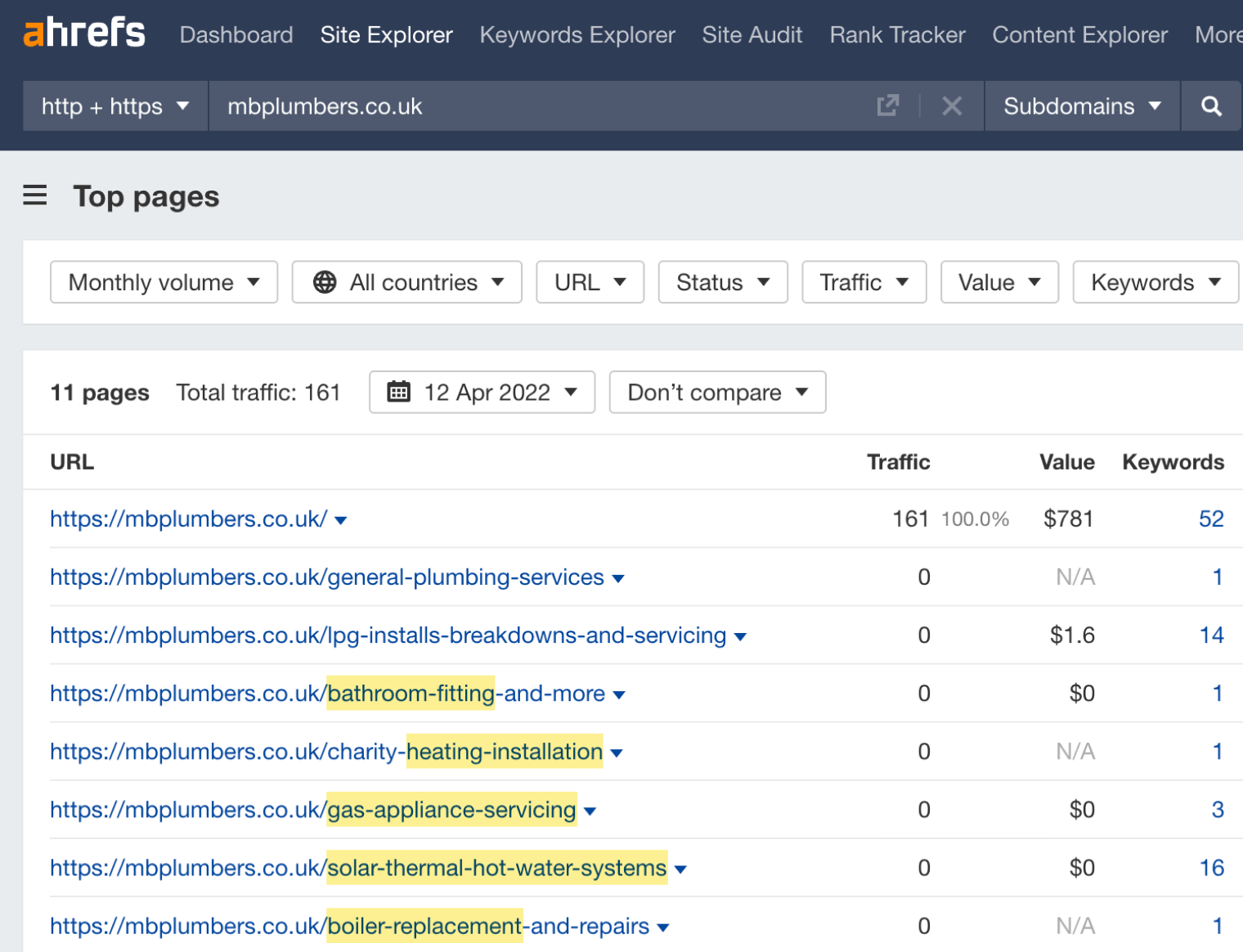
Site Explorer can help you investigate the organic search performance and backlink profiles of competing businesses. Enter a competitor’s website to see which pages attract search traffic and which topics appear to be important to their strategy.

Use this research to spot opportunities, not to copy another business. You might discover that competitors have useful guides, detailed service pages or local case studies that your own website is missing. You can also review their referring websites to identify relevant local publications, trade organisations or community sites that may be worth contacting.

Remember that a competitor’s website data is an estimate, not a complete record of its performance. Treat it as a source of ideas and compare it with what you see in the search results and in your own analytics.

Check your website with Site Audit

A technically sound website makes it easier for search engines and visitors to access your content. Ahrefs’ Site Audit can crawl your site and flag issues that may need attention, such as broken links, redirect problems, missing page titles or slow-loading pages.

For local businesses, check that:

  • your key service and location pages can be crawled and indexed;
  • each important page has a clear, descriptive title and heading;
  • your contact details are easy to find and consistent;
  • the website works well on mobile devices;
  • internal links connect relevant services, locations and supporting information.

Site Audit findings should be prioritised by their likely impact. Fixing every warning is not necessarily the best use of time; focus first on problems affecting important pages or preventing visitors from completing an action.

Build relevant local links

Links from reputable websites can help search engines understand your business and may introduce you to potential customers. Ahrefs’ Site Explorer and Content Explorer can help you find websites, articles and organisations connected to your industry or area.

Consider opportunities such as local business associations, professional bodies, community groups, event organisers, suppliers and local news sites. A useful contribution, partnership or piece of expert information is generally a stronger reason for a link than a mass outreach email asking for one.

Focus on relevance and quality. A link from a trusted local organisation can be more meaningful than many links from unrelated websites. Avoid buying links or joining schemes designed solely to manipulate rankings.

Track progress over time

Ahrefs’ Rank Tracker can help you monitor selected keywords and review how rankings change. Where available, set the target location to match the market you serve. Search results can vary by location, device and personalisation, so a single ranking should not be treated as the whole picture.

Track a balanced set of terms, including your main services, location-specific phrases and useful informational searches. Review trends over time and compare them with more important business measures, such as enquiries, calls, bookings and sales.

What Ahrefs doesn’t replace

Local SEO depends on more than website rankings. Ahrefs does not replace the work of maintaining your Google Business Profile, responding to reviews or checking your business details across relevant directories. Make sure your name, address and phone number are accurate wherever they appear, and keep your opening hours and service information up to date.

Reviews also matter to potential customers. Encourage genuine feedback from customers in line with Google’s policies, and respond professionally to both positive and negative reviews. Never offer incentives in exchange for reviews or post fake feedback.

A simple local SEO workflow using Ahrefs

  1. Define your service area: list the towns, boroughs or neighbourhoods you genuinely serve.
  2. Research search terms: use Keywords Explorer to find relevant local and service-based queries.
  3. Review your website: run a Site Audit and improve important pages, usability and internal links.
  4. Study competitors: use Site Explorer to identify content gaps and relevant link opportunities.
  5. Strengthen local signals: maintain your Google Business Profile, business details and customer reviews.
  6. Measure results: monitor rankings alongside website visits, calls, enquiries and conversions.

Conclusion

Ahrefs can make local SEO more focused by helping you research keywords, assess competitors, identify website issues and explore link opportunities. The strongest results come when those insights are combined with useful local pages, accurate business listings and a positive customer experience.

Use Ahrefs as part of a broader local SEO process, rather than expecting any single tool to deliver rankings on its own. Start with the searches your customers use, make your website genuinely helpful and measure success by the enquiries and customers your visibility brings in.


Top 6 FAQs About Using Ahrefs for Local SEO

  1. Can I use Ahref for free?
  2. Is Ahrefs a SEO tool?
  3. How is local SEO different from SEO?
  4. Is local SEO paid?
  5. How can I do local SEO?
  6. How do I use Ahrefs for local SEO?

Can I use Ahref for free?

Yes, you can use some Ahrefs tools for free. Ahrefs offers a selection of free SEO tools, and Ahrefs Webmaster Tools provides limited access to site audits and backlink data for websites you own and verify. These can help with local SEO basics, but features such as more extensive keyword research and rank tracking may require a paid plan.

Is Ahrefs a SEO tool?

Yes, Ahrefs is an SEO toolset that helps businesses research keywords, analyse competitors’ websites and backlinks, audit technical issues and track search rankings. It can support local SEO by uncovering location-specific search terms and opportunities, but it does not replace managing your Google Business Profile, reviews or local business listings.

How is local SEO different from SEO?

SEO aims to improve a website’s visibility in search results more broadly, while local SEO focuses on reaching people searching for businesses, products or services in a specific area. It places greater emphasis on location-based searches, Google Business Profile, local listings, customer reviews and locally relevant pages. Tools such as Ahrefs can help with keyword research, competitor analysis and website checks for both, but local SEO also depends on accurate business details and strong local signals.

Is local SEO paid?

Local SEO isn’t paid advertising: it focuses on improving your visibility in organic search results and Google Maps. Creating a Google Business Profile is free, although you may choose to pay for SEO tools such as Ahrefs or hire a specialist to help with research, content and optimisation. You can also run paid search ads, but these are separate from local SEO and stop appearing when your advertising budget runs out.

How can I do local SEO?

To do local SEO, make sure your website clearly explains what your business offers and where you serve, with useful service and location pages rather than repetitive pages for every area. Keep your Google Business Profile accurate and up to date, maintain consistent business details across relevant directories, and encourage genuine customer reviews. Use Ahrefs to research local search terms, check your website for technical issues, review competitors and find relevant local link opportunities. Track rankings alongside calls, enquiries and sales so you can see whether your work is attracting the right customers.

How do I use Ahrefs for local SEO?

Use Ahrefs to research location-specific keywords in Keywords Explorer, analyse local competitors’ pages and backlinks in Site Explorer, and run Site Audit to find technical issues on your website. You can also use Rank Tracker to monitor important local search terms and discover relevant local websites that may offer link opportunities. Pair these insights with an up-to-date Google Business Profile, accurate business details and useful pages for the areas you serve.


track seo ranking

Mastering the Art of Tracking SEO Ranking for Optimal Website Performance

The Importance of Tracking SEO Ranking for Your Website

The Importance of Tracking SEO Ranking for Your Website

Search Engine Optimization (SEO) is crucial for improving your website’s visibility and attracting organic traffic. However, implementing SEO strategies is only half the battle. To ensure the effectiveness of your efforts, it is essential to track your SEO ranking regularly.

Why Track SEO Ranking?

Tracking your website’s SEO ranking provides valuable insights into the performance of your SEO strategies. By monitoring where your website stands in search engine results pages (SERPs) for relevant keywords, you can:

  • Measure the impact of your SEO efforts over time
  • Identify areas for improvement and optimization
  • Monitor competitor rankings and adjust your strategy accordingly
  • Understand user behaviour and preferences based on search trends

How to Track SEO Ranking

There are several tools available that can help you track and monitor your website’s SEO ranking effectively. Popular tools include Google Analytics, SEMrush, Ahrefs, Moz Pro, and Rank Tracker. These tools provide valuable data on keyword rankings, organic traffic, backlinks, and more.

To track your SEO ranking effectively, follow these steps:

  1. Select relevant keywords for tracking based on search volume and relevance to your business.
  2. Monitor keyword rankings regularly to identify fluctuations and trends.
  3. Analyse organic traffic data to understand how changes in ranking impact website visits.
  4. Compare your ranking performance with competitors to gain a competitive edge.

The Benefits of Tracking SEO Ranking

By consistently tracking your website’s SEO ranking, you can make informed decisions about your digital marketing strategy. Monitoring changes in ranking allows you to adapt quickly to algorithm updates, user behaviour shifts, and market trends.

Ultimately, tracking SEO ranking empowers you to refine your SEO strategies for better results. Whether it’s improving content quality, enhancing user experience, or building high-quality backlinks – staying on top of your SEO performance is key to achieving long-term success online.

© 2021 SEOLondon Digital – All Rights Reserved


Essential FAQs on Tracking SEO Ranking: Tools, Importance, and Best Practices

  1. What is SEO ranking?
  2. Why is tracking SEO ranking important?
  3. How can I track my website’s SEO ranking?
  4. Which tools can help me monitor my SEO ranking?
  5. What are the key metrics to consider when tracking SEO ranking?
  6. How often should I check my website’s SEO ranking?
  7. Can tracking SEO ranking help improve website performance?
  8. Are there any free tools available for monitoring SEO ranking?

What is SEO ranking?

SEO ranking refers to the position of a website in search engine results pages (SERPs) for specific keywords or phrases. It is a crucial metric that determines how visible a website is to users searching for relevant information or products online. The higher a website ranks in search results, the more likely it is to attract organic traffic and potential customers. SEO ranking is influenced by various factors, including the quality of content, relevance of keywords, backlink profile, user experience, and technical aspects of a website. Monitoring and tracking SEO ranking is essential for assessing the effectiveness of SEO strategies and making informed decisions to improve visibility and online presence.

Why is tracking SEO ranking important?

Tracking SEO ranking is crucial for businesses seeking to enhance their online visibility and attract organic traffic. By monitoring where your website stands in search engine results pages (SERPs) for relevant keywords, you gain valuable insights into the effectiveness of your SEO strategies. This data allows you to measure the impact of your efforts, identify areas for improvement, stay ahead of competitors, and adapt your digital marketing tactics based on user behaviour trends. Ultimately, tracking SEO ranking empowers you to make informed decisions that drive continuous improvement and long-term success in the competitive online landscape.

How can I track my website’s SEO ranking?

To track your website’s SEO ranking effectively, you can utilise various tools and techniques. One common method is to use online SEO tools like Google Analytics, SEMrush, Ahrefs, Moz Pro, or Rank Tracker. These tools provide valuable insights into your website’s performance in search engine results pages (SERPs) for specific keywords. By selecting relevant keywords and monitoring their rankings regularly, you can assess the impact of your SEO efforts and make informed decisions to improve your website’s visibility. Additionally, analysing organic traffic data and comparing your ranking performance with competitors can help you refine your SEO strategy for optimal results.

Which tools can help me monitor my SEO ranking?

To effectively monitor your SEO ranking, there are several tools available that can provide valuable insights into your website’s performance. Popular tools such as Google Analytics, SEMrush, Ahrefs, Moz Pro, and Rank Tracker offer comprehensive features for tracking keyword rankings, organic traffic, backlinks, and more. These tools enable you to select relevant keywords, track fluctuations in ranking over time, analyse competitor performance, and make data-driven decisions to enhance your SEO strategy. By utilising these tools, you can stay informed about your website’s search engine visibility and make informed adjustments to improve your online presence effectively.

What are the key metrics to consider when tracking SEO ranking?

When tracking SEO ranking, it is essential to consider several key metrics to evaluate the effectiveness of your SEO strategies. Some of the crucial metrics to monitor include keyword rankings for targeted search terms, organic traffic to your website, click-through rates (CTRs) from search engine results pages (SERPs), backlink profile quality and quantity, bounce rates, and conversion rates. By analysing these metrics regularly, you can gain valuable insights into the performance of your SEO efforts, identify areas for improvement, and make data-driven decisions to enhance your website’s visibility and online presence.

How often should I check my website’s SEO ranking?

Monitoring your website’s SEO ranking is crucial for assessing the effectiveness of your digital marketing efforts. As a general guideline, it is recommended to check your website’s SEO ranking at least once a week to stay informed about any fluctuations or trends. Regular monitoring allows you to track the impact of your SEO strategies over time, identify areas for improvement, and make informed decisions to enhance your website’s visibility in search engine results pages. By checking your SEO ranking consistently, you can stay proactive in adjusting your tactics based on performance data and ensure that your website remains competitive in the ever-evolving digital landscape.

Can tracking SEO ranking help improve website performance?

Tracking SEO ranking plays a pivotal role in enhancing website performance. By monitoring the position of your website in search engine results pages (SERPs) for relevant keywords, you gain valuable insights into the effectiveness of your SEO strategies. Understanding how changes in ranking impact organic traffic, user engagement, and overall visibility allows you to make informed decisions to optimise your website for better performance. By identifying areas for improvement, tracking SEO ranking enables you to refine your digital marketing efforts, enhance user experience, and ultimately boost your website’s online presence and success.

Are there any free tools available for monitoring SEO ranking?

For those looking to monitor their SEO ranking without incurring costs, there are several free tools available that can provide valuable insights. Platforms like Google Search Console and Google Analytics offer essential data on keyword performance, website traffic, and user behaviour. Additionally, tools such as SERPWatcher and SEOQuake offer free versions with limited features but can still be utilised for basic SEO ranking monitoring. While these free tools may not provide the same depth of analysis as paid options, they serve as a good starting point for tracking SEO performance and making informed decisions to enhance your website’s visibility.

ahrefs seo

Unlocking the Potential of Ahrefs SEO Tools for Enhanced Online Visibility

The Power of Ahrefs SEO Tools

The Power of Ahrefs SEO Tools

In the world of digital marketing, search engine optimisation (SEO) plays a crucial role in driving organic traffic to websites. Ahrefs is a powerful suite of SEO tools that has become a staple for marketers and businesses looking to improve their online visibility and rankings.

What is Ahrefs?

Ahrefs is an all-in-one SEO toolset that offers a comprehensive range of features to help with various aspects of SEO strategy. From keyword research and backlink analysis to site audits and competitor analysis, Ahrefs provides valuable insights and data to make informed decisions for optimising your website.

Key Features of Ahrefs

  • Keyword Explorer: Discover relevant keywords with search volume data, keyword difficulty scores, and click metrics to target the right terms for your content.
  • Site Audit: Identify technical issues on your website that may affect its performance in search engines and receive recommendations for improvement.
  • Backlink Analysis: Analyse your backlink profile and track new and lost backlinks to understand your link building efforts and monitor competitor backlinks.
  • Rank Tracker: Monitor your keyword rankings over time and track your progress in search engine results pages (SERPs).
  • Content Explorer: Find popular topics in your niche, analyse top-performing content, and discover link-building opportunities.

Benefits of Using Ahrefs

Ahrefs offers several benefits for businesses looking to improve their SEO performance:

  • Data-driven Insights: Access accurate data on keywords, backlinks, and competitor strategies to inform your SEO decisions.
  • Competitor Analysis: Identify what strategies are working for your competitors and leverage this information to enhance your own SEO efforts.
  • Actionable Recommendations: Receive actionable recommendations for improving website performance based on site audits and keyword research.
  • Ongoing Monitoring: Continuously track your website’s performance, keyword rankings, and backlink profile to stay ahead in the competitive digital landscape.

In Conclusion

Ahrefs is a valuable tool for any business or marketer looking to boost their SEO efforts. With its comprehensive features, accurate data insights, and actionable recommendations, Ahrefs empowers users to take their online presence to the next level. By leveraging the power of Ahrefs SEO tools, you can enhance your website’s visibility, attract more organic traffic, and ultimately achieve greater success in the digital realm.


Mastering SEO: 8 Essential Tips for Using Ahrefs Effectively

  1. Utilize Ahrefs’ Site Explorer tool to analyse backlinks and organic search traffic of any website.
  2. Monitor your website’s keyword rankings and track competitors’ performance using Ahrefs’ Rank Tracker feature.
  3. Identify content gaps on your website by using Ahrefs’ Content Gap tool to see which keywords your competitors are ranking for but you are not.
  4. Perform in-depth keyword research with Ahrefs’ Keywords Explorer to discover valuable keywords for your SEO strategy.
  5. Regularly audit your website’s backlink profile using Ahrefs’ Site Audit feature to identify and fix any issues that may affect your SEO performance.
  6. Track the impact of your link building efforts by monitoring new and lost backlinks with Ahrefs’ Backlink Checker tool.
  7. Stay updated on the latest trends in your industry by setting up alerts for mentions of specific keywords or brand names using Ahrefs’ Alerts feature.
  8. Utilize Ahrefs’ SEO Toolbar browser extension for quick access to important SEO metrics while browsing the web.

By utilising Ahrefs’ Site Explorer tool, you can delve deep into the backlink profile and organic search traffic data of any website. This powerful feature allows you to gain valuable insights into the link-building strategies of competitors, identify high-quality backlink opportunities, and understand the sources driving organic traffic to a particular site. With Ahrefs’ Site Explorer tool, you can make informed decisions to enhance your own website’s SEO performance and visibility in search engine results.

Monitor your website’s keyword rankings and track competitors’ performance using Ahrefs’ Rank Tracker feature.

To enhance your SEO strategy, it is essential to monitor your website’s keyword rankings and keep an eye on your competitors’ performance. With Ahrefs’ Rank Tracker feature, you can easily track the progress of your targeted keywords over time and gain valuable insights into how your competitors are ranking for similar terms. By utilising this tool effectively, you can make informed decisions to optimise your content and stay ahead in the competitive search engine landscape.

Identify content gaps on your website by using Ahrefs’ Content Gap tool to see which keywords your competitors are ranking for but you are not.

By utilising Ahrefs’ Content Gap tool, you can uncover valuable insights into your website’s content strategy. This tool enables you to identify content gaps by comparing the keywords that your competitors are ranking for, but you are not. By understanding these missed opportunities, you can tailor your content creation efforts to target relevant keywords and topics that have the potential to drive more organic traffic to your website. This strategic approach can help enhance your SEO performance and bridge the gap between your current content offerings and what your competitors are successfully ranking for.

Perform in-depth keyword research with Ahrefs’ Keywords Explorer to discover valuable keywords for your SEO strategy.

Performing in-depth keyword research is essential for a successful SEO strategy, and Ahrefs’ Keywords Explorer tool is a valuable asset in this process. By utilising Keywords Explorer, you can uncover valuable keywords that have the potential to drive organic traffic to your website. This tool provides crucial insights such as search volume data, keyword difficulty scores, and click metrics, allowing you to target the most relevant and high-performing keywords for your content. With Ahrefs’ Keywords Explorer, you can refine your SEO strategy by focusing on the right keywords that align with your goals and help improve your website’s visibility in search engine results.

Regularly auditing your website’s backlink profile using Ahrefs’ Site Audit feature is a crucial step in maintaining optimal SEO performance. By leveraging this tool, you can proactively identify and address any issues within your backlink profile that could potentially harm your website’s search engine rankings. Addressing these issues promptly not only helps in maintaining a healthy link profile but also ensures that your SEO efforts are maximised for better visibility and organic traffic growth.

To maximise the effectiveness of your SEO strategy, it is essential to track the impact of your link building endeavours. With Ahrefs’ Backlink Checker tool, you can easily monitor both new and lost backlinks to your website. By keeping a close eye on these metrics, you can gain valuable insights into the performance of your link building campaigns, identify areas for improvement, and stay informed about your website’s backlink profile evolution. This proactive approach allows you to make data-driven decisions and adapt your SEO tactics to enhance your online visibility and authority in search engine rankings.

To stay ahead in the ever-evolving digital landscape, it is essential to stay informed about the latest trends and developments in your industry. Ahrefs’ Alerts feature allows you to set up notifications for mentions of specific keywords or brand names, enabling you to monitor conversations, track competitor activities, and stay updated on relevant industry news. By leveraging this powerful tool, you can gain valuable insights, identify opportunities for engagement, and adapt your SEO strategy to align with current trends, ultimately enhancing your online presence and driving success in the competitive digital space.

Utilize Ahrefs’ SEO Toolbar browser extension for quick access to important SEO metrics while browsing the web.

By utilising Ahrefs’ SEO Toolbar browser extension, you can conveniently access crucial SEO metrics while browsing the web. This handy tool provides quick insights into key data points, allowing you to make informed decisions on the spot and streamline your SEO strategy effortlessly. With just a click, you can gather valuable information that helps optimise your online presence and stay ahead in the competitive digital landscape.

seo powersuite

Unlock Your SEO Potential with SEO PowerSuite: The Ultimate Toolkit for Digital Success

The Ultimate SEO Toolkit: SEO PowerSuite

The Ultimate SEO Toolkit: SEO PowerSuite

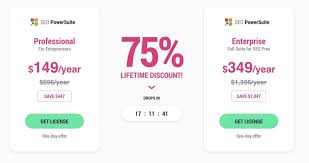
SEO PowerSuite is a comprehensive set of tools designed to empower digital marketers and website owners in maximising their search engine optimisation efforts. This all-in-one SEO software offers a range of features that cater to every aspect of SEO, from keyword research to on-page optimisation and link building.

Key Features of SEO PowerSuite:

  • Rank Tracker: Monitor your website’s search engine rankings across multiple keywords and search engines. Track your progress over time and identify opportunities for improvement.
  • Website Auditor: Conduct in-depth website audits to identify technical issues, on-page optimisation opportunities, and overall site health. Receive actionable recommendations for improving your site’s SEO performance.
  • SEO SpyGlass: Analyse your backlink profile and that of your competitors. Identify high-quality link building opportunities and monitor the effectiveness of your link building campaigns.
  • LinkAssistant: Manage your link building efforts efficiently by finding relevant link prospects, conducting outreach, and tracking your backlink acquisitions. Build a strong and diverse backlink profile to enhance your website’s authority.

Benefits of Using SEO PowerSuite:

By utilising SEO PowerSuite, users can streamline their SEO workflow, save time on manual tasks, and gain valuable insights into their website’s performance. The software’s user-friendly interface makes it accessible to both beginners and experienced professionals in the field of search engine optimisation.

Whether you are looking to improve your website’s visibility in search results, increase organic traffic, or boost conversions, SEO PowerSuite provides the tools you need to achieve your goals effectively.

In Conclusion

SEO PowerSuite stands out as a powerful solution for anyone seeking to enhance their SEO efforts comprehensively. With its array of features, intuitive interface, and reliable performance, this toolkit has become a go-to resource for those looking to succeed in the competitive world of online marketing.


8 Essential SEO PowerSuite Tips for Boosting Your Website’s Performance

  1. Perform keyword research to identify relevant and high-volume keywords for your website.
  2. Optimize on-page elements such as titles, meta descriptions, and headings with target keywords.
  3. Regularly monitor your website’s performance using SEO PowerSuite’s tools like Rank Tracker and Website Auditor.
  4. Analyse your competitors’ strategies and keywords to stay competitive in the search results.
  5. Utilize SEO SpyGlass to identify backlink opportunities and enhance your website’s authority.
  6. Generate detailed reports using SEO PowerSuite to track progress and make data-driven decisions for improvements.
  7. Ensure your website is mobile-friendly and loads quickly for better user experience and search engine rankings.
  8. Stay updated with the latest SEO trends and algorithm changes to adapt your strategy accordingly.

Perform keyword research to identify relevant and high-volume keywords for your website.

Performing thorough keyword research is a crucial step in optimising your website’s SEO strategy using SEO PowerSuite. By identifying relevant and high-volume keywords specific to your niche, you can effectively target your audience and improve your website’s visibility in search engine results. This process allows you to understand the search intent of your potential visitors and tailor your content to meet their needs, ultimately driving organic traffic and enhancing your online presence.

Optimize on-page elements such as titles, meta descriptions, and headings with target keywords.

To maximise the effectiveness of SEO PowerSuite, it is crucial to focus on optimising on-page elements like titles, meta descriptions, and headings with relevant target keywords. By strategically incorporating these keywords into your website’s content, you can enhance its visibility and relevance to search engines. This practice not only helps improve your site’s ranking in search results but also ensures that users can easily find and navigate your web pages based on their search queries.

Regularly monitor your website’s performance using SEO PowerSuite’s tools like Rank Tracker and Website Auditor.

Regularly monitoring your website’s performance is essential for maintaining and improving your search engine rankings. With SEO PowerSuite’s tools like Rank Tracker and Website Auditor, you can track your keyword positions, analyse website health, and identify areas for enhancement. By leveraging these features consistently, you can stay informed about your SEO progress, address any issues promptly, and make data-driven decisions to optimise your website for better visibility and success in the digital landscape.

Analyse your competitors’ strategies and keywords to stay competitive in the search results.

To stay competitive in search results, utilise SEO PowerSuite’s feature to analyse your competitors’ strategies and keywords. By gaining insights into what tactics and keywords are driving their success, you can adapt your own SEO approach to better position yourself in the digital landscape. Understanding your competitors’ strengths and weaknesses allows you to make informed decisions and implement strategies that help you stand out in search engine rankings.

By leveraging SEO SpyGlass within SEO PowerSuite, you can uncover valuable backlink opportunities that have the potential to significantly boost your website’s authority. This powerful tool allows you to analyse your backlink profile as well as that of your competitors, enabling you to pinpoint high-quality link prospects and monitor the effectiveness of your link building campaigns. By strategically utilising SEO SpyGlass, you can strengthen your backlink profile, improve your site’s credibility in the eyes of search engines, and ultimately enhance your online visibility and rankings.

Generate detailed reports using SEO PowerSuite to track progress and make data-driven decisions for improvements.

Utilise the robust reporting capabilities of SEO PowerSuite to generate comprehensive reports that offer valuable insights into your SEO performance. By tracking key metrics and analysing data trends, you can make informed decisions to enhance your website’s search engine optimisation strategy. These detailed reports not only provide visibility into your progress but also serve as a roadmap for implementing targeted improvements that align with your business goals. With SEO PowerSuite, you can empower your decision-making process with accurate data and drive tangible results for your online presence.

Ensure your website is mobile-friendly and loads quickly for better user experience and search engine rankings.

Ensuring that your website is mobile-friendly and loads quickly is crucial for enhancing both user experience and search engine rankings. With SEO PowerSuite, you can easily monitor and optimise your website’s performance across various devices to cater to mobile users effectively. By prioritising mobile responsiveness and fast loading times, you not only provide a seamless browsing experience for visitors but also signal to search engines that your site is user-friendly and deserves higher visibility in search results. Incorporating these elements into your SEO strategy using SEO PowerSuite can lead to improved rankings, increased organic traffic, and ultimately, better online success.

To maximise the effectiveness of SEO PowerSuite, it is crucial to stay informed about the latest SEO trends and algorithm changes. By keeping abreast of industry developments, you can adapt your SEO strategy proactively and ensure that your efforts align with current best practices. Whether it involves adjusting keyword strategies, refining on-page optimisation techniques, or enhancing link building approaches, staying updated allows you to stay ahead of the curve and maintain a competitive edge in the ever-evolving landscape of search engine optimisation.