Real Estate Local SEO: A Practical Guide to Winning More Local Property Enquiries
Real Estate Local SEO: How to Attract More Property Enquiries in Your Area
For estate agents, letting agencies, property managers and other real estate businesses, visibility in local search can make a real difference. When someone searches for an estate agent, property valuation or rental service nearby, they are often looking for help in a specific location and may be ready to take action.
Real estate local SEO is the process of improving your online presence so your business is easier to find in relevant local searches. A well-planned approach can help you reach prospective clients in the areas you serve, build trust and generate more useful enquiries.
Why local SEO matters for real estate businesses
Property decisions are closely tied to location. Buyers and renters search by town, borough, postcode and neighbourhood, while sellers and landlords often want an agent with knowledge of their local market. Searches such as “estate agent in Islington” or “property management near me” show clear local intent.
Appearing prominently for relevant searches can bring your agency in front of people at the moment they are comparing local services. Local SEO also helps you communicate what you offer, where you operate and why clients should choose your business.
Optimise your Google Business Profile
Your Google Business Profile is an important part of local visibility. Keep it accurate, complete and consistent with the information on your website. Check that your business name, address, phone number, website and opening hours are correct.
Choose the most appropriate primary category and add relevant secondary categories where available. Describe your services clearly, such as residential sales, lettings, property valuations or commercial property services. Add high-quality photographs of your office, team and properties, and update the profile when your services or hours change.
If your business serves customers at their properties rather than at a public office, make sure your profile follows Google’s rules for service-area businesses. Avoid creating listings for locations where you do not have an eligible, staffed business presence.
Create useful pages for the areas you serve
A strong website should make your service areas easy to understand. Create dedicated location pages for places where you genuinely operate, such as towns, boroughs or neighbourhoods. Each page should offer helpful local information rather than simply repeating a place name.
A useful location page might include:
- The services available in that area
- Local property expertise and market context
- Relevant examples of properties or work, where appropriate
- Clear contact details and a simple enquiry option
- Links to related services and nearby areas
Avoid publishing many near-identical pages with only the location name changed. Thin or duplicated content provides little value to prospective clients and may weaken the quality of your site.
Target the searches your clients actually use
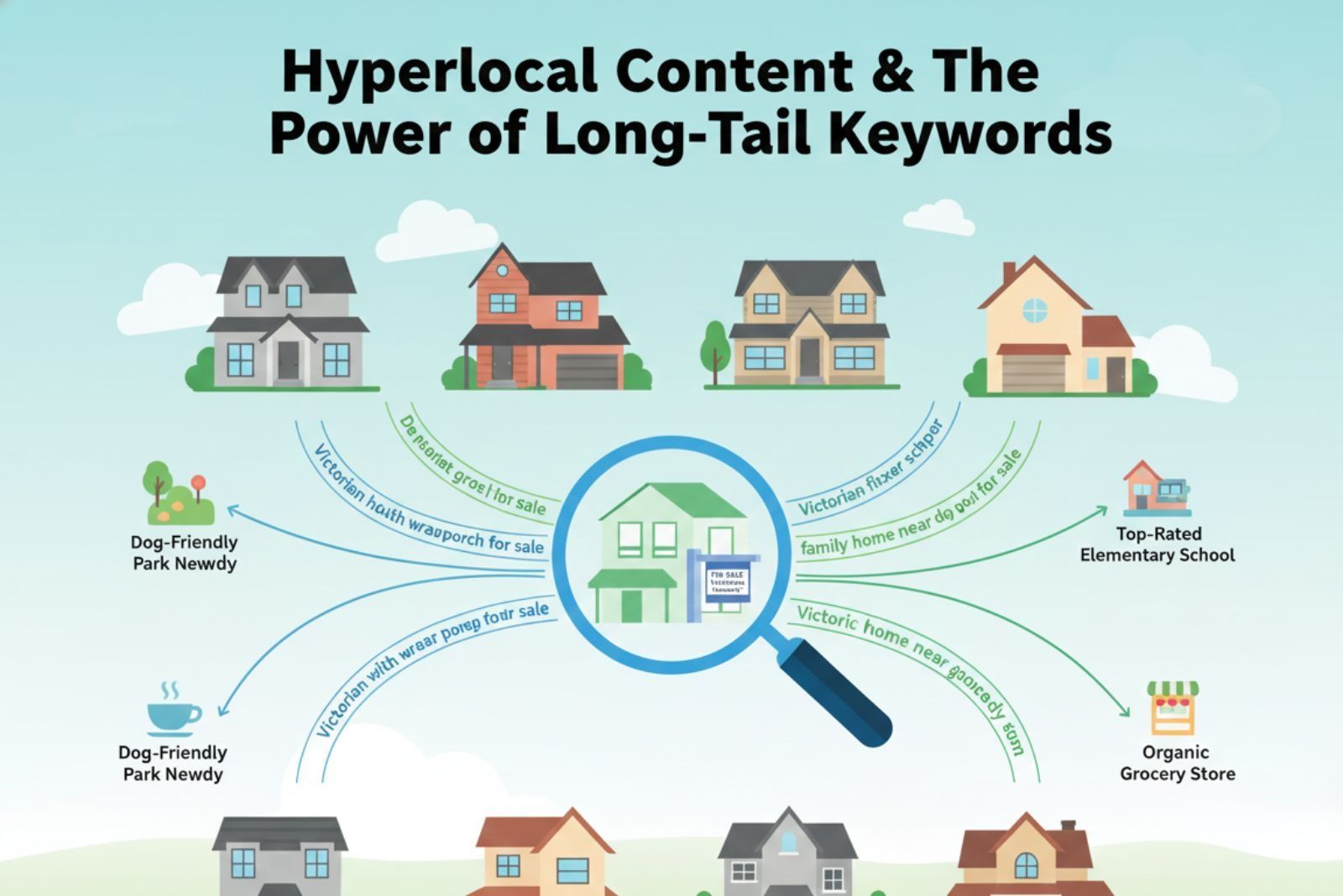
Keyword research can reveal how buyers, sellers, landlords and tenants search for local services. Consider combining your service with relevant locations, for example “letting agent in Richmond”, “house valuation in Hackney” or “commercial property agent in Manchester”.
Use these phrases naturally in page titles, headings and copy. Search behaviour varies, so focus on clear, useful language rather than repeating keywords unnaturally. It can also be valuable to create content that answers common questions, such as how a property valuation works, what landlords should prepare before letting a home, or how to choose an estate agent.
Build trust with reviews and local reputation
Reviews can help prospective clients assess your service and may support your local presence. Invite genuine clients to share honest feedback, and respond courteously to both positive and negative reviews. Never offer incentives in exchange for reviews or publish feedback that is not genuine.
Your reputation extends beyond Google. Consistent details across reputable local directories, professional associations and relevant property platforms can help people verify your business. Keep your name, address and phone number consistent wherever they appear, and correct outdated listings when you find them.
Make your website work well on mobile
Many people look for property services on a mobile phone, so your website should be fast, easy to navigate and simple to use on a smaller screen. Make contact details prominent, ensure forms are straightforward and make it easy to browse relevant properties or services.
Technical essentials matter too. Use secure HTTPS, fix broken links, provide descriptive page titles and headings, and ensure search engines can access important pages. Structured data, such as appropriate local business markup, can help search engines interpret information about your business. It should reflect visible, accurate details and does not guarantee enhanced search results.
Publish genuinely local content
Useful local content can demonstrate that your business understands the areas it serves. Consider writing about neighbourhood features, local property trends, moving advice or practical information for landlords and sellers. Keep claims current and use reliable sources when discussing market data.
Content should be created for people first. A thoughtful guide to selling a home in a particular area is more valuable than a page written solely to include a list of search terms.
Measure enquiries, not just rankings
Local SEO is an ongoing process, so track whether it is contributing to business goals. Useful measures include calls, contact form submissions, valuation requests, directions requests and qualified enquiries. Search visibility and website visits can provide context, but they are not the only measures of success.
Use analytics and search performance tools to understand which pages and searches are bringing visitors to your site. Review the results regularly and improve pages that attract attention but do not lead to useful actions.
A practical local SEO checklist for estate agents
- Keep your Google Business Profile complete and accurate.
- Use clear, location-relevant service pages on your website.
- Make your contact details consistent across trusted platforms.
- Encourage honest reviews and respond professionally.
- Ensure your website is fast, secure and mobile-friendly.
- Publish helpful content based on local knowledge.
- Track calls and qualified enquiries as well as website traffic.
Make local SEO part of your growth plan
Real estate local SEO is not a one-off task. Profiles, reviews, local information and search behaviour all change over time. By keeping your business details accurate, creating useful area-specific content and making it easy for people to contact you, you can build a stronger local presence and give prospective clients a clearer reason to get in touch.
5 Local SEO Tips for Estate Agents to Boost Visibility
- Optimise your Google Business Profile with accurate details and opening hours.
- Create pages for each area you serve, with useful local property information.
- Ask happy clients to leave honest Google reviews.
- Use consistent business details across local directories.
- Add local keywords to property listings, page titles and image descriptions.
Optimise your Google Business Profile with accurate details and opening hours.
Keep your Google Business Profile accurate and up to date so local clients can quickly find and contact your estate agency. Check that your business name, address, phone number, website and services are correct, and make sure your opening hours reflect when you’re available. Update the profile promptly if anything changes, including bank holidays or temporary closures. Clear, reliable information helps set expectations and makes it easier for buyers, sellers, landlords and tenants to choose your business.
Create pages for each area you serve, with useful local property information.
Create a dedicated page for each area your real estate business genuinely serves, and make every page useful to local buyers, sellers, landlords or tenants. Include relevant details such as the property types you handle, local market insights, neighbourhood features and the services available, alongside clear contact information. Avoid simply duplicating the same copy and swapping the place name: original, helpful information gives visitors a better reason to choose your agency and helps search engines understand your local expertise.
Ask happy clients to leave honest Google reviews.
Ask happy clients to leave an honest Google review after you have helped them buy, sell, rent or manage a property. Reviews give prospective clients a better sense of what it is like to work with your agency and can strengthen your visibility in local search. Make the request politely and without offering incentives, and respond to feedback professionally. Genuine, detailed reviews are more useful than generic praise, so invite clients to share what they appreciated about your service in their own words.
Use consistent business details across local directories.
Keep your business name, address and phone number consistent across local directories, property portals and your website. Even small differences—such as an old phone number or an abbreviated address—can confuse potential clients and make it harder for search engines to confirm your business details. Review your listings regularly, update any changes promptly and remove or correct duplicates wherever possible.
Add local keywords to property listings, page titles and image descriptions.
Include relevant local keywords in your property listings, page titles and image descriptions to help search engines understand where a property is located and which searches it may suit. Use natural, accurate phrases such as the neighbourhood, town or postcode alongside details of the property—for example, “two-bedroom flat for sale in Clapham”. Add descriptive alt text to images that explains what they show, including the location where appropriate. Keep the wording useful and specific, and avoid repeating keywords unnaturally or adding locations that are not relevant.