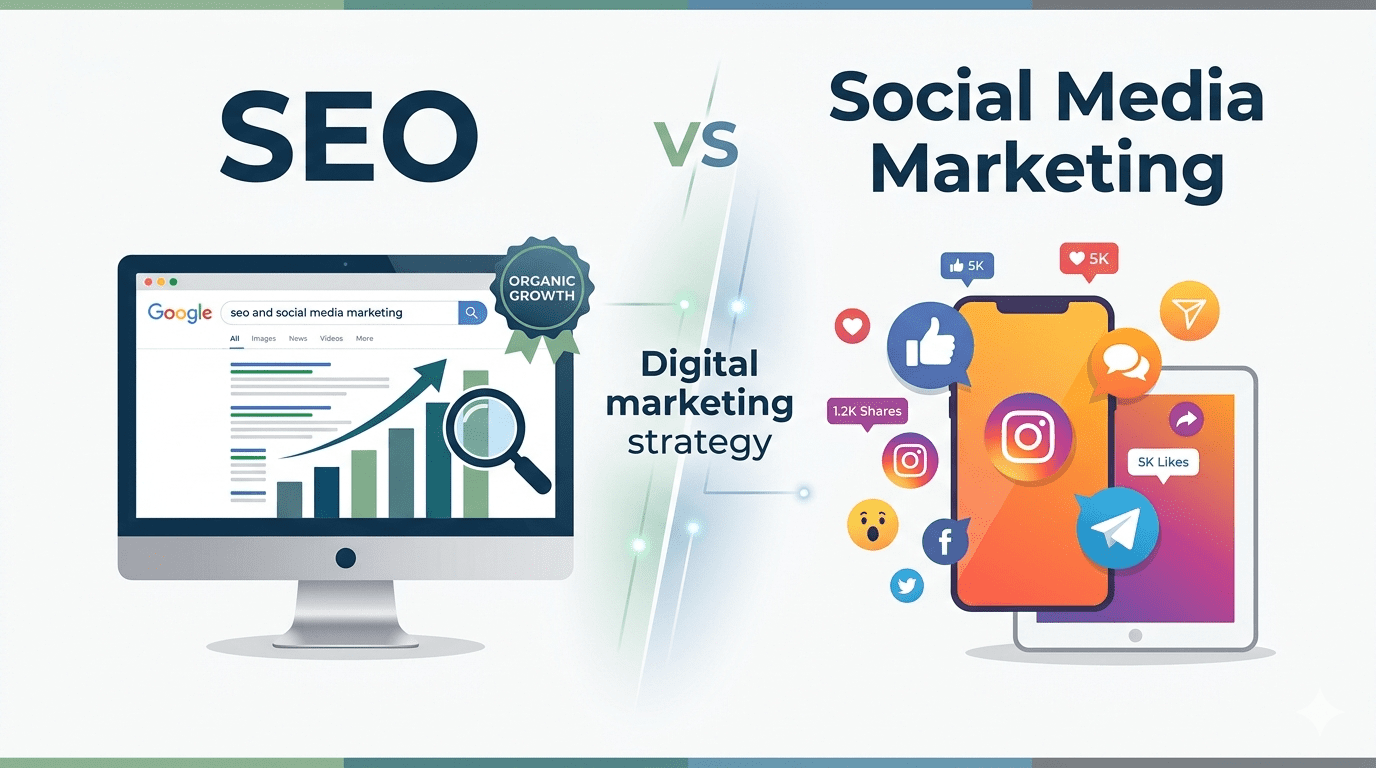
seo and social media marketing

SEO and Social Media Marketing: A Guide to Growing Your Online Presence

SEO and Social Media Marketing: How They Work Together

Search engine optimisation (SEO) and social media marketing are often treated as separate parts of a digital strategy. In practice, they can support one another. SEO helps people find your website through search engines, while social media helps you reach, engage and build relationships with audiences across social platforms.

Neither channel is a quick fix. But when they share clear goals and useful content, they can help your business become more visible online and create more opportunities to connect with potential customers.

What is SEO?

SEO is the process of improving a website so that it is easier for search engines and people to understand. It can involve researching the terms your audience uses, creating helpful pages, improving site structure and making sure the website works well on mobile devices.

SEO is about more than appearing in search results. A successful page should match the visitor’s needs, provide reliable information and make it easy to take the next step, whether that is making an enquiry, buying a product or reading more.

What is social media marketing?

Social media marketing uses platforms such as Instagram, LinkedIn, Facebook, TikTok and Pinterest to share content and communicate with an audience. Depending on your business and objectives, this might include publishing organic posts, responding to comments, working with creators or running paid campaigns.

Social media can help a brand stay connected with its community, showcase its expertise and direct people to useful resources on its website.

How SEO and social media can support each other

Social media can bring more people to your content

Sharing a useful article, guide or product page on social media can introduce it to people who may not have found it through search. If they visit the website, explore other pages or share the content with others, social activity may contribute to broader awareness and engagement.

Social media shares are not generally treated as a direct ranking factor by search engines. However, sharing content can help it reach more people, which may lead to natural links, mentions and further visits over time.

SEO can help you understand what your audience wants

Keyword research reveals the questions and topics people search for. These insights can inform social media content, helping you create posts that answer genuine questions rather than relying on guesswork.

Social media conversations can also reveal common concerns, customer language and emerging interests. These insights may inspire new website content or help you improve existing pages.

Consistent messaging strengthens your brand

When your website and social channels share a consistent tone, message and visual identity, people are more likely to recognise your brand. Clear, consistent communication can build familiarity and trust, whether someone discovers you through a search result, a social post or a recommendation.

Social profiles can appear in search results

Social media profiles and public posts may appear in search engine results, especially when someone searches for a brand by name. Complete profiles with accurate information, links and recent activity can make it easier for people to learn about your business and find your official channels.

Practical ways to combine SEO and social media

  • Start with your audience. Identify who you want to reach, what they need and which platforms they use.
  • Use search insights to plan content. Research relevant queries and turn them into useful articles, videos, short posts or FAQs.
  • Make content easy to share. Use clear headlines, helpful summaries and suitable images or video. Include social sharing options where they improve the user experience.
  • Adapt content for each platform. A detailed website guide might become a LinkedIn post, a short video, an Instagram carousel or a series of tips.
  • Keep profiles accurate. Use consistent business details, descriptions and links across your website and social channels.
  • Engage with your audience. Respond to relevant questions and comments, and use recurring feedback to improve your content.
  • Measure meaningful outcomes. Track organic search visibility, website visits, enquiries, sales and engagement against your business goals.

Measure each channel appropriately

SEO and social media have different performance indicators. For SEO, useful measures can include organic traffic, search visibility, rankings for relevant queries, conversions and the quality of visits. For social media, consider reach, engagement, referral traffic, audience growth and actions such as enquiries or purchases.

Use analytics tools to understand how the channels contribute to your objectives. Avoid judging success by follower numbers or rankings alone: the most valuable results are those that help your organisation meet its goals.

A joined-up strategy takes time

SEO is usually a long-term activity, while social media can provide quicker feedback on how people respond to ideas and content. Neither guarantees immediate results. Search performance depends on many factors, and social reach can vary by platform, audience and format.

By planning the channels together, businesses can create content that is useful to their audience, easier to discover and more consistent across the customer journey. The aim is not simply to post more or target more keywords. It is to provide the right information in the right places, and make it easy for people to take the next step.

Conclusion

SEO and social media marketing serve different purposes, but they can work well as part of a connected digital strategy. SEO helps people discover relevant website content through search, while social media helps that content reach and engage wider communities. With a clear understanding of your audience, consistent messaging and thoughtful measurement, both channels can contribute to stronger online visibility and lasting customer relationships.


Top 8 FAQs on Integrating SEO with Social Media Marketing

  1. How do SEO and social media marketing work together?
  2. Does social media activity directly affect SEO rankings?
  3. Can social media help increase organic website traffic?
  4. Which social media platforms are best for SEO?
  5. How can I use keyword research to plan social media content?
  6. What types of content work well for both SEO and social media?
  7. How should I measure the results of SEO and social media marketing?
  8. How long does it take to see results from SEO and social media marketing?

How do SEO and social media marketing work together?

SEO and social media marketing work together by helping your content reach people in different ways. SEO makes your website easier to find through search engines, while social media helps you share content, engage with your audience and bring visitors to your site. Social media activity is not generally a direct search ranking factor, but it can increase awareness and encourage visits, shares and natural links. Insights from search queries and social conversations can also help you create more relevant content for both channels.

Does social media activity directly affect SEO rankings?

Social media activity does not directly affect SEO rankings: likes, shares and follower numbers are not considered direct ranking factors by search engines. However, social media can support SEO indirectly by helping your content reach more people, attract website visits and earn natural links or brand mentions. It can also offer useful insights into the topics and questions your audience cares about, helping you create more relevant content.

Can social media help increase organic website traffic?

Yes, social media can help increase organic website traffic by promoting your content to a wider audience and encouraging people to visit your site. Sharing useful articles, products or resources can attract visitors who may not have found you through search, while audience feedback can help you create content that better answers their questions. Social media activity is not generally a direct Google ranking factor, so focus on sharing relevant, engaging content and making it easy for people to find and explore your website.

Which social media platforms are best for SEO?

No social media platform directly improves your search rankings, so the best choice depends on where your audience spends time and what you want to achieve. LinkedIn can suit B2B businesses and professional content, while Instagram, TikTok and Pinterest may work well for visual products and inspiration; Facebook can help businesses build communities and reach local audiences. Choose platforms you can maintain consistently, share useful content that links back to relevant pages on your website, and make sure your profiles include accurate business details. Social activity may increase awareness and visits, and can help your content reach people who may later link to or mention it.

How can I use keyword research to plan social media content?

Use keyword research to discover the questions, phrases and topics your audience is searching for, then turn those insights into useful social media posts. Group related keywords into themes and adapt them to each platform—for example, create a short video answering a common question, a carousel explaining a topic or a post linking to a more detailed guide on your website. Treat keywords as clues to audience interests rather than terms to squeeze into every caption, and use natural language that suits the platform. Review engagement and website visits to see which topics resonate and shape future content.

What types of content work well for both SEO and social media?

Content that answers your audience’s questions tends to work well for both SEO and social media. Practical guides, how-to articles, FAQs, original research, case studies, infographics and short videos can attract search visitors while also giving people something useful to share or discuss. Start with a clear topic based on audience needs and relevant search queries, then adapt the format for each platform—for example, turn a detailed guide into a short video or a series of social posts. Ensure the content is accurate, easy to understand and genuinely helpful, rather than created solely to include keywords or encourage clicks.

How should I measure the results of SEO and social media marketing?

Measure SEO and social media against clear business goals, such as increasing relevant website visits, enquiries or sales. For SEO, track organic traffic, visibility for relevant search terms, conversions and the quality of visits. For social media, monitor reach, engagement, referral traffic and actions such as enquiries or purchases. Use analytics tools to see how each channel contributes over time, and review results regularly. Follower counts and rankings can offer useful context, but they matter most when they support meaningful outcomes for your business.

How long does it take to see results from SEO and social media marketing?

The time it takes to see results from SEO and social media marketing varies according to your industry, competition, budget and the consistency of your activity. SEO is usually a longer-term investment: improvements in rankings and organic traffic may take several months, particularly for a new website or a competitive search term. Social media can generate engagement and reach sooner, but building a loyal audience and achieving steady enquiries or sales also takes time. Regular, useful content, a clear strategy and ongoing measurement can help both channels deliver more sustainable results.

social signals seo

Unlocking the Power of Social Signals in SEO Strategies

The Impact of Social Signals on SEO

The Impact of Social Signals on SEO

Social signals play a crucial role in the world of Search Engine Optimization (SEO). In today’s digital landscape, social media platforms have become integral to how content is shared, discovered, and indexed by search engines. Understanding the relationship between social signals and SEO can significantly impact the visibility and ranking of a website.

What are Social Signals?

Social signals refer to metrics related to a website’s presence on social media platforms. These include likes, shares, comments, retweets, and overall engagement levels on platforms such as Facebook, Twitter, Instagram, LinkedIn, and others. Search engines consider these signals as indicators of a website’s credibility, relevance, and authority.

How Social Signals Influence SEO

Search engines like Google take into account social signals when determining the ranking of a website in search results. Websites with strong social signals are perceived as more trustworthy and valuable by search engines. When content receives high engagement on social media, it is likely to be deemed as high-quality content that users find valuable.

Furthermore, social signals can lead to increased visibility and traffic to a website. When content is shared widely across social media platforms, it can attract more visitors and backlinks from other websites. This influx of traffic and backlinks can positively impact the website’s SEO performance.

Best Practices for Leveraging Social Signals for SEO

  • Create shareable content: Produce high-quality content that resonates with your target audience and encourages them to share it on social media.
  • Engage with your audience: Interact with followers, respond to comments and messages, and foster a sense of community around your brand.
  • Optimise social profiles: Ensure that your social media profiles are complete, up-to-date, and aligned with your brand identity.
  • Monitor performance: Track the performance of your social signals using analytics tools to understand what resonates with your audience.
  • Encourage sharing: Include social sharing buttons on your website to make it easy for visitors to share your content on their preferred platforms.

In Conclusion

Social signals have become an essential component of SEO strategy in the digital age. By leveraging social media platforms effectively and generating strong engagement levels through likes, shares, and comments, websites can improve their visibility in search engine results pages. Understanding the impact of social signals on SEO is key to enhancing online presence and driving organic traffic to websites.


Understanding Social Signals: 21 FAQs on Their Impact and Best Practices for SEO

  1. What are the 7 Simple social media for SEO best practices?
  2. How does social affect SEO?
  3. What are social signals in communication?
  4. What is an example of a social signal?
  5. Does Google use social signals to rank?
  6. Do social signals help SEO?
  7. What is the use of social signals?
  8. Do social signals impact SEO?
  9. What do you mean by social signals?
  10. Does social affect SEO?
  11. Is social signal a ranking factor?
  12. What are social signals used to determine?
  13. How to create a social signal?
  14. What are social signals in marketing?
  15. How do you use social signals for SEO?
  16. Does Social traffic Help SEO?
  17. Is social signals a ranking factor?
  18. Are social signals important for SEO?
  19. Do social signals help your SEO?
  20. What are 4 social signals?
  21. What are social signals in SEO?

What are the 7 Simple social media for SEO best practices?

When it comes to leveraging social media for SEO, there are 7 simple best practices that can significantly impact your online visibility and search engine rankings. These practices include creating shareable content that resonates with your audience, engaging with followers to build a sense of community, optimising your social profiles for consistency and relevance, monitoring performance through analytics tools, encouraging sharing through social buttons on your website, collaborating with influencers or partners for wider reach, and staying updated on social media trends to adapt strategies accordingly. By following these simple yet effective practices, businesses can enhance their SEO efforts and harness the power of social signals to improve their online presence.

How does social affect SEO?

Social signals have a significant impact on SEO by influencing how search engines perceive a website’s credibility and relevance. When content receives high engagement on social media platforms such as likes, shares, and comments, it indicates to search engines that the content is valuable and worth ranking higher in search results. Social signals can also lead to increased visibility, traffic, and backlinks to a website, all of which are crucial factors in improving SEO performance. By actively engaging with audiences on social media and creating shareable content, businesses can enhance their online presence and positively influence their SEO rankings.

What are social signals in communication?

Social signals in communication refer to non-verbal cues and behaviours that individuals use to convey messages and information in social interactions. These signals can include facial expressions, body language, tone of voice, gestures, and eye contact. In the context of SEO, social signals also encompass metrics such as likes, shares, comments, and engagement on social media platforms. Understanding and interpreting social signals in communication is essential for effective interpersonal relationships and can also play a significant role in digital marketing strategies to enhance online visibility and engagement.

What is an example of a social signal?

A common example of a social signal is the number of likes and shares a post receives on social media platforms such as Facebook, Twitter, or Instagram. When a piece of content garners a high volume of likes and shares, it indicates that users find the content engaging and valuable. This level of engagement serves as a positive signal to search engines, suggesting that the content is relevant and authoritative. Social signals like likes and shares can contribute to improving a website’s SEO performance by enhancing its credibility and visibility online.

Does Google use social signals to rank?

The question of whether Google uses social signals to rank websites is a common query in the realm of SEO. While Google has stated that social signals such as likes, shares, and comments are not direct ranking factors in its algorithm, there is evidence to suggest that social signals can indirectly impact a website’s SEO performance. Although Google may not use social signals as a direct ranking signal, the engagement and visibility generated through social media can contribute to increased traffic, backlinks, and overall credibility – factors that can positively influence a website’s search engine rankings. Therefore, while social signals may not be a direct ranking factor, their impact on SEO should not be underestimated.

Do social signals help SEO?

The question of whether social signals contribute to SEO is a common query in the realm of digital marketing. The consensus among experts is that social signals do indeed play a significant role in enhancing SEO performance. When content garners high engagement on social media platforms, it indicates to search engines that the content is valuable and relevant to users. This, in turn, can lead to improved visibility, increased website traffic, and potentially higher rankings in search engine results pages. Therefore, leveraging social signals effectively as part of an integrated SEO strategy can positively impact a website’s overall search engine optimisation efforts.

What is the use of social signals?

The use of social signals in SEO is to enhance a website’s visibility and credibility by leveraging social media engagement metrics such as likes, shares, comments, and overall interaction. Social signals serve as indicators of a website’s relevance and authority to search engines, influencing its ranking in search results. By generating strong social signals through compelling content that resonates with users, websites can attract more traffic, backlinks, and ultimately improve their SEO performance. Embracing social signals as part of an SEO strategy can help businesses connect with their target audience, increase brand awareness, and drive organic growth online.

Do social signals impact SEO?

The question of whether social signals impact SEO is a common query in the realm of digital marketing. Social signals, such as likes, shares, and comments on social media platforms, do indeed play a significant role in influencing SEO. Search engines like Google consider these signals as indicators of a website’s credibility and relevance. Websites that receive high levels of engagement on social media are often rewarded with improved visibility and ranking in search engine results. Therefore, understanding and harnessing the power of social signals can have a tangible impact on an organisation’s SEO performance and overall online presence.

What do you mean by social signals?

Social signals refer to the metrics and interactions generated on social media platforms that indicate the level of engagement, visibility, and influence of a website or content. These signals include likes, shares, comments, retweets, and other forms of social engagement that demonstrate how users perceive and interact with a particular piece of content. Search engines like Google consider social signals as indicators of a website’s credibility and authority, with higher levels of social engagement often leading to improved search engine rankings. Understanding and leveraging social signals is crucial in enhancing the online visibility and reputation of a website in the digital landscape.

Does social affect SEO?

The relationship between social signals and SEO is a common topic of interest among digital marketers and website owners. The frequently asked question, “Does social affect SEO?” addresses the impact of social media engagement on search engine optimisation. Social signals, such as likes, shares, and comments on platforms like Facebook and Twitter, can influence a website’s SEO performance. Search engines consider these signals as indicators of content quality and relevance, potentially leading to improved visibility and rankings in search results. Understanding how social activity can affect SEO outcomes is essential for developing a comprehensive digital marketing strategy that leverages the power of both social media and search engine optimisation.

Is social signal a ranking factor?

The question of whether social signals are a ranking factor in SEO is a common query among digital marketers and website owners. While the direct impact of social signals on search engine rankings is debated within the SEO community, there is evidence to suggest that strong engagement on social media platforms can indirectly influence a website’s visibility and authority. Search engines like Google may consider social signals as indicators of user interest and content quality, which can potentially contribute to improved rankings. Therefore, while social signals may not be a direct ranking factor, their role in enhancing online presence and attracting organic traffic should not be overlooked in a comprehensive SEO strategy.

What are social signals used to determine?

Social signals are used to determine the credibility, relevance, and authority of a website in the realm of Search Engine Optimization (SEO). These signals, which include likes, shares, comments, and overall engagement on social media platforms, provide search engines with valuable insights into how users perceive and interact with content. Websites that receive strong social signals are often seen as trustworthy sources of information by search engines, leading to improved visibility and higher rankings in search results. Understanding the role of social signals in SEO is crucial for businesses looking to enhance their online presence and attract organic traffic to their websites.

How to create a social signal?

Creating a social signal involves engaging with your target audience on social media platforms in a way that encourages interaction and sharing of your content. To generate social signals, start by producing high-quality and relevant content that resonates with your followers. Encourage likes, shares, comments, and other forms of engagement by posting regularly and fostering a sense of community around your brand. Interact with your audience by responding to comments, asking questions, and actively participating in conversations. By building a strong presence on social media and providing value to your followers, you can organically create social signals that boost your website’s visibility and credibility in the eyes of search engines.

What are social signals in marketing?

Social signals in marketing refer to the metrics and interactions generated on social media platforms that indicate how users engage with a brand’s content. These signals include likes, shares, comments, retweets, and overall social media activity that reflect the level of interest and relevance of a brand’s online presence. In essence, social signals serve as indicators of a brand’s credibility, authority, and popularity within the digital landscape. Marketers leverage social signals to gauge the effectiveness of their social media strategies, enhance brand visibility, and build relationships with their target audience through meaningful engagement on various social platforms.

How do you use social signals for SEO?

Utilising social signals for SEO involves strategically leveraging engagement metrics from social media platforms to enhance a website’s search engine optimisation performance. By creating shareable content that resonates with the target audience, encouraging interactions such as likes, shares, and comments, and fostering a strong social presence, businesses can signal to search engines that their content is valuable and relevant. Engaging with followers, optimising social profiles, monitoring performance analytics, and facilitating easy sharing of content all contribute to harnessing the power of social signals for SEO success. By integrating social signals effectively into an SEO strategy, businesses can boost visibility, attract organic traffic, and improve their overall online presence.

Does Social traffic Help SEO?

The question of whether social traffic helps SEO is a common query among website owners and digital marketers. While social traffic itself does not directly impact traditional SEO factors like backlinks or keyword optimization, it can indirectly benefit SEO efforts in several ways. Social traffic can increase brand visibility, drive engagement, and attract potential backlinks from other websites. When content receives high levels of social engagement, it signals to search engines that the content is valuable and relevant, potentially leading to improved search rankings. Therefore, while social traffic may not be a direct ranking factor, its influence on user engagement and content visibility can contribute to overall SEO performance.

Is social signals a ranking factor?

In the realm of Search Engine Optimization (SEO), the question of whether social signals serve as a direct ranking factor has been a topic of debate. While search engines like Google have not explicitly confirmed that social signals directly impact website rankings, there is evidence to suggest that strong social engagement can indirectly influence SEO performance. Social signals, such as likes, shares, and comments on social media platforms, can enhance a website’s credibility and visibility, potentially leading to increased organic traffic and backlinks. Therefore, while social signals may not be a direct ranking factor, their impact on user engagement and brand authority can contribute to overall SEO success.

Are social signals important for SEO?

The question of whether social signals are important for SEO is a common one in the digital marketing realm. Social signals, such as likes, shares, and comments on social media platforms, play a significant role in influencing a website’s search engine ranking. Search engines like Google consider strong social signals as indicators of credibility and relevance, thus boosting a website’s visibility in search results. Websites that actively engage with their audience on social media and generate high levels of interaction tend to experience improved SEO performance. Therefore, understanding the importance of social signals for SEO is crucial for businesses looking to enhance their online presence and drive organic traffic to their websites.

Do social signals help your SEO?

The question of whether social signals help your SEO is a common one in the realm of digital marketing. Social signals, such as likes, shares, and comments on social media platforms, can indeed have a positive impact on your SEO efforts. Search engines like Google consider these signals as indicators of a website’s credibility and relevance, which can influence its ranking in search results. When content receives high engagement on social media, it can attract more traffic and backlinks, ultimately boosting the website’s visibility and authority in the eyes of search engines. Therefore, incorporating social signals into your SEO strategy can be beneficial for improving your online presence and driving organic traffic to your website.

What are 4 social signals?

In the realm of SEO, social signals are crucial indicators of a website’s online presence and credibility. When it comes to identifying social signals, four key metrics stand out: likes, shares, comments, and engagement levels. These signals play a significant role in influencing search engine rankings by showcasing the popularity and relevance of content on various social media platforms. Likes indicate approval and interest, shares expand reach and visibility, comments encourage interaction and feedback, while overall engagement levels reflect the overall impact of content within the online community. Understanding and optimising these four social signals can greatly enhance a website’s SEO performance and organic traffic growth.

What are social signals in SEO?

Social signals in SEO refer to the metrics and interactions generated on social media platforms that indicate the popularity, relevance, and authority of a website. These signals include likes, shares, comments, retweets, and overall engagement levels on platforms such as Facebook, Twitter, Instagram, and LinkedIn. Search engines like Google consider social signals as a measure of a website’s credibility and value to users. Websites with strong social signals are more likely to rank higher in search engine results pages due to the perceived quality and relevance of their content. Understanding and leveraging social signals in SEO can significantly impact a website’s visibility and organic traffic.