seo and social media marketing

SEO and Social Media Marketing: A Guide to Growing Your Online Presence

SEO and Social Media Marketing: How They Work Together

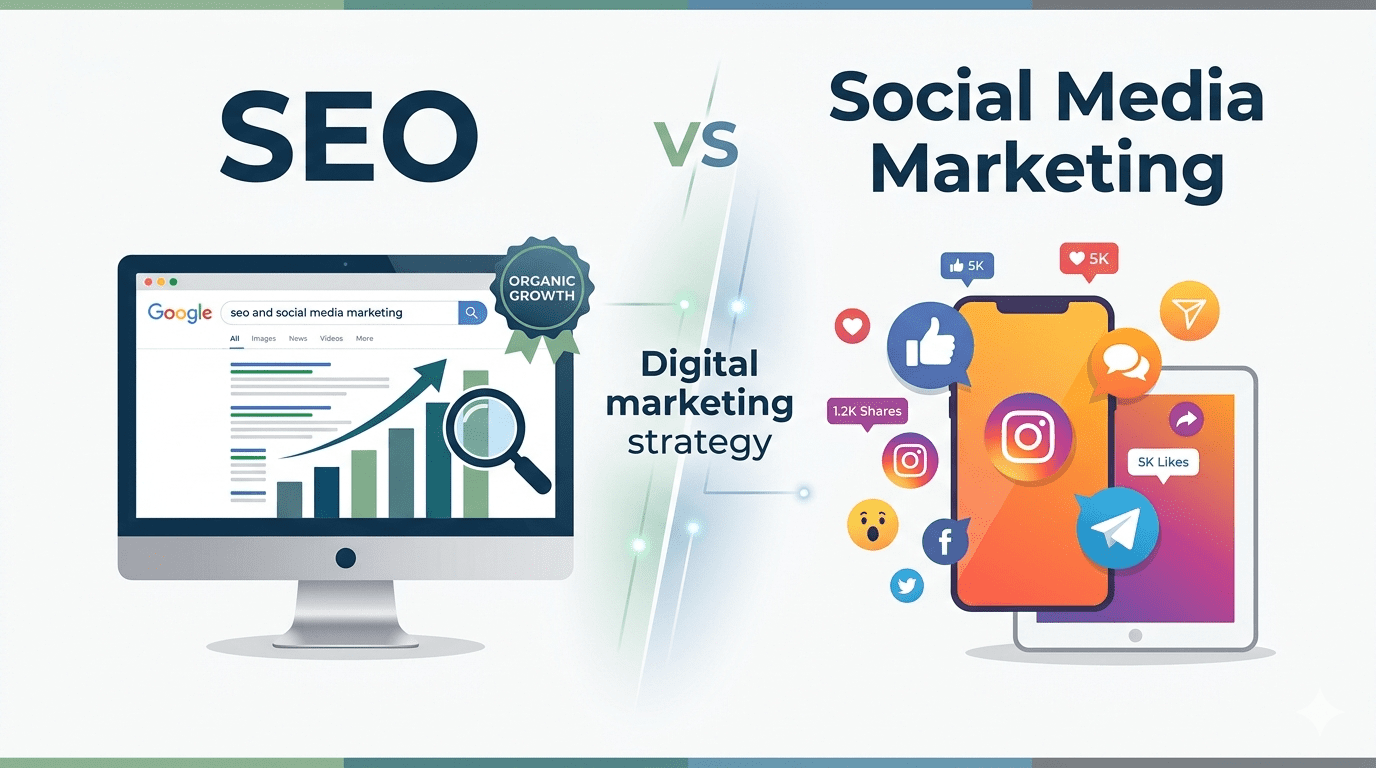
Search engine optimisation (SEO) and social media marketing are often treated as separate parts of a digital strategy. In practice, they can support one another. SEO helps people find your website through search engines, while social media helps you reach, engage and build relationships with audiences across social platforms.

Neither channel is a quick fix. But when they share clear goals and useful content, they can help your business become more visible online and create more opportunities to connect with potential customers.

What is SEO?

SEO is the process of improving a website so that it is easier for search engines and people to understand. It can involve researching the terms your audience uses, creating helpful pages, improving site structure and making sure the website works well on mobile devices.

SEO is about more than appearing in search results. A successful page should match the visitor’s needs, provide reliable information and make it easy to take the next step, whether that is making an enquiry, buying a product or reading more.

What is social media marketing?

Social media marketing uses platforms such as Instagram, LinkedIn, Facebook, TikTok and Pinterest to share content and communicate with an audience. Depending on your business and objectives, this might include publishing organic posts, responding to comments, working with creators or running paid campaigns.

Social media can help a brand stay connected with its community, showcase its expertise and direct people to useful resources on its website.

How SEO and social media can support each other

Social media can bring more people to your content

Sharing a useful article, guide or product page on social media can introduce it to people who may not have found it through search. If they visit the website, explore other pages or share the content with others, social activity may contribute to broader awareness and engagement.

Social media shares are not generally treated as a direct ranking factor by search engines. However, sharing content can help it reach more people, which may lead to natural links, mentions and further visits over time.

SEO can help you understand what your audience wants

Keyword research reveals the questions and topics people search for. These insights can inform social media content, helping you create posts that answer genuine questions rather than relying on guesswork.

Social media conversations can also reveal common concerns, customer language and emerging interests. These insights may inspire new website content or help you improve existing pages.

Consistent messaging strengthens your brand

When your website and social channels share a consistent tone, message and visual identity, people are more likely to recognise your brand. Clear, consistent communication can build familiarity and trust, whether someone discovers you through a search result, a social post or a recommendation.

Social profiles can appear in search results

Social media profiles and public posts may appear in search engine results, especially when someone searches for a brand by name. Complete profiles with accurate information, links and recent activity can make it easier for people to learn about your business and find your official channels.

Practical ways to combine SEO and social media

  • Start with your audience. Identify who you want to reach, what they need and which platforms they use.
  • Use search insights to plan content. Research relevant queries and turn them into useful articles, videos, short posts or FAQs.
  • Make content easy to share. Use clear headlines, helpful summaries and suitable images or video. Include social sharing options where they improve the user experience.
  • Adapt content for each platform. A detailed website guide might become a LinkedIn post, a short video, an Instagram carousel or a series of tips.
  • Keep profiles accurate. Use consistent business details, descriptions and links across your website and social channels.
  • Engage with your audience. Respond to relevant questions and comments, and use recurring feedback to improve your content.
  • Measure meaningful outcomes. Track organic search visibility, website visits, enquiries, sales and engagement against your business goals.

Measure each channel appropriately

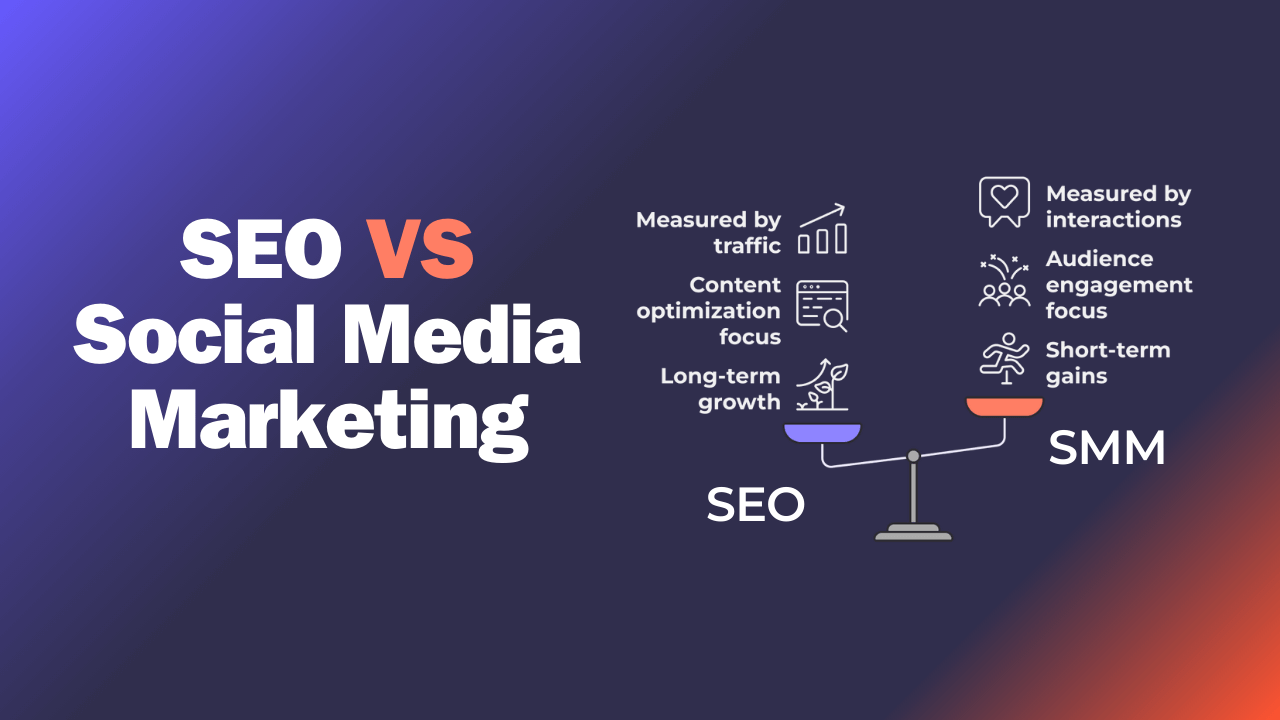
SEO and social media have different performance indicators. For SEO, useful measures can include organic traffic, search visibility, rankings for relevant queries, conversions and the quality of visits. For social media, consider reach, engagement, referral traffic, audience growth and actions such as enquiries or purchases.

Use analytics tools to understand how the channels contribute to your objectives. Avoid judging success by follower numbers or rankings alone: the most valuable results are those that help your organisation meet its goals.

A joined-up strategy takes time

SEO is usually a long-term activity, while social media can provide quicker feedback on how people respond to ideas and content. Neither guarantees immediate results. Search performance depends on many factors, and social reach can vary by platform, audience and format.

By planning the channels together, businesses can create content that is useful to their audience, easier to discover and more consistent across the customer journey. The aim is not simply to post more or target more keywords. It is to provide the right information in the right places, and make it easy for people to take the next step.

Conclusion

SEO and social media marketing serve different purposes, but they can work well as part of a connected digital strategy. SEO helps people discover relevant website content through search, while social media helps that content reach and engage wider communities. With a clear understanding of your audience, consistent messaging and thoughtful measurement, both channels can contribute to stronger online visibility and lasting customer relationships.


Top 8 FAQs on Integrating SEO with Social Media Marketing

  1. How do SEO and social media marketing work together?
  2. Does social media activity directly affect SEO rankings?
  3. Can social media help increase organic website traffic?
  4. Which social media platforms are best for SEO?
  5. How can I use keyword research to plan social media content?
  6. What types of content work well for both SEO and social media?
  7. How should I measure the results of SEO and social media marketing?
  8. How long does it take to see results from SEO and social media marketing?

How do SEO and social media marketing work together?

SEO and social media marketing work together by helping your content reach people in different ways. SEO makes your website easier to find through search engines, while social media helps you share content, engage with your audience and bring visitors to your site. Social media activity is not generally a direct search ranking factor, but it can increase awareness and encourage visits, shares and natural links. Insights from search queries and social conversations can also help you create more relevant content for both channels.

Does social media activity directly affect SEO rankings?

Social media activity does not directly affect SEO rankings: likes, shares and follower numbers are not considered direct ranking factors by search engines. However, social media can support SEO indirectly by helping your content reach more people, attract website visits and earn natural links or brand mentions. It can also offer useful insights into the topics and questions your audience cares about, helping you create more relevant content.

Can social media help increase organic website traffic?

Yes, social media can help increase organic website traffic by promoting your content to a wider audience and encouraging people to visit your site. Sharing useful articles, products or resources can attract visitors who may not have found you through search, while audience feedback can help you create content that better answers their questions. Social media activity is not generally a direct Google ranking factor, so focus on sharing relevant, engaging content and making it easy for people to find and explore your website.

Which social media platforms are best for SEO?

No social media platform directly improves your search rankings, so the best choice depends on where your audience spends time and what you want to achieve. LinkedIn can suit B2B businesses and professional content, while Instagram, TikTok and Pinterest may work well for visual products and inspiration; Facebook can help businesses build communities and reach local audiences. Choose platforms you can maintain consistently, share useful content that links back to relevant pages on your website, and make sure your profiles include accurate business details. Social activity may increase awareness and visits, and can help your content reach people who may later link to or mention it.

How can I use keyword research to plan social media content?

Use keyword research to discover the questions, phrases and topics your audience is searching for, then turn those insights into useful social media posts. Group related keywords into themes and adapt them to each platform—for example, create a short video answering a common question, a carousel explaining a topic or a post linking to a more detailed guide on your website. Treat keywords as clues to audience interests rather than terms to squeeze into every caption, and use natural language that suits the platform. Review engagement and website visits to see which topics resonate and shape future content.

What types of content work well for both SEO and social media?

Content that answers your audience’s questions tends to work well for both SEO and social media. Practical guides, how-to articles, FAQs, original research, case studies, infographics and short videos can attract search visitors while also giving people something useful to share or discuss. Start with a clear topic based on audience needs and relevant search queries, then adapt the format for each platform—for example, turn a detailed guide into a short video or a series of social posts. Ensure the content is accurate, easy to understand and genuinely helpful, rather than created solely to include keywords or encourage clicks.

How should I measure the results of SEO and social media marketing?

Measure SEO and social media against clear business goals, such as increasing relevant website visits, enquiries or sales. For SEO, track organic traffic, visibility for relevant search terms, conversions and the quality of visits. For social media, monitor reach, engagement, referral traffic and actions such as enquiries or purchases. Use analytics tools to see how each channel contributes over time, and review results regularly. Follower counts and rankings can offer useful context, but they matter most when they support meaningful outcomes for your business.

How long does it take to see results from SEO and social media marketing?

The time it takes to see results from SEO and social media marketing varies according to your industry, competition, budget and the consistency of your activity. SEO is usually a longer-term investment: improvements in rankings and organic traffic may take several months, particularly for a new website or a competitive search term. Social media can generate engagement and reach sooner, but building a loyal audience and achieving steady enquiries or sales also takes time. Regular, useful content, a clear strategy and ongoing measurement can help both channels deliver more sustainable results.
seo and social media

SEO and Social Media: How to Make Them Work Together

SEO and Social Media: How They Work Together

Search engine optimisation (SEO) and social media are often treated as separate parts of digital marketing. In practice, they can support one another. SEO helps people find your website through search engines, while social media gives you ways to share useful content, connect with your audience and build awareness of your brand.

Social media activity is not generally a direct ranking factor in traditional search results. However, it can contribute to SEO indirectly by helping your content reach more people, attract attention and earn links or mentions. A joined-up approach can therefore strengthen your overall online presence.

What SEO and social media each do

SEO focuses on improving a website’s visibility in unpaid search results. It includes work such as researching search terms, creating helpful content, improving site structure and ensuring pages can be crawled and understood by search engines.

Social media marketing uses platforms such as Instagram, LinkedIn, TikTok, Facebook and YouTube to publish content and engage with an audience. Each platform has its own discovery features, so social posts can help people find a business even when they are not actively searching for it on Google or another search engine.

How social media can support SEO

It can extend the reach of your content

Publishing a useful article is only part of content marketing. Sharing it through relevant social channels can put it in front of more potential readers. Those readers may visit your website, share the article, refer to it in their own content or link to it from another website.

Social shares do not automatically improve search rankings. Their value is that they can increase exposure and create opportunities for the kinds of attention and references that may support a site’s authority over time.

It can help you understand your audience

Comments, questions, direct messages and engagement patterns can reveal what your audience wants to know. Use these insights to identify topics, concerns and language that could inform your SEO content plan.

For example, if customers repeatedly ask how a service works or how much it costs, those questions may inspire a detailed website guide or a useful FAQ page. Search data can then help you understand how people phrase similar questions in search engines.

It can build brand awareness

Consistent, helpful activity on social media can make your brand more familiar to potential customers. Someone who sees your posts may later search for your business by name, visit your website directly or choose your result over an unfamiliar alternative.

Brand awareness is difficult to measure with one metric, but it can be assessed through indicators such as branded search activity, website visits, enquiries and engagement with your content.

It can highlight content that deserves further investment

Social engagement can offer early feedback on topics and formats that resonate with your audience. A post that attracts thoughtful questions or is widely shared may point to a subject worth developing into a comprehensive guide, video or landing page.

Social performance is not a substitute for keyword research or search analytics, but it can add another useful source of insight.

How to align your SEO and social media strategies

  1. Start with shared goals. Decide what you want to achieve, such as increasing relevant website visits, generating enquiries or improving awareness of a particular service.
  2. Plan content around audience needs. Use keyword research, customer questions and social conversations to choose topics that are genuinely useful.
  3. Create content for each channel. Share the main idea in a format that suits the platform. A detailed website article might become a short video, a LinkedIn post or a series of social updates.
  4. Make it easy to visit your website. Add clear links where appropriate and make sure the destination page matches what the post promises.
  5. Use consistent branding and information. Keep your business name, descriptions and contact details accurate across your website and social profiles.
  6. Measure results across channels. Track social engagement alongside website visits, search visibility, leads and sales. Use analytics tools and campaign tracking parameters to understand which activity is contributing to results.

Common mistakes to avoid

  • Chasing likes instead of business outcomes. High engagement can be encouraging, but it does not necessarily mean more qualified visitors or customers.
  • Posting links without context. Explain why a piece of content is useful and who it is for, rather than simply dropping a link into a feed.
  • Duplicating the same post everywhere. Adapt the wording, format and call to action to suit each platform and its audience.
  • Expecting immediate ranking gains. SEO takes time, and social activity should not be treated as a shortcut to higher search positions.
  • Ignoring accessibility. Use descriptive link text, captions for video and alternative text for meaningful images where the platform allows it.

Measuring what matters

The right measures depend on your objectives. For SEO, you might monitor organic impressions, clicks, rankings for relevant searches and conversions from organic traffic. For social media, useful measures may include reach, engagement, referral visits and enquiries.

Look for connections between the channels rather than relying on a single figure. For example, a social campaign may bring new visitors to a guide, while search data later shows that the guide is gaining visibility for relevant queries. Regular reporting can help you understand what is working and where to refine your approach.

Conclusion

SEO and social media have different roles, but they can be more effective when planned together. Social media can help your content reach people, reveal audience interests and build familiarity with your brand. SEO can make your most useful website content easier to discover through search. By focusing on helpful content, a consistent brand experience and meaningful measurement, businesses can make both channels work towards shared goals.


Understanding the Interplay Between SEO and Social Media: 24 Key Questions Answered

  1. Is SEO and social media the same?
  2. How social media affects SEO?
  3. Can we use SEO for social media?
  4. What is the relationship between social media and SEO?
  5. How do SEO and social media work together?
  6. Why is social media optimization important to SEO?
  7. Does social media Affect Your SEO?
  8. Do you need social media for SEO?
  9. Does social media posting help SEO?
  10. Do links from social media help SEO?
  11. What is the role of SEO in social media marketing?
  12. Is SEO being phased out?
  13. Does SEO affect social media?
  14. What is the 80 20 rule of SEO?
  15. What is SEO for social media?
  16. What is SEO on social media?
  17. How social media impacts your SEO?
  18. What is the difference between social media and SEO?
  19. Is SEO needed for social media?
  20. How does SEO affect social media?
  21. What does SEO mean social media?
  22. How do I incorporate social media into SEO strategy?
  23. Can social media affect SEO?
  24. How important is SEO for social media?

Is SEO and social media the same?

No, SEO and social media marketing are not the same, although they can support each other. SEO helps your website appear in unpaid search engine results, while social media marketing uses platforms such as Instagram, LinkedIn and Facebook to share content and engage with audiences. Social activity can increase the reach of your content and build brand awareness, which may indirectly support your SEO, but social media engagement does not automatically improve search rankings.

How social media affects SEO?

Social media does not usually affect search rankings directly, but it can support SEO in several indirect ways. Sharing useful content can increase its reach, bring visitors to your website and encourage others to mention or link to it. Social conversations can also reveal the questions and topics your audience cares about, helping you create more relevant website content. Together, these benefits can strengthen brand awareness and contribute to a stronger online presence over time.

Can we use SEO for social media?

Yes. SEO principles can help people discover your social media content, although each platform has its own search and recommendation systems. Use clear, relevant keywords in profile descriptions, video titles, captions and post text, and make sure your business name and details are consistent across your profiles. Creating useful, well-structured content and adding accurate captions or hashtags can also improve discoverability. Social media SEO is different from optimising a website, so tailor your approach to the platform and the way your audience searches there.

What is the relationship between social media and SEO?

Social media and SEO support each other, although social media activity is not generally a direct ranking factor in search results. Sharing useful content on social platforms can increase its reach, bring visitors to your website and help build brand awareness. This exposure may lead to links, mentions and branded searches, which can contribute to your wider SEO efforts. Social conversations can also reveal the questions and topics your audience cares about, helping you create more relevant website content.

How do SEO and social media work together?

SEO and social media work together by helping people discover and engage with your brand in different ways. SEO improves your visibility in search results, while social media helps you share useful content, reach new audiences and learn what they care about. Social shares are not usually a direct search ranking factor, but wider exposure can encourage visits, brand searches and natural links to your website—all of which can support your wider SEO efforts.

Why is social media optimization important to SEO?

Social media optimisation is important to SEO because it helps your content reach a wider audience and encourages people to engage with your brand. Social signals such as likes and shares are not generally direct Google ranking factors, but greater visibility can lead to more website visits, brand searches and natural links or mentions—all of which may support your wider SEO efforts. An active, consistent social presence can also help you understand what your audience cares about, so you can create more relevant content for your website.

Does social media Affect Your SEO?

Social media does not usually affect search rankings directly, as likes, shares and follower numbers are not standard ranking factors. However, it can support SEO indirectly by helping your content reach a wider audience, attract website visits and earn links or brand mentions. Social platforms can also offer useful insight into the topics and questions your audience cares about. For the best results, use social media to share helpful content and build awareness, alongside a strong SEO strategy for your website.

Do you need social media for SEO?

No, you don’t need social media for SEO, and social media activity is not generally a direct Google ranking factor. However, it can support your SEO efforts by helping more people discover and share your content, increasing brand awareness and potentially attracting links to your website. Treat social media as a complementary channel: focus on useful content, an accessible website and sound SEO practices, then use social platforms to reach and engage your audience.

Does social media posting help SEO?

Social media posting does not usually improve search rankings directly, but it can support SEO in other ways. Sharing useful content can increase its reach, bring visitors to your website and help more people discover your brand. This exposure may lead to mentions or links from other websites, which can benefit your wider SEO efforts. Social platforms can also reveal the questions and topics your audience cares about, helping you plan relevant website content.

Links shared on social media can help people discover your website and may lead to visits, shares or links from other sites, but they do not usually improve search rankings directly. Search engines generally treat most social media links as “nofollow” or otherwise exclude them from passing ranking value. Their SEO benefit is indirect: sharing useful content can increase its reach, build brand awareness and create more opportunities for people to reference it elsewhere.

What is the role of SEO in social media marketing?

SEO supports social media marketing by helping you understand what your audience is searching for and shaping content around those interests. While social media activity does not directly determine traditional search rankings, optimising social profiles and sharing useful, relevant content can improve discoverability, drive visitors to your website and build brand awareness. Together, SEO and social media can help your content reach the right people across different channels.

Is SEO being phased out?

No, SEO is not being phased out; it is changing as search engines evolve and people discover information through more channels, including social platforms and AI-powered tools. The fundamentals still matter: creating useful, reliable content, making your website accessible and technically sound, and helping the right audience find it. Businesses may need to adapt their approach, but SEO remains an important way to build visibility and attract relevant visitors over time.

Does SEO affect social media?

SEO can support your social media strategy, and social media can help your SEO efforts, but neither directly controls the other. Social posts can increase the reach of your website content, introduce your brand to new audiences and provide insights into the topics people care about. This may lead to more website visits, brand searches or links from other websites. However, likes and shares are not generally direct ranking factors in traditional search results, so focus on useful content and a consistent experience across both channels.

What is the 80 20 rule of SEO?

The 80/20 rule of SEO applies the Pareto principle: a relatively small share of your SEO activities may drive most of your results. For example, a few high-performing pages, valuable search terms or important technical improvements could account for much of your organic traffic and enquiries. Use performance data to identify these priorities, then focus your time and resources on improving them. It is a useful way to guide decisions, rather than a guaranteed ratio or fixed rule.

What is SEO for social media?

SEO for social media means optimising your profiles and content so people can find them through searches on social platforms and, where relevant, search engines. This can include using clear profile descriptions, relevant keywords, accurate business details, descriptive captions and accessible text for images and videos. Social media SEO is distinct from website SEO, but both benefit from useful, well-structured content that matches what your audience is looking for.

What is SEO on social media?

SEO on social media means optimising your profiles and posts so people can find them more easily through a platform’s search and discovery features. This can include using relevant keywords in your profile name, bio and captions, adding accurate descriptions and hashtags, and publishing useful content that encourages genuine engagement. Social media SEO is different from website SEO, but it can help your content reach a wider audience and support your overall online visibility.

How social media impacts your SEO?

Social media activity does not usually directly affect your rankings in traditional search results, but it can support SEO in valuable ways. Sharing useful content can increase its reach, attract visitors and encourage other websites to mention or link to it. Social platforms can also help you understand your audience’s interests and questions, giving you ideas for content that meets their needs. Together, these benefits can strengthen brand awareness and create more opportunities for people to discover your website through search.

What is the difference between social media and SEO?

Social media focuses on connecting with audiences and sharing content on platforms such as Instagram, LinkedIn and Facebook, while SEO aims to improve a website’s visibility in unpaid search engine results. Social media can help build awareness, encourage engagement and bring visitors to your website; SEO helps people find relevant pages when they search for information, products or services. Although they use different channels and tactics, they can work together to strengthen your online presence.

Is SEO needed for social media?

SEO isn’t essential for posting on social media, but it can help people discover your profiles and content. Use clear, relevant wording in your profile details, captions and video titles, and include keywords naturally where they fit. Each platform has its own search and recommendation systems, so tailor your approach to the channel. Social media SEO is separate from website SEO, but both can support your wider online visibility.

How does SEO affect social media?

SEO can support your social media activity by helping you understand the words and topics your audience searches for, which can inform your posts, captions and profile descriptions. Optimised social profiles and useful, discoverable content may also appear in search engine results, helping more people find your brand. Social media engagement is not generally a direct ranking factor for traditional search results, but sharing content can increase its reach and create opportunities for website visits, brand mentions and links that may indirectly support SEO.

What does SEO mean social media?

When people ask “What does SEO mean on social media?”, they usually mean using search engine optimisation principles to make social profiles and posts easier to discover. This can include using relevant keywords in profile descriptions, captions, video titles and hashtags, as well as publishing useful content that matches what your audience is looking for. Social media SEO can help content appear in searches within a platform and, in some cases, in external search results. It is related to traditional SEO, but each social platform has its own search and recommendation systems.

How do I incorporate social media into SEO strategy?

Incorporate social media into your SEO strategy by using it to share helpful website content, reach relevant audiences and learn what questions your customers care about. Turn popular discussions and recurring questions into useful pages or articles, and tailor each social post to its platform with a clear link to the relevant content. Keep your brand details consistent across your website and social profiles, and track referral visits, engagement and conversions to see what is working. Social signals are not generally a direct search-ranking factor, but social activity can broaden your content’s reach and create opportunities for visits, mentions and links.

Can social media affect SEO?

Social media activity does not usually directly influence search rankings, but it can support SEO in several indirect ways. Sharing useful content can increase its reach, bring visitors to your website and encourage others to mention or link to it. Social platforms can also help you understand your audience’s interests and build brand awareness, which may lead people to search for your business by name. Treat social media as a way to strengthen your wider online presence, rather than as a shortcut to higher rankings.

How important is SEO for social media?

SEO is important for social media because it helps your profiles and content become easier to discover, both within social platforms and through search engines. Use relevant keywords naturally in profile descriptions, captions, titles and hashtags, and make sure your business information is accurate and consistent. Social media activity does not usually directly improve search rankings, but sharing useful content can increase its reach, attract website visitors and encourage links or brand mentions. Treat SEO and social media as complementary parts of your digital marketing strategy.

search engine optimization and social media

How Search Engine Optimization and Social Media Work Together

Search Engine Optimisation and Social Media: How They Work Together

Search engine optimisation (SEO) and social media are often treated as separate parts of digital marketing. In practice, they can support one another. SEO helps people find your website through search engines, while social media gives you ways to share useful content, build relationships and introduce your brand to new audiences.

Social media activity is not generally considered a direct Google ranking factor. However, it can contribute to outcomes that support SEO, such as greater awareness, more visits to your website and increased opportunities for people to discover and link to your content.

What SEO and social media each do

SEO involves improving your website so that it can be discovered, understood and used by people searching online. This includes creating helpful content, improving site structure and addressing technical issues that affect crawling, indexing or page experience.

Social media marketing focuses on publishing and sharing content on platforms such as LinkedIn, Instagram, Facebook and TikTok. It can help businesses engage with customers, answer questions and reach communities that may not yet know about their products or services.

Although their methods differ, both disciplines benefit from a clear understanding of your audience and the information they are looking for.

How social media can support SEO

It helps your content reach more people

Publishing a useful article on your website is only one step. Sharing it through relevant social channels can put it in front of a wider audience. More people may visit the page, discuss its ideas or share it with others. This can increase the likelihood of your content being discovered by publishers, bloggers or businesses that may choose to reference it.

Social shares themselves should not be treated as a guaranteed route to higher rankings. Their value lies in helping content travel further and creating opportunities for genuine attention and links.

It can strengthen brand awareness

Regular, useful activity on social media can help people become familiar with your brand. If they later search for your business by name, or recognise your website in search results, that familiarity may encourage them to visit. A consistent brand presence can also make your business easier to remember and recommend.

It provides insight into your audience

Comments, questions and conversations on social platforms can reveal what your audience cares about. These insights can inform keyword research and content planning. For example, repeated questions about delivery, pricing or product comparisons may point to topics worth addressing on your website.

Social media is not a replacement for proper keyword research, but it can be a useful source of real-world language and ideas.

It can help you identify content opportunities

When a post receives thoughtful discussion or strong engagement, consider whether the topic deserves a more detailed treatment on your website. You could develop it into a guide, a frequently asked questions page or a case study. The aim is to provide a lasting, searchable resource that answers the audience’s needs in greater depth.

How SEO can improve your social media strategy

SEO research can also make social media planning more effective. Search queries show the questions and problems people are actively exploring. By using these insights, you can create social posts that are more relevant and useful.

Your website content can also provide material for ongoing social activity. A single in-depth article might become several short posts, a video outline, an infographic or a series of tips. Adapt the content to suit each platform rather than simply copying and pasting the same message everywhere.

Practical ways to bring SEO and social media together

  • Start with audience needs: Identify the questions your customers ask and the problems they want to solve.
  • Create valuable website content: Publish accurate, original pages that offer a clear benefit to readers.
  • Share content thoughtfully: Choose platforms that suit your audience and adapt each post to the platform’s format.
  • Use clear titles and descriptions: Make it easy for people to understand what a shared link contains.
  • Encourage discussion: Respond to comments and use genuine feedback to shape future content.
  • Make sharing easy: Use descriptive page titles, suitable images and clear calls to action.
  • Measure the right outcomes: Track organic search performance separately from social referrals, engagement and conversions.

Measuring success

SEO and social media should each have clear objectives. For SEO, useful measures may include organic clicks, relevant keyword visibility, qualified enquiries and sales. For social media, consider reach, meaningful engagement, referral visits and conversions.

Analytics tools can help show whether social posts are sending visitors to your website and what those visitors do next. Use campaign tracking links where appropriate, and assess performance over time rather than judging a strategy by a single post or short-term change.

Common mistakes to avoid

  • Expecting social shares to directly improve rankings: Social activity can support visibility, but it does not guarantee better search positions.
  • Posting without a purpose: Every post should offer value, start a relevant conversation or guide people towards a useful resource.
  • Chasing vanity metrics: A large number of likes does not necessarily mean more relevant website visits or business results.
  • Ignoring the website experience: If a page is slow, confusing or difficult to use on mobile, social traffic may not convert.
  • Using the same approach on every platform: Different audiences and formats call for different types of content.

Conclusion

SEO and social media are most effective when they work towards shared business goals. Social platforms can help your content reach people, build brand familiarity and uncover audience questions. SEO can help turn those insights into useful website content that people can find through search.

Rather than treating social media as a shortcut to better rankings, use it as part of a broader strategy: create genuinely helpful content, share it with the right audiences and measure whether it contributes to meaningful results.


9 Advantages of SEO and Social Media: Enhancing Brand Visibility and Engagement

  1. Boosts brand visibility across search and social platforms.
  2. Helps content reach a wider audience.
  3. Drives relevant visitors to your website.
  4. Builds trust through consistent, useful content.
  5. Reveals audience interests and questions.
  6. Creates more opportunities for content sharing.
  7. Supports stronger brand recognition.
  8. Turns customer feedback into content ideas.
  9. Helps measure engagement and website visits.


Challenges of Balancing SEO and Social Media: Limited Impact on Rankings, Time Demands, and Conversion Issues

  1. Social media shares do not directly guarantee higher search rankings.
  2. Managing both channels can be time-consuming.
  3. Likes and followers may not translate into website traffic or sales.

Boosts brand visibility across search and social platforms.

A key benefit of combining search engine optimisation and social media is increased brand visibility across multiple platforms. SEO helps your website appear when people search for relevant products, services or information, while social media introduces your brand to audiences as they browse and share content. This wider presence makes it easier for potential customers to discover and recognise your business, helping to build familiarity and trust over time.

Helps content reach a wider audience.

SEO and social media can work together to help content reach a wider audience. Optimising a webpage makes it easier for people to find through search engines, while sharing it on relevant social platforms can introduce it to new communities. As more people discover and engage with useful content, they may share it further or link to it from their own websites, extending its reach and creating more opportunities for potential customers to find your brand.

Drives relevant visitors to your website.

SEO and social media can work together to drive relevant visitors to your website. SEO helps your pages appear when people search for products, services or information related to your business, while social media lets you share useful content with audiences who are likely to be interested. By targeting the right topics and platforms, you can attract visitors who are more likely to engage with your content and take action.

Builds trust through consistent, useful content.

Consistently sharing useful, accurate content across your website and social media helps build trust with your audience. SEO makes that content easier to find when people are searching for answers, while social media gives you a way to share it, respond to questions and stay connected. Over time, this reliable presence can show that your business understands its customers and is committed to helping them.

Reveals audience interests and questions.

Search engine optimisation and social media can reveal what your audience is interested in and the questions they want answered. Search data highlights the terms people use to find information, while comments, messages and discussions on social platforms offer insight into their concerns and opinions. By combining these signals, businesses can create more relevant content, address common questions and better match their products or services to what their audience needs.

Creates more opportunities for content sharing.

Combining search engine optimisation with social media creates more opportunities for useful content to reach the right people. SEO helps your content appear in relevant search results, while social platforms make it easy to share articles, guides and resources with wider audiences. As more people discover and discuss your content, it may attract further shares, visits and natural links from other websites, extending its reach and supporting your wider digital marketing efforts.

Supports stronger brand recognition.

SEO and social media can work together to build stronger brand recognition. A consistent presence in search results helps people discover your business when they are looking for relevant products, services or information, while social media gives you regular opportunities to share useful content and engage with your audience. Over time, seeing your brand across these channels can make it more familiar, memorable and trusted.

Turns customer feedback into content ideas.

Customer feedback on social media can be a valuable source of ideas for your website content. Questions, comments and recurring concerns reveal what your audience wants to know, helping you create useful blog posts, guides and FAQs that address real needs. By answering these questions clearly, you can improve the experience for potential customers and create content that is relevant to the search terms they use.

Helps measure engagement and website visits.

SEO and social media analytics help you understand how people engage with your content and whether that engagement leads to visits to your website. By tracking measures such as clicks, comments, shares, organic traffic and conversions, you can see which topics and channels are attracting the most interest. These insights make it easier to refine your content and focus your efforts on what works.

Social media shares do not directly guarantee higher search rankings.

Social media shares can help your content reach a wider audience, but they do not directly guarantee higher search rankings. Search engines use many factors to assess and rank pages, and a post receiving likes or shares is not, by itself, proof that the page deserves a higher position. Treat social media as a way to build awareness, attract visitors and create opportunities for people to discover and link to your content—not as a shortcut to improved rankings.

Managing both channels can be time-consuming.

Managing SEO and social media together can be time-consuming, as both require regular planning, content creation, monitoring and analysis. SEO often involves ongoing technical improvements and tracking search performance, while social media calls for consistent posting and responding to comments and messages. Without a clear schedule and shared content plan, the workload can quickly grow and make it harder to maintain quality across both channels.

Likes and followers may not translate into website traffic or sales.

A large number of likes and followers can look impressive, but they do not necessarily lead to more website visits or sales. Social media users may engage with a post without clicking through, and those who do visit may not be ready to make a purchase. For this reason, businesses should look beyond follower counts and likes, and track meaningful outcomes such as referral traffic, enquiries and conversions.

seo meta in 1 click

Unlock the Power of SEO Meta in Just 1 Click for Enhanced Online Visibility

The Power of SEO Meta in One Click

The Power of SEO Meta in One Click

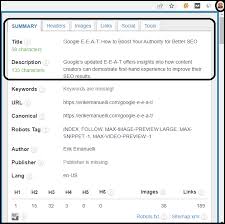
Search Engine Optimization (SEO) is a crucial aspect of any successful online presence. One key element of SEO that often gets overlooked is meta tags. These snippets of text provide search engines with information about your website and its content, helping to improve your visibility in search results.

Traditionally, setting up meta tags required manual input and careful consideration of keywords and descriptions. However, with the advancement of technology, there are now tools available that can generate SEO meta tags in just one click.

Benefits of One-Click SEO Meta Generation

Using a one-click SEO meta generator can save you time and effort while ensuring that your website is optimised for search engines. These tools analyse your content and automatically generate meta titles, descriptions, and keywords based on the information found on your pages.

By simplifying the process of creating meta tags, you can focus more on creating high-quality content that resonates with your audience. This automation not only streamlines your SEO efforts but also improves the overall user experience on your website.

How to Choose the Right Tool

When selecting a one-click SEO meta generator, it’s essential to consider factors such as accuracy, customisation options, and compatibility with different content management systems. Look for a tool that allows you to review and edit generated meta tags to ensure they align with your brand voice and messaging.

Additionally, choose a tool that provides insights into how well your meta tags are performing. Tracking metrics such as click-through rates and search engine rankings can help you refine your SEO strategy further and drive more organic traffic to your website.

Conclusion

Incorporating SEO meta tags into your website is vital for improving its visibility and attracting more visitors. With the convenience of one-click SEO meta generation tools, optimising your site for search engines has never been easier. By leveraging these tools effectively, you can enhance your online presence and reach a wider audience in no time.


Optimise Your Website: 8 Essential Tips for Effective SEO Meta Tags

  1. Include relevant keywords in your meta title and description.
  2. Keep your meta title under 60 characters and meta description under 160 characters.
  3. Write unique meta tags for each page of your website.
  4. Use action-oriented language to encourage clicks in your meta description.
  5. Avoid keyword stuffing in your meta tags.
  6. Ensure that your meta tags accurately reflect the content of the page.
  7. Incorporate local SEO keywords if relevant to your business.
  8. Regularly review and update your meta tags to stay current with search trends.

Include relevant keywords in your meta title and description.

When utilising a one-click SEO meta generator, it is crucial to include relevant keywords in your meta title and description. By incorporating targeted keywords that align with your content and audience’s search queries, you enhance the visibility of your website in search engine results. These keywords not only help search engines understand the context of your pages but also attract potential visitors looking for specific information or products. Ensuring that your meta tags contain relevant keywords is a strategic approach to improving your SEO performance and driving organic traffic to your site.

Keep your meta title under 60 characters and meta description under 160 characters.

It is essential to keep your meta title under 60 characters and your meta description under 160 characters when utilising a one-click SEO meta generator. By adhering to these character limits, you ensure that your title and description display optimally in search engine results pages (SERPs). Concise and compelling meta tags not only improve the readability of your snippets but also enhance the chances of attracting clicks from users. Remember, crafting succinct meta titles and descriptions is a key strategy in boosting your website’s visibility and driving organic traffic effectively.

Write unique meta tags for each page of your website.

It is crucial to write unique meta tags for each page of your website to enhance your SEO strategy effectively. By crafting individualised meta titles, descriptions, and keywords for every page, you can optimise your website’s visibility in search engine results. Unique meta tags not only help search engines understand the content of each page better but also attract more relevant traffic to your site. This practice demonstrates to search engines that your website offers valuable and diverse information, ultimately improving your chances of ranking higher in search results and driving organic traffic to specific pages.

Use action-oriented language to encourage clicks in your meta description.

When utilising a one-click SEO meta generator, it is essential to leverage action-oriented language in your meta description to entice clicks. By incorporating compelling verbs and phrases that prompt users to take action, such as “Discover,” “Learn More,” or “Get Started,” you can increase the likelihood of attracting clicks and engagement. Encouraging a call to action in your meta description not only enhances click-through rates but also improves the overall effectiveness of your SEO strategy by driving traffic to your website.

Avoid keyword stuffing in your meta tags.

When utilising a one-click SEO meta generator, it is crucial to avoid keyword stuffing in your meta tags. While incorporating relevant keywords is essential for improving search engine visibility, overloading your meta tags with excessive keywords can have a negative impact on your SEO efforts. Search engines penalise websites that engage in keyword stuffing, as it diminishes the user experience and undermines the credibility of the content. Focus on using keywords strategically and naturally within your meta tags to enhance their effectiveness without compromising the quality of your content or risking search engine penalties.

Ensure that your meta tags accurately reflect the content of the page.

It is crucial to ensure that your meta tags accurately reflect the content of the page when using a one-click SEO meta generator. By aligning your meta titles, descriptions, and keywords with the actual content on your website, you not only improve search engine visibility but also enhance user experience. Misleading or irrelevant meta tags can lead to a disconnect between what users expect and what they find on your site, potentially resulting in higher bounce rates. Therefore, by maintaining consistency between your content and meta tags, you can establish trust with both search engines and visitors, ultimately driving organic traffic and engagement.

Incorporate local SEO keywords if relevant to your business.

When using a one-click SEO meta generator, it is essential to incorporate local SEO keywords if they are relevant to your business. By including location-specific keywords in your meta tags, such as the name of your city or region, you can improve your chances of appearing in local search results. This targeted approach helps connect you with potential customers in your area who are actively seeking the products or services you offer. By leveraging local SEO keywords in your meta tags, you can enhance your online visibility and attract more qualified leads to your website.

To maintain a strong online presence, it is essential to regularly review and update your meta tags to align with current search trends. By staying proactive in monitoring and adjusting your meta titles, descriptions, and keywords, you can ensure that your website remains relevant and optimised for search engines. This practice not only helps boost your visibility in search results but also demonstrates to search engines that your content is up-to-date and valuable to users. Keeping your meta tags current through regular reviews is a strategic approach to staying competitive in the ever-evolving digital landscape.

twitter seo

Unlocking the Power of Twitter SEO: Enhance Your Visibility and Engagement

Twitter SEO: How to Improve Your Visibility on the Platform

Twitter SEO: How to Improve Your Visibility on the Platform

Twitter is not just a social media platform; it can also be a powerful tool for improving your online visibility through search engine optimisation (SEO). By optimising your Twitter profile and tweets, you can attract more followers, increase engagement, and ultimately drive more traffic to your website. Here are some tips to enhance your Twitter SEO:

Optimise Your Twitter Profile

Make sure your Twitter bio includes relevant keywords related to your industry or business. Use a clear profile picture and header image that represent your brand effectively. Include a link to your website in the designated space.

Use Keywords in Your Tweets

Incorporate relevant keywords into your tweets to make them more discoverable in Twitter search results. Use hashtags strategically but avoid overloading your tweets with them. Focus on creating valuable content that resonates with your audience.

Engage with Followers

Engagement is key on Twitter. Respond to mentions, retweet relevant content, and participate in conversations within your industry. Building relationships with followers can improve your visibility and credibility on the platform.

Share Visual Content

Visual content such as images and videos tend to perform well on Twitter. Including eye-catching visuals in your tweets can increase engagement and make your content more shareable, further boosting your visibility.

Monitor Analytics

Use Twitter analytics tools to track the performance of your tweets and profile. Pay attention to metrics such as impressions, engagements, and click-through rates. Analyse what works best for your audience and adjust your strategy accordingly.

Collaborate with Influencers

Partnering with influencers in your industry can help expand the reach of your tweets and increase visibility among their followers. Identify relevant influencers who align with your brand values and collaborate on campaigns or promotions.

In conclusion, incorporating SEO tactics into your Twitter strategy can significantly impact your online visibility and overall digital marketing efforts. By following these tips and staying active on the platform, you can enhance engagement, attract new followers, and drive traffic to your website through effective Twitter SEO.


Top 8 Frequently Asked Questions About Optimising Twitter for SEO Success

  1. 1. What is Twitter SEO and why is it important?
  2. 2. How can I optimise my Twitter profile for better SEO?
  3. 3. What role do keywords play in improving visibility on Twitter?
  4. 4. Is engagement with followers crucial for Twitter SEO success?
  5. 5. How does visual content impact SEO on Twitter?
  6. 6. Which analytics should I monitor to track the performance of my tweets on Twitter?
  7. 7. Are collaborations with influencers beneficial for Twitter SEO?
  8. 8. What are some common mistakes to avoid when implementing SEO strategies on Twitter?

1. What is Twitter SEO and why is it important?

Twitter SEO refers to the practice of optimising your Twitter profile and tweets to improve visibility and attract more followers on the platform. It involves using relevant keywords, engaging with followers, sharing valuable content, and monitoring analytics to enhance your presence in Twitter search results. Twitter SEO is important because it helps increase your brand’s online visibility, drives traffic to your website, and boosts engagement with your target audience. By implementing effective Twitter SEO strategies, you can strengthen your online presence, build credibility, and ultimately achieve your digital marketing goals on this dynamic social media platform.

2. How can I optimise my Twitter profile for better SEO?

Optimising your Twitter profile for better SEO involves several key steps to enhance your visibility on the platform. Start by crafting a compelling bio that incorporates relevant keywords related to your industry or business. Use a clear profile picture and header image that reflect your brand identity effectively. Ensure to include a link to your website in the designated space to drive traffic. Consistency in branding and messaging across your profile is essential for establishing credibility and attracting followers. By implementing these strategies, you can improve the discoverability of your Twitter profile and increase engagement with your target audience.

3. What role do keywords play in improving visibility on Twitter?

Keywords play a crucial role in improving visibility on Twitter by making your tweets more discoverable to users searching for specific topics or interests. By strategically incorporating relevant keywords into your tweets, you increase the chances of appearing in search results and attracting a targeted audience. Using industry-specific terms, trending hashtags, and popular phrases can help boost the visibility of your content and attract engagement from users interested in those topics. Therefore, leveraging keywords effectively on Twitter can enhance your online presence, drive more traffic to your profile, and ultimately improve your overall visibility on the platform.

4. Is engagement with followers crucial for Twitter SEO success?

Engagement with followers plays a pivotal role in achieving success in Twitter SEO. Interacting with your audience through replies, retweets, and likes not only fosters a sense of community but also signals to the Twitter algorithm that your content is valuable and relevant. This active engagement can lead to increased visibility on the platform, as Twitter is more likely to promote accounts that consistently engage with their followers. By prioritising interactions and building meaningful relationships with your audience, you can enhance your Twitter SEO efforts and ultimately improve your overall presence on the platform.

5. How does visual content impact SEO on Twitter?

Visual content plays a crucial role in enhancing SEO on Twitter. Tweets with images or videos tend to attract more engagement and stand out in users’ feeds, increasing the likelihood of being shared and reaching a wider audience. Visual elements not only make tweets more appealing but also improve the overall user experience, leading to higher retention rates and increased click-through rates. Including relevant visual content in your tweets can boost your visibility on Twitter, improve your profile’s discoverability, and ultimately contribute to better SEO performance on the platform.

6. Which analytics should I monitor to track the performance of my tweets on Twitter?

When it comes to tracking the performance of your tweets on Twitter, there are several key analytics that you should monitor closely. These include metrics such as impressions, engagements, click-through rates, and follower growth. Impressions indicate the number of times your tweet has been seen by users, while engagements measure the interactions such as likes, retweets, and replies. Click-through rates reveal how many users clicked on links or media included in your tweet. Monitoring follower growth can also provide insights into the impact of your tweets on expanding your audience reach. By analysing these analytics regularly, you can gain valuable insights into the effectiveness of your Twitter strategy and make informed decisions to enhance your online visibility and engagement on the platform.

7. Are collaborations with influencers beneficial for Twitter SEO?

Collaborations with influencers can indeed be highly beneficial for Twitter SEO. When influencers with a significant following share your content or mention your brand on Twitter, it can amplify your reach and visibility on the platform. Their endorsement can attract new followers, increase engagement, and drive traffic to your website. Additionally, influencer collaborations can enhance your brand credibility and authority within your industry, which can positively impact your search engine rankings. By leveraging the influence of key personalities in your niche, you not only expand your audience but also boost your overall SEO efforts on Twitter.

8. What are some common mistakes to avoid when implementing SEO strategies on Twitter?

When implementing SEO strategies on Twitter, it is essential to be aware of common mistakes that can hinder your efforts. One common mistake to avoid is neglecting the use of relevant keywords in your tweets and profile bio. Keywords play a crucial role in making your content discoverable on Twitter search results. Another mistake is overusing hashtags, which can make your tweets appear spammy and reduce engagement. Additionally, failing to engage with followers and participate in conversations within your industry can limit the reach of your tweets. It’s important to strike a balance between promotional content and genuine interactions to maintain a strong presence on Twitter. By avoiding these common pitfalls and staying informed about best practices, you can enhance the effectiveness of your SEO strategies on Twitter.

seo and marketing services

Unlocking Business Success: The Dynamic Duo of SEO and Marketing Services

SEO and Marketing Services

The Power of SEO and Marketing Services in Boosting Your Business

In today’s competitive digital landscape, having a strong online presence is crucial for the success of any business. Search Engine Optimization (SEO) and marketing services play a pivotal role in helping businesses stand out from the crowd and reach their target audience effectively.

SEO Services

SEO is the process of optimising your website to improve its visibility on search engines like Google. By incorporating relevant keywords, creating high-quality content, and building authoritative backlinks, SEO helps your website rank higher in search engine results pages (SERPs).

Effective SEO services can drive organic traffic to your website, increase brand awareness, and generate leads that are more likely to convert into customers. With the right SEO strategy in place, your business can experience sustainable growth and stay ahead of the competition.

Marketing Services

Marketing services encompass a wide range of strategies aimed at promoting your products or services to your target audience. From social media marketing and email campaigns to pay-per-click advertising and content marketing, marketing services help you connect with potential customers across various channels.

By utilising marketing services effectively, you can engage with your audience, build brand loyalty, and drive conversions. A well-rounded marketing strategy tailored to your business goals can maximise your ROI and propel your business towards success.

Why You Need Both

While SEO focuses on improving your website’s visibility in search results, marketing services help you engage with your audience and convert leads into customers. By combining SEO with targeted marketing strategies, you can create a comprehensive digital marketing plan that enhances brand awareness, drives traffic to your site, and boosts sales.

Investing in professional SEO and marketing services is essential for staying competitive in today’s digital age. By partnering with experts who understand the intricacies of online visibility and customer engagement, you can unlock the full potential of your business and achieve long-term success.

Contact us today to learn how our tailored SEO and marketing services can elevate your business to new heights.


8 Key Benefits of SEO and Marketing Services for Boosting Online Success

  1. Enhances online visibility, making it easier for potential customers to find your business.
  2. Increases website traffic through improved search engine rankings and targeted marketing strategies.
  3. Builds brand credibility and trust by appearing higher in search results and engaging with customers effectively.
  4. Generates high-quality leads that are more likely to convert into paying customers.
  5. Boosts ROI by attracting relevant traffic to your website and maximising conversions.
  6. Helps businesses stay competitive in the digital marketplace by reaching a wider audience online.
  7. Provides valuable insights through analytics and data-driven strategies for continuous improvement.
  8. Creates a strong online presence that reinforces brand identity and promotes customer loyalty.


Challenges of SEO and Marketing Services: Time, Cost, Competition, Algorithms, and ROI Uncertainty

  1. 1. Time-Intensive
  2. 2. Costly Investment
  3. 3. Competitive Landscape
  4. 4. Algorithm Changes
  5. 5. Uncertain ROI

Enhances online visibility, making it easier for potential customers to find your business.

By utilising SEO and marketing services, businesses can significantly enhance their online visibility, making it easier for potential customers to find their products or services. Through strategic SEO techniques and targeted marketing campaigns, businesses can improve their search engine rankings, increase brand exposure, and attract relevant traffic to their websites. This increased visibility not only boosts brand awareness but also ensures that businesses are more easily discovered by individuals actively seeking the products or services they offer, ultimately leading to a higher likelihood of converting these potential customers into loyal clients.

Increases website traffic through improved search engine rankings and targeted marketing strategies.

By harnessing the power of SEO and marketing services, businesses can significantly boost their online visibility and attract more visitors to their websites. Through enhanced search engine rankings and targeted marketing strategies, companies can drive organic traffic to their sites, reaching a broader audience of potential customers. This increased website traffic not only improves brand awareness but also creates valuable opportunities for engagement and conversions, ultimately leading to business growth and success in the competitive digital landscape.

Builds brand credibility and trust by appearing higher in search results and engaging with customers effectively.

By leveraging SEO and marketing services, businesses can enhance their brand credibility and trustworthiness by securing higher positions in search engine results and effectively engaging with their target audience. Appearing prominently in search results signals authority and reliability to potential customers, instilling confidence in the brand. Moreover, engaging with customers through strategic marketing efforts fosters relationships and establishes a sense of trust, ultimately leading to increased brand loyalty and customer retention.

Generates high-quality leads that are more likely to convert into paying customers.

One of the key benefits of SEO and marketing services is their ability to generate high-quality leads that have a higher likelihood of converting into paying customers. By employing targeted strategies that attract relevant traffic to your website and engage with your target audience effectively, these services help filter out unqualified leads and focus on those prospects who are genuinely interested in your products or services. This targeted approach not only increases the chances of conversion but also ensures that the leads generated are more likely to result in valuable, long-term customer relationships.

Boosts ROI by attracting relevant traffic to your website and maximising conversions.

By effectively utilising SEO and marketing services, businesses can significantly enhance their Return on Investment (ROI) by attracting targeted traffic to their website and optimising conversion rates. By implementing strategies that improve visibility in search results and engaging with the right audience through marketing campaigns, businesses can ensure that the traffic they receive is relevant and more likely to convert into valuable leads and customers. This targeted approach not only increases the efficiency of marketing efforts but also maximises the return on investment, ultimately leading to sustainable business growth and success.

Helps businesses stay competitive in the digital marketplace by reaching a wider audience online.

By leveraging SEO and marketing services, businesses can effectively stay competitive in the digital marketplace by expanding their reach to a broader audience online. Through strategic SEO techniques and targeted marketing campaigns, companies can enhance their visibility on search engines and engage with potential customers across various online platforms. This proactive approach not only increases brand awareness but also enables businesses to connect with a wider demographic, ultimately driving growth and maintaining a competitive edge in the ever-evolving digital landscape.

Provides valuable insights through analytics and data-driven strategies for continuous improvement.

One of the key advantages of SEO and marketing services is their ability to provide valuable insights through analytics and data-driven strategies. By analysing user behaviour, website performance, and campaign results, businesses can gain a deeper understanding of their audience and make informed decisions for continuous improvement. These data-driven approaches not only enhance the effectiveness of marketing efforts but also allow for strategic adjustments that lead to better outcomes over time.

Creates a strong online presence that reinforces brand identity and promotes customer loyalty.

One of the key benefits of utilising SEO and marketing services is the ability to establish a robust online presence that not only strengthens brand identity but also fosters customer loyalty. By implementing effective SEO strategies to enhance visibility and engaging marketing tactics to connect with the target audience, businesses can create a cohesive digital footprint that resonates with customers. This consistent and compelling online presence helps build trust, credibility, and recognition, ultimately leading to increased customer loyalty and long-term relationships with the brand.

1. Time-Intensive

Implementing SEO and marketing services can be a time-intensive endeavour, demanding consistent effort and dedication to yield substantial results. This aspect poses a challenge for businesses operating with constrained resources, as the continuous need for attention and monitoring can strain their capacity. The necessity for ongoing optimisation and adaptation in the dynamic digital landscape underscores the importance of allocating sufficient time and resources to effectively leverage SEO and marketing strategies for long-term success.

2. Costly Investment

One significant drawback of utilising professional SEO and marketing services is the substantial cost involved. For small businesses with limited financial resources, investing in these services can be a significant expense that may strain their budget. The fees associated with hiring experts to implement SEO strategies and marketing campaigns can be prohibitive, making it challenging for smaller enterprises to compete effectively in the digital marketplace. The high cost of these services can act as a barrier for some businesses looking to enhance their online presence and reach a wider audience.

3. Competitive Landscape

In the realm of SEO and marketing services, one significant drawback is the fiercely competitive landscape within the digital marketing space. Despite implementing effective SEO strategies, businesses often find it challenging to distinguish themselves from competitors who are also vying for the attention of their target audience. The saturation of the market can make it arduous to achieve prominent visibility and stand out amidst the crowd, posing a notable con in navigating the competitive landscape of digital marketing.

4. Algorithm Changes

One significant drawback of SEO and marketing services is the constant evolution of search engine algorithms. Search engines regularly update their algorithms, making it essential for businesses to continuously adapt their SEO tactics to keep up with these changes. This ongoing need for adjustment can be time-consuming and challenging, as what may have worked in the past may no longer be effective. Staying ahead of algorithm changes requires a proactive approach and a deep understanding of the latest trends in digital marketing, adding complexity to the already intricate process of maintaining visibility and rankings online.

5. Uncertain ROI

One significant drawback of SEO and marketing services is the uncertainty surrounding the return on investment (ROI). Measuring the precise impact of SEO and marketing campaigns can be a complex task, making it challenging to determine the direct correlation between these efforts and tangible results. This uncertainty about the effectiveness of SEO and marketing strategies can create hesitation for businesses looking to invest in these services, as they may struggle to gauge the true value and impact on their bottom line.

off page seo

Unlocking the Potential: Mastering Off-Page SEO Strategies for Website Success

The Power of Off-Page SEO: Boosting Your Website’s Authority

The Power of Off-Page SEO: Boosting Your Website’s Authority

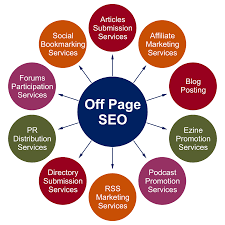
When it comes to search engine optimisation (SEO), most people are familiar with on-page tactics such as keyword optimisation and meta tags. However, off-page SEO plays an equally crucial role in determining your website’s ranking on search engine results pages (SERPs).

Off-page SEO refers to all the activities that take place outside your website but have a direct impact on its authority and credibility in the eyes of search engines like Google. These activities are essential for building backlinks, establishing your website as a reputable source of information, and ultimately improving your search rankings.

Key Components of Off-Page SEO:

  • Link Building: One of the most critical aspects of off-page SEO is building high-quality backlinks from reputable websites. Backlinks act as votes of confidence for your site, indicating to search engines that your content is valuable and trustworthy.
  • Social Media Engagement: Engaging with your audience on social media platforms not only helps drive traffic to your website but also signals to search engines that your content is relevant and popular.
  • Online Reputation Management: Monitoring and managing online reviews, mentions, and comments about your brand can impact how search engines perceive your website’s authority.
  • Guest Blogging: Publishing high-quality guest posts on other websites within your industry can help you reach new audiences and earn valuable backlinks to your site.

The Benefits of Off-Page SEO:

Implementing a robust off-page SEO strategy can yield several benefits for your website, including:

  • Improved Search Rankings: High-quality backlinks from authoritative sites can significantly boost your website’s ranking in SERPs.
  • Increased Website Traffic: By attracting more visitors through off-page tactics such as social media marketing and guest blogging, you can drive organic traffic to your site.
  • Enhanced Brand Visibility: Establishing a strong online presence through off-page activities can help increase brand awareness and credibility among users.
  • Better User Trust: When other reputable sites link back to yours, it instils trust in users and signals to search engines that your content is reliable.

In conclusion, off-page SEO is a vital component of any comprehensive SEO strategy. By focusing on building quality backlinks, engaging with your audience on social media, managing online reputation effectively, and leveraging guest blogging opportunities, you can enhance your website’s authority and drive organic traffic for long-term success.


Nine Key Benefits of Off-Page SEO for Enhancing Online Presence and Authority

  1. Boosts website’s authority and credibility
  2. Improves search engine rankings
  3. Drives organic traffic to the site
  4. Increases brand visibility and awareness
  5. Enhances online reputation and trustworthiness
  6. Helps in reaching new audiences through backlinks
  7. Strengthens social media presence and engagement
  8. Builds valuable relationships with other websites in the industry
  9. Positions the website as a reputable source of information


Challenges of Off-Page SEO: Time, Control, Dependency, Risk, and Measurement Issues

  1. 1. Time-Consuming
  2. 2. Lack of Control
  3. 3. Dependency on Others
  4. 4. Risk of Negative SEO
  5. 5. Difficulty in Measurement

Boosts website’s authority and credibility

One significant advantage of off-page SEO is its ability to boost a website’s authority and credibility. By acquiring high-quality backlinks from reputable websites and engaging in online activities that showcase expertise and trustworthiness, a website can establish itself as a reliable source of information in the eyes of both users and search engines. This enhanced authority not only improves the website’s ranking on search engine results pages but also fosters greater trust among visitors, ultimately leading to increased traffic and conversions.

Improves search engine rankings

One significant advantage of off-page SEO is its ability to improve search engine rankings effectively. By acquiring high-quality backlinks from reputable websites and engaging in social media strategies, off-page SEO signals to search engines like Google that your website is a trusted and authoritative source of information. This increased credibility can lead to higher rankings on search engine results pages, ultimately driving more organic traffic to your site and enhancing your online visibility.

Drives organic traffic to the site

One significant advantage of off-page SEO is its ability to drive organic traffic to the website. By implementing effective off-page strategies such as link building, social media engagement, and guest blogging, websites can attract a steady stream of visitors who are genuinely interested in the content and offerings. This organic traffic not only increases the site’s visibility but also brings in high-quality leads and potential customers who are more likely to engage with the site’s content and convert into loyal followers or customers over time.

Increases brand visibility and awareness

One significant advantage of off-page SEO is its ability to increase brand visibility and awareness. By strategically building backlinks from reputable websites, engaging with audiences on social media platforms, and participating in guest blogging opportunities, businesses can expand their online presence and reach a broader audience. This heightened visibility not only enhances brand recognition but also establishes credibility and trust among users, ultimately driving more organic traffic to the website.

Enhances online reputation and trustworthiness

One of the key advantages of off-page SEO is its ability to enhance a website’s online reputation and trustworthiness. By building high-quality backlinks from reputable websites, engaging with users on social media platforms, and managing online reviews effectively, businesses can establish themselves as credible and trustworthy sources of information in the eyes of both users and search engines. This increased credibility not only improves the website’s authority in search engine rankings but also fosters trust among visitors, leading to higher levels of user engagement and loyalty over time.

One significant advantage of off-page SEO is its ability to help websites reach new audiences through backlinks. By acquiring high-quality backlinks from reputable sources, websites can expand their reach and attract visitors who may not have otherwise discovered their content. These backlinks act as pathways that lead users from other websites to yours, increasing visibility and driving organic traffic from diverse sources. This not only enhances the website’s authority in the eyes of search engines but also opens up opportunities to engage with a broader audience and establish connections with new potential customers or followers.

Strengthens social media presence and engagement

Off-page SEO plays a crucial role in strengthening a website’s social media presence and engagement. By actively engaging with the audience on social media platforms and sharing valuable content that resonates with users, off-page SEO helps build a loyal following and increase brand visibility. High-quality backlinks from social media platforms can drive traffic to the website, while active participation in discussions and sharing relevant content can boost engagement levels. This proactive approach not only enhances the website’s authority but also fosters a strong connection with the target audience, leading to increased brand awareness and credibility in the digital landscape.

Builds valuable relationships with other websites in the industry

One significant advantage of off-page SEO is its ability to build valuable relationships with other websites in the industry. By engaging in activities such as guest blogging, link building, and social media interactions, websites can establish connections with reputable sources. These relationships not only help in acquiring high-quality backlinks but also foster collaborations and partnerships that can enhance credibility, visibility, and authority within the industry. Building strong relationships with other websites through off-page SEO strategies can lead to mutual benefits, increased exposure, and a broader network of support within the online community.

Positions the website as a reputable source of information

One significant advantage of off-page SEO is that it positions the website as a reputable and authoritative source of information within its industry or niche. By acquiring high-quality backlinks from trustworthy websites, engaging in social media interactions, and participating in guest blogging opportunities, the website demonstrates credibility and expertise to both users and search engines. This reputation as a reliable source of information not only boosts the website’s visibility in search engine rankings but also instils trust in visitors, encouraging them to view the site as a go-to destination for valuable content and insights.

1. Time-Consuming

One significant drawback of off-page SEO is its time-consuming nature. Building high-quality backlinks and actively engaging in off-page SEO activities demand a considerable amount of time and consistent effort. From reaching out to other websites for guest blogging opportunities to monitoring social media engagement and managing online reputation, these tasks can be labour-intensive and require ongoing dedication to yield tangible results. The time investment needed for effective off-page SEO strategies can sometimes be a challenge for businesses looking to see quick returns on their digital marketing efforts.

2. Lack of Control

An inherent drawback of off-page SEO is the lack of control over external websites’ linking practices to your site. Unlike on-page SEO where you have full autonomy to optimise content and meta tags, the quality of backlinks generated through off-page strategies can be influenced by factors beyond your control. This limitation in managing how other websites link to yours poses a challenge in ensuring that all backlinks are from reputable sources, potentially affecting the overall effectiveness of your SEO efforts.

3. Dependency on Others

An inherent drawback of off-page SEO is its reliance on external entities like other websites and social media platforms, leading to a level of dependency that can be concerning. Since off-page SEO strategies hinge on factors outside your direct influence, such as algorithm updates or changes in social media policies, the effectiveness of these efforts can be subject to unpredictable shifts. This dependency on external sources highlights a vulnerability within off-page SEO, as changes beyond your control may impact the success and sustainability of your digital marketing initiatives.

4. Risk of Negative SEO

One significant downside of off-page SEO is the risk of negative SEO practices. Competitors or malicious entities may resort to unethical tactics, such as creating spammy backlinks pointing to your website. These black hat strategies can have detrimental effects on your search engine rankings by triggering penalties from search engines like Google. It is essential for website owners to stay vigilant and monitor their backlink profile regularly to identify and disavow any harmful links that could potentially harm their online visibility and reputation.

5. Difficulty in Measurement

One significant drawback of off-page SEO is the difficulty in measurement. Unlike on-page SEO, where results can be more easily tracked and analysed, assessing the direct impact of off-page SEO efforts on search engine rankings and organic traffic can be a challenging task. The influence of factors such as backlinks, social media engagement, and online reputation management on a website’s performance may not always be straightforward to quantify accurately. This lack of precise measurement can make it harder for businesses to determine the effectiveness of their off-page strategies and adjust them accordingly for optimal results.

content marketing strategy

Crafting a Winning Content Marketing Strategy

The Power of a Strong Content Marketing Strategy

The Power of a Strong Content Marketing Strategy

Content marketing has become an indispensable tool for businesses looking to engage with their target audience, build brand awareness, and drive conversions. A well-crafted content marketing strategy can be the key to unlocking success in the digital landscape.

Understanding Content Marketing

Content marketing involves creating and distributing valuable, relevant, and consistent content to attract and retain a clearly defined audience. This content can take various forms, including blog posts, videos, infographics, social media posts, and more. The goal is to provide information that educates, entertains, or inspires your audience while subtly promoting your brand.

The Benefits of a Strong Strategy

A robust content marketing strategy offers numerous benefits to businesses of all sizes:

  • Increased Brand Visibility: By consistently producing high-quality content that resonates with your target audience, you can enhance brand visibility and establish yourself as an industry authority.
  • Improved Search Engine Rankings: Search engines favour websites that regularly publish fresh and relevant content. A strategic approach to content creation can help boost your organic search rankings.
  • Enhanced Audience Engagement: Compelling content has the power to captivate your audience, encourage interaction, and foster meaningful relationships with potential customers.
  • Lead Generation and Conversions: Well-executed content marketing can drive traffic to your website, generate leads, and ultimately convert prospects into customers.

Key Elements of an Effective Strategy

To maximise the impact of your content marketing efforts, consider incorporating the following elements into your strategy:

  1. Define Your Goals: Clearly outline what you hope to achieve through your content marketing initiatives. Whether it’s increasing website traffic, boosting brand awareness or driving sales, setting specific goals will guide your strategy.
  2. Know Your Audience: Understanding your target demographic is crucial for creating content that resonates with them. Conduct research to identify their preferences, pain points, and interests.
  3. Create Valuable Content: Focus on producing high-quality content that provides value to your audience. Whether it’s informative articles, engaging videos or interactive quizzes – aim to educate or entertain while subtly promoting your brand.
  4. Distribute Strategically: Utilise various channels such as social media platforms, email newsletters, and guest blogging opportunities to distribute your content effectively. Tailor your approach based on where your target audience spends their time online.
  5. Analyse and Optimise: Regularly monitor the performance of your content using analytics tools. Identify what works well and what can be improved upon. Use this data-driven insight to refine your strategy for better results.

In Conclusion

A well-defined content marketing strategy is a powerful tool for businesses seeking to connect with their audience in a meaningful way. By creating valuable content that resonates with users and aligns with business objectives, you can drive engagement, build brand loyalty, and ultimately achieve success in the digital realm.


8 Essential Tips for an Effective Content Marketing Strategy

  1. Define your target audience clearly to tailor your content effectively.
  2. Create high-quality and engaging content that provides value to your audience.
  3. Consistency is key – establish a regular posting schedule for your content.
  4. Utilise various types of content such as articles, videos, infographics, etc., to keep it diverse.
  5. Optimise your content for SEO to improve visibility and reach a wider audience.
  6. Promote your content across different channels like social media, email newsletters, etc., to increase its exposure.
  7. Monitor the performance of your content using analytics tools and adjust strategies accordingly.
  8. Engage with your audience through comments, messages, and feedback to build relationships and loyalty.

Define your target audience clearly to tailor your content effectively.

Defining your target audience clearly is a crucial step in crafting a successful content marketing strategy. By understanding the demographics, preferences, and behaviours of your audience, you can tailor your content to resonate with them effectively. This targeted approach ensures that your messages are relevant, engaging, and valuable to the people most likely to engage with your brand. By aligning your content with the needs and interests of your target audience, you can enhance engagement, build trust, and drive meaningful interactions that ultimately lead to business growth.

Create high-quality and engaging content that provides value to your audience.

Creating high-quality and engaging content that offers genuine value to your audience is at the core of a successful content marketing strategy. By focusing on producing content that educates, entertains, or solves a problem for your target demographic, you can establish trust, build credibility, and foster long-lasting relationships with your audience. Quality content not only captivates readers but also encourages them to take action, whether it’s sharing the content with others, engaging with your brand further, or making a purchase. Remember, when you prioritise delivering value to your audience through your content, you set the foundation for meaningful connections and sustainable business growth.

Consistency is key – establish a regular posting schedule for your content.

Consistency is paramount when it comes to content marketing strategy. By establishing a regular posting schedule for your content, you not only maintain a steady flow of information for your audience but also build trust and credibility with them. A consistent posting schedule helps to keep your brand top of mind and reinforces your commitment to providing valuable content. Whether it’s weekly blog posts, daily social media updates, or monthly newsletters, staying consistent in your content delivery can significantly impact audience engagement and ultimately drive success in your marketing efforts.

Utilise various types of content such as articles, videos, infographics, etc., to keep it diverse.

In order to enhance the effectiveness of your content marketing strategy, it is essential to diversify the types of content you produce. By utilising a mix of articles, videos, infographics, and other formats, you can cater to different preferences and capture the attention of a wider audience. This diversity not only keeps your content fresh and engaging but also allows you to convey your message in various ways, making it more likely to resonate with different segments of your target audience.

Optimise your content for SEO to improve visibility and reach a wider audience.

To enhance your content marketing strategy, it is vital to optimise your content for SEO. By incorporating relevant keywords, meta tags, and structuring your content for search engines, you can significantly improve visibility and reach a wider audience. SEO optimisation ensures that your content is easily discoverable by users searching for related topics, ultimately driving organic traffic to your website and increasing the effectiveness of your overall marketing efforts.

Promote your content across different channels like social media, email newsletters, etc., to increase its exposure.

To maximise the reach and impact of your content marketing strategy, it is essential to promote your content across various channels such as social media platforms, email newsletters, and other relevant outlets. By leveraging multiple channels for content distribution, you can significantly increase its exposure and engagement potential among your target audience. This multi-channel approach not only broadens your content’s visibility but also allows you to tailor your messaging to suit the preferences and behaviours of different audience segments, ultimately enhancing the effectiveness of your overall marketing efforts.

Monitor the performance of your content using analytics tools and adjust strategies accordingly.

Monitoring the performance of your content using analytics tools is a crucial aspect of a successful content marketing strategy. By tracking key metrics such as website traffic, engagement levels, and conversion rates, you can gain valuable insights into what resonates with your audience and what may need improvement. Adjusting your strategies based on this data allows you to optimise your content for better results, ensuring that your efforts are aligned with your business goals and driving meaningful outcomes in the digital landscape.

Engage with your audience through comments, messages, and feedback to build relationships and loyalty.

Engaging with your audience through comments, messages, and feedback is a fundamental aspect of a successful content marketing strategy. By actively interacting with your audience, you not only demonstrate that you value their opinions and input but also create opportunities to build meaningful relationships and foster loyalty. Responding to comments, addressing messages promptly, and seeking feedback not only humanises your brand but also helps establish trust and credibility with your audience. This two-way communication approach can lead to increased engagement, brand advocacy, and long-term customer loyalty.