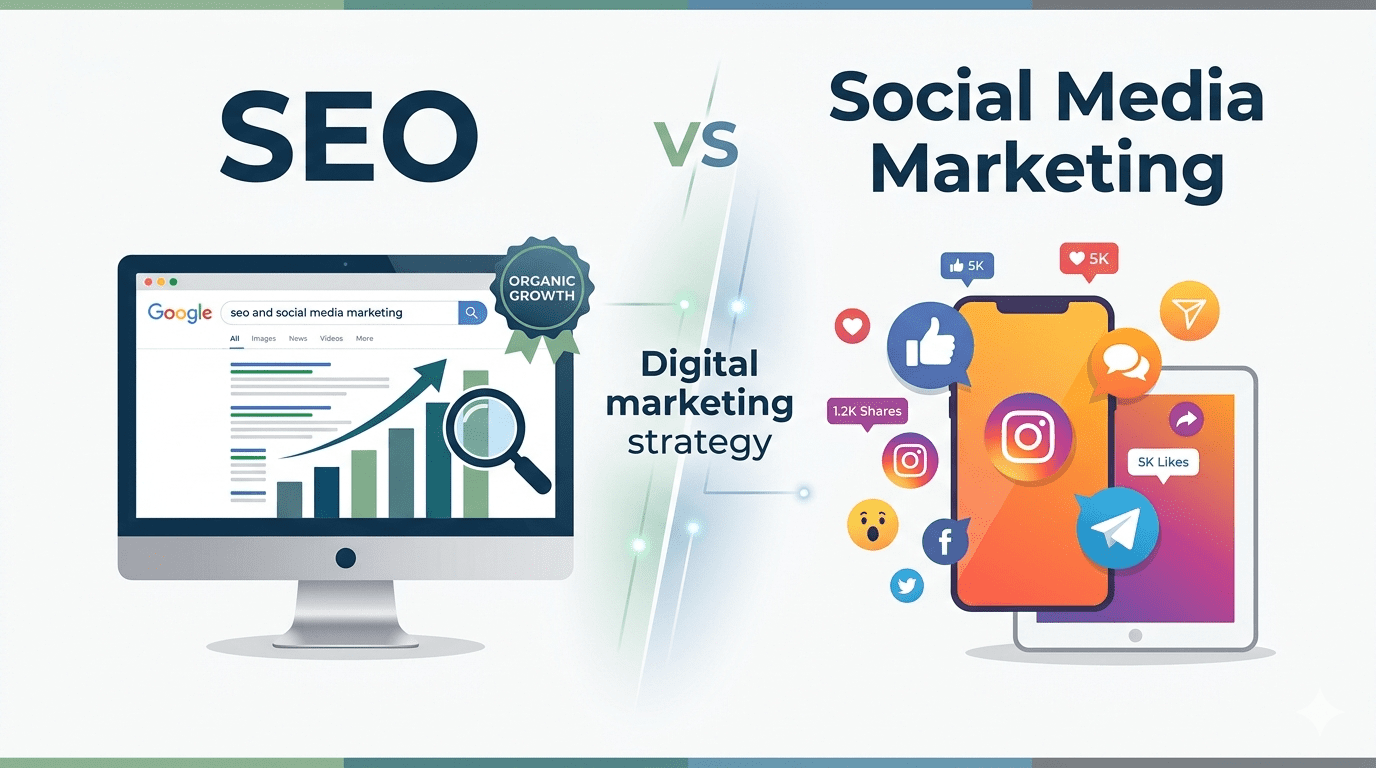
seo and social media marketing

SEO and Social Media Marketing: A Guide to Growing Your Online Presence

SEO and Social Media Marketing: How They Work Together

Search engine optimisation (SEO) and social media marketing are often treated as separate parts of a digital strategy. In practice, they can support one another. SEO helps people find your website through search engines, while social media helps you reach, engage and build relationships with audiences across social platforms.

Neither channel is a quick fix. But when they share clear goals and useful content, they can help your business become more visible online and create more opportunities to connect with potential customers.

What is SEO?

SEO is the process of improving a website so that it is easier for search engines and people to understand. It can involve researching the terms your audience uses, creating helpful pages, improving site structure and making sure the website works well on mobile devices.

SEO is about more than appearing in search results. A successful page should match the visitor’s needs, provide reliable information and make it easy to take the next step, whether that is making an enquiry, buying a product or reading more.

What is social media marketing?

Social media marketing uses platforms such as Instagram, LinkedIn, Facebook, TikTok and Pinterest to share content and communicate with an audience. Depending on your business and objectives, this might include publishing organic posts, responding to comments, working with creators or running paid campaigns.

Social media can help a brand stay connected with its community, showcase its expertise and direct people to useful resources on its website.

How SEO and social media can support each other

Social media can bring more people to your content

Sharing a useful article, guide or product page on social media can introduce it to people who may not have found it through search. If they visit the website, explore other pages or share the content with others, social activity may contribute to broader awareness and engagement.

Social media shares are not generally treated as a direct ranking factor by search engines. However, sharing content can help it reach more people, which may lead to natural links, mentions and further visits over time.

SEO can help you understand what your audience wants

Keyword research reveals the questions and topics people search for. These insights can inform social media content, helping you create posts that answer genuine questions rather than relying on guesswork.

Social media conversations can also reveal common concerns, customer language and emerging interests. These insights may inspire new website content or help you improve existing pages.

Consistent messaging strengthens your brand

When your website and social channels share a consistent tone, message and visual identity, people are more likely to recognise your brand. Clear, consistent communication can build familiarity and trust, whether someone discovers you through a search result, a social post or a recommendation.

Social profiles can appear in search results

Social media profiles and public posts may appear in search engine results, especially when someone searches for a brand by name. Complete profiles with accurate information, links and recent activity can make it easier for people to learn about your business and find your official channels.

Practical ways to combine SEO and social media

  • Start with your audience. Identify who you want to reach, what they need and which platforms they use.
  • Use search insights to plan content. Research relevant queries and turn them into useful articles, videos, short posts or FAQs.
  • Make content easy to share. Use clear headlines, helpful summaries and suitable images or video. Include social sharing options where they improve the user experience.
  • Adapt content for each platform. A detailed website guide might become a LinkedIn post, a short video, an Instagram carousel or a series of tips.
  • Keep profiles accurate. Use consistent business details, descriptions and links across your website and social channels.
  • Engage with your audience. Respond to relevant questions and comments, and use recurring feedback to improve your content.
  • Measure meaningful outcomes. Track organic search visibility, website visits, enquiries, sales and engagement against your business goals.

Measure each channel appropriately

SEO and social media have different performance indicators. For SEO, useful measures can include organic traffic, search visibility, rankings for relevant queries, conversions and the quality of visits. For social media, consider reach, engagement, referral traffic, audience growth and actions such as enquiries or purchases.

Use analytics tools to understand how the channels contribute to your objectives. Avoid judging success by follower numbers or rankings alone: the most valuable results are those that help your organisation meet its goals.

A joined-up strategy takes time

SEO is usually a long-term activity, while social media can provide quicker feedback on how people respond to ideas and content. Neither guarantees immediate results. Search performance depends on many factors, and social reach can vary by platform, audience and format.

By planning the channels together, businesses can create content that is useful to their audience, easier to discover and more consistent across the customer journey. The aim is not simply to post more or target more keywords. It is to provide the right information in the right places, and make it easy for people to take the next step.

Conclusion

SEO and social media marketing serve different purposes, but they can work well as part of a connected digital strategy. SEO helps people discover relevant website content through search, while social media helps that content reach and engage wider communities. With a clear understanding of your audience, consistent messaging and thoughtful measurement, both channels can contribute to stronger online visibility and lasting customer relationships.


Top 8 FAQs on Integrating SEO with Social Media Marketing

  1. How do SEO and social media marketing work together?
  2. Does social media activity directly affect SEO rankings?
  3. Can social media help increase organic website traffic?
  4. Which social media platforms are best for SEO?
  5. How can I use keyword research to plan social media content?
  6. What types of content work well for both SEO and social media?
  7. How should I measure the results of SEO and social media marketing?
  8. How long does it take to see results from SEO and social media marketing?

How do SEO and social media marketing work together?

SEO and social media marketing work together by helping your content reach people in different ways. SEO makes your website easier to find through search engines, while social media helps you share content, engage with your audience and bring visitors to your site. Social media activity is not generally a direct search ranking factor, but it can increase awareness and encourage visits, shares and natural links. Insights from search queries and social conversations can also help you create more relevant content for both channels.

Does social media activity directly affect SEO rankings?

Social media activity does not directly affect SEO rankings: likes, shares and follower numbers are not considered direct ranking factors by search engines. However, social media can support SEO indirectly by helping your content reach more people, attract website visits and earn natural links or brand mentions. It can also offer useful insights into the topics and questions your audience cares about, helping you create more relevant content.

Can social media help increase organic website traffic?

Yes, social media can help increase organic website traffic by promoting your content to a wider audience and encouraging people to visit your site. Sharing useful articles, products or resources can attract visitors who may not have found you through search, while audience feedback can help you create content that better answers their questions. Social media activity is not generally a direct Google ranking factor, so focus on sharing relevant, engaging content and making it easy for people to find and explore your website.

Which social media platforms are best for SEO?

No social media platform directly improves your search rankings, so the best choice depends on where your audience spends time and what you want to achieve. LinkedIn can suit B2B businesses and professional content, while Instagram, TikTok and Pinterest may work well for visual products and inspiration; Facebook can help businesses build communities and reach local audiences. Choose platforms you can maintain consistently, share useful content that links back to relevant pages on your website, and make sure your profiles include accurate business details. Social activity may increase awareness and visits, and can help your content reach people who may later link to or mention it.

How can I use keyword research to plan social media content?

Use keyword research to discover the questions, phrases and topics your audience is searching for, then turn those insights into useful social media posts. Group related keywords into themes and adapt them to each platform—for example, create a short video answering a common question, a carousel explaining a topic or a post linking to a more detailed guide on your website. Treat keywords as clues to audience interests rather than terms to squeeze into every caption, and use natural language that suits the platform. Review engagement and website visits to see which topics resonate and shape future content.

What types of content work well for both SEO and social media?

Content that answers your audience’s questions tends to work well for both SEO and social media. Practical guides, how-to articles, FAQs, original research, case studies, infographics and short videos can attract search visitors while also giving people something useful to share or discuss. Start with a clear topic based on audience needs and relevant search queries, then adapt the format for each platform—for example, turn a detailed guide into a short video or a series of social posts. Ensure the content is accurate, easy to understand and genuinely helpful, rather than created solely to include keywords or encourage clicks.

How should I measure the results of SEO and social media marketing?

Measure SEO and social media against clear business goals, such as increasing relevant website visits, enquiries or sales. For SEO, track organic traffic, visibility for relevant search terms, conversions and the quality of visits. For social media, monitor reach, engagement, referral traffic and actions such as enquiries or purchases. Use analytics tools to see how each channel contributes over time, and review results regularly. Follower counts and rankings can offer useful context, but they matter most when they support meaningful outcomes for your business.

How long does it take to see results from SEO and social media marketing?

The time it takes to see results from SEO and social media marketing varies according to your industry, competition, budget and the consistency of your activity. SEO is usually a longer-term investment: improvements in rankings and organic traffic may take several months, particularly for a new website or a competitive search term. Social media can generate engagement and reach sooner, but building a loyal audience and achieving steady enquiries or sales also takes time. Regular, useful content, a clear strategy and ongoing measurement can help both channels deliver more sustainable results.

nap seo

Optimising Local Business Visibility: The Power of NAP SEO

The Importance of NAP SEO for Local Businesses

The Importance of NAP SEO for Local Businesses

When it comes to local search engine optimisation (SEO), one crucial factor that often gets overlooked is NAP consistency. NAP stands for Name, Address, and Phone Number – essential information that should be consistent across all online platforms.

Having accurate and consistent NAP information is vital for local businesses as it helps search engines like Google verify the legitimacy and credibility of your business. When your NAP details are inconsistent or outdated, it can lead to confusion among potential customers and negatively impact your local search rankings.

Why is NAP SEO Important?

Local Search Ranking: Search engines use NAP information to determine the relevance of a business to a particular location. Consistent NAP details across directories, websites, and social media profiles can improve your local search rankings.

User Experience: Inaccurate NAP information can frustrate potential customers who may end up contacting the wrong phone number or visiting the wrong address. Providing accurate details enhances user experience and builds trust with your audience.

Best Practices for NAP SEO

Ensure Consistency: Make sure your business name, address, and phone number are consistent across all online platforms, including your website, Google My Business listing, social media profiles, and local directories.

Regularly Update Information: Keep track of any changes to your business details and update them promptly on all platforms to maintain consistency.

Monitor Citations: Monitor online citations of your business to ensure that all instances of your NAP information are accurate and up-to-date.

Conclusion

NAP SEO plays a crucial role in improving the visibility and credibility of local businesses in search engine results. By ensuring that your Name, Address, and Phone Number are consistent across all online platforms, you can enhance your local search rankings and provide a seamless experience for potential customers.


9 Essential SEO Tips to Enhance Your Website’s Performance

  1. Ensure your website is mobile-friendly for better SEO.
  2. Create high-quality and relevant content for your target audience.
  3. Optimize your meta tags including title tags and meta descriptions.
  4. Improve website loading speed to enhance user experience and SEO performance.
  5. Utilize keywords strategically throughout your website content.
  6. Earn backlinks from reputable websites to boost your site’s authority.
  7. Regularly update and maintain your website with fresh content.
  8. Optimize images on your website by using descriptive filenames and alt text.
  9. Monitor and analyse your SEO performance using tools like Google Analytics.

Ensure your website is mobile-friendly for better SEO.

Ensuring that your website is mobile-friendly is a crucial tip for NAP SEO success. With the increasing use of mobile devices for local searches, having a responsive design that provides a seamless user experience across different screen sizes can significantly impact your SEO efforts. Search engines like Google prioritise mobile-friendly websites in their rankings, making it essential for local businesses to optimise their sites for mobile to improve visibility and attract more potential customers.

Create high-quality and relevant content for your target audience.

Creating high-quality and relevant content for your target audience is a key aspect of NAP SEO. By producing content that is informative, engaging, and tailored to the needs of your audience, you not only enhance user experience but also establish credibility and authority in your industry. Search engines value content that provides value to users, so by focusing on creating quality content that aligns with your NAP details, you can improve your local search rankings and attract more potential customers to your business.

Optimize your meta tags including title tags and meta descriptions.

To enhance your NAP SEO strategy, it is essential to optimise your meta tags, including title tags and meta descriptions. By incorporating accurate NAP information within these elements, you can improve the visibility and credibility of your local business in search engine results. Consistent NAP details in meta tags not only help search engines understand the relevance of your business to a specific location but also provide potential customers with clear and reliable information when they come across your website in search results. Ensuring that your meta tags reflect accurate NAP data is a valuable step towards boosting your local search rankings and enhancing user experience.

Improve website loading speed to enhance user experience and SEO performance.

Optimising your website loading speed is a key aspect of NAP SEO that can significantly impact both user experience and SEO performance. A faster loading website not only enhances user satisfaction by providing a seamless browsing experience but also contributes to better search engine rankings. Search engines like Google consider page speed as a ranking factor, so improving your website’s loading speed can help boost your visibility in search results while ensuring that visitors stay engaged and satisfied with their online experience.

Utilize keywords strategically throughout your website content.

To enhance your NAP SEO strategy, it is essential to strategically incorporate relevant keywords throughout your website content. By integrating key terms related to your business, location, and services in a natural and informative manner, you can improve the visibility of your website in local search results. This strategic use of keywords not only helps search engines understand the context of your business but also enhances the overall relevance and authority of your online presence.

Earning backlinks from reputable websites is a key strategy in NAP SEO that can significantly boost your site’s authority and credibility. When high-quality websites link back to your business with accurate NAP details, search engines view your site as more trustworthy and relevant, ultimately improving your local search rankings. By building a network of quality backlinks, you not only enhance your online visibility but also establish a strong digital presence that resonates with both search engines and potential customers.

Regularly update and maintain your website with fresh content.

Regularly updating and maintaining your website with fresh content is a key aspect of NAP SEO. By keeping your website up-to-date with relevant and engaging content, you not only provide value to your visitors but also signal to search engines that your business is active and authoritative. Fresh content can include blog posts, news updates, product descriptions, or any information that is pertinent to your audience. This practice not only helps improve your search engine rankings but also ensures that your NAP details remain consistent across all online platforms, reinforcing the credibility of your business.

Optimize images on your website by using descriptive filenames and alt text.

Optimising images on your website by using descriptive filenames and alt text is a key tip for enhancing NAP SEO. When search engines crawl your site, they also analyse images to understand their relevance to your content. By incorporating relevant keywords into the filenames and alt text of your images, you not only improve the user experience for visually impaired visitors but also provide search engines with valuable context about your business. This practice can boost your local search rankings and contribute to a more comprehensive NAP SEO strategy that ensures consistency and accuracy across all aspects of your online presence.

Monitor and analyse your SEO performance using tools like Google Analytics.

Monitoring and analysing your SEO performance using tools such as Google Analytics is essential for understanding the impact of your NAP SEO efforts. By tracking key metrics like website traffic, user engagement, and conversion rates, you can gain valuable insights into how your NAP information is influencing your online visibility and local search rankings. Regularly reviewing these analytics allows you to identify areas for improvement and make data-driven decisions to enhance your overall SEO strategy.

Unlocking the Potential of Local SEO with Google Maps: A Guide for Businesses in the UK

The Power of Local SEO and Google Maps for Businesses

The Power of Local SEO and Google Maps for Businesses

In today’s digital age, having a strong online presence is crucial for businesses to attract customers. Local Search Engine Optimization (SEO) and Google Maps play a vital role in helping businesses connect with their local audience effectively.

What is Local SEO?

Local SEO is the practice of optimizing your website and online presence to attract more business from relevant local searches. This strategy helps businesses promote their products and services to local customers at the exact time they are looking for them online.

How Google Maps Enhances Local SEO

Google Maps is a powerful tool that integrates seamlessly with local search results. By listing your business on Google Maps, you can ensure that your company appears in local search queries, making it easier for potential customers to find you.

Benefits of Local SEO and Google Maps:

  • Increased Visibility: By implementing local SEO strategies and listing your business on Google Maps, you increase your visibility to potential customers searching for products or services in your area.
  • Improved Rankings: Optimizing your website for local searches can help improve your rankings on search engine results pages (SERPs), making it more likely for users to discover your business.
  • Enhanced Credibility: Having a presence on Google Maps adds credibility to your business, as customers can easily find information about your location, contact details, and reviews from other users.
  • Better User Experience: Google Maps provides users with accurate directions to your business location, making it convenient for them to visit you in person.
  • Increase in Foot Traffic: With the help of Google Maps, you can attract more foot traffic to your physical store or office by making it easier for customers to locate you.

In Conclusion

Local SEO and Google Maps are invaluable tools for businesses looking to target their local audience effectively. By optimising your online presence and leveraging the power of location-based searches, you can boost visibility, attract more customers, and ultimately drive growth for your business.


Top 6 Tips for Enhancing Local SEO on Google Maps

  1. Ensure your business name, address, and phone number (NAP) are consistent across all online platforms.
  2. Optimise your Google My Business listing with accurate information, high-quality images, and relevant categories.
  3. Encourage customers to leave positive reviews on Google Maps to improve your local ranking.
  4. Include local keywords in your website content and meta tags to boost visibility in local searches.
  5. Create location-specific landing pages on your website for different areas you serve.
  6. Engage with your audience by responding to reviews and messages promptly on Google Maps.

Ensure your business name, address, and phone number (NAP) are consistent across all online platforms.

Ensuring consistency in your business name, address, and phone number (NAP) across all online platforms is a crucial tip for effective local SEO and Google Maps integration. By maintaining uniformity in this information, you establish trust with search engines and potential customers, making it easier for them to find and contact your business. Inaccurate or inconsistent NAP details can lead to confusion and hinder your online visibility. Therefore, by keeping your NAP consistent across directories, websites, and social media profiles, you enhance your local search rankings and provide a seamless experience for users seeking your products or services in their area.

Optimise your Google My Business listing with accurate information, high-quality images, and relevant categories.

To maximise the impact of your local SEO strategy using Google Maps, it is essential to optimise your Google My Business listing meticulously. Ensure that all information provided is accurate and up-to-date, including your business name, address, phone number, and operating hours. Additionally, uploading high-quality images that showcase your products or services can capture the attention of potential customers. Selecting relevant categories for your business on Google My Business helps improve visibility in local searches, making it easier for users to find and engage with your business effectively. By paying attention to these details, you can enhance your online presence and attract more local customers to your business.

Encourage customers to leave positive reviews on Google Maps to improve your local ranking.

Encouraging customers to leave positive reviews on Google Maps is a highly effective tip for enhancing your local SEO ranking. Positive reviews not only improve your credibility and reputation but also signal to Google that your business is trustworthy and relevant to local searches. By actively seeking feedback from satisfied customers and responding to reviews, you can boost your visibility on Google Maps, attract more potential customers, and ultimately strengthen your position in local search results.

Include local keywords in your website content and meta tags to boost visibility in local searches.

To enhance your visibility in local searches using Google Maps, a crucial tip is to incorporate local keywords strategically within your website content and meta tags. By including relevant local terms and phrases that potential customers are likely to use when searching for businesses in your area, you can significantly boost your chances of appearing in local search results. This practice not only helps search engines understand the geographical relevance of your business but also increases the likelihood of attracting local traffic to your website, ultimately driving more footfall to your physical location.

Create location-specific landing pages on your website for different areas you serve.

To enhance your local SEO strategy with Google Maps, consider creating location-specific landing pages on your website for the various areas you serve. By tailoring content to each specific location, including relevant keywords and information about local services or products, you can improve your visibility in local search results. These dedicated landing pages not only help search engines understand the geographic relevance of your business but also provide users with targeted and valuable content that resonates with their location, ultimately driving more traffic and conversions to your website.

Engage with your audience by responding to reviews and messages promptly on Google Maps.

Engaging with your audience by responding promptly to reviews and messages on Google Maps is a key tip for enhancing your local SEO strategy. By actively interacting with customers, you not only show that you value their feedback but also build trust and credibility for your business. Prompt responses demonstrate your commitment to customer satisfaction and can encourage positive word-of-mouth recommendations. This engagement not only improves your online reputation but also signals to search engines that your business is active and responsive, ultimately boosting your visibility in local search results.