Backlinko Local SEO: A Practical Guide to Improving Local Search Visibility
Backlinko Local SEO: A Practical Guide to Getting Found Nearby
Searching for “Backlinko local SEO” usually means looking for clear, actionable advice on improving a business’s visibility in local search results. The principles behind effective local SEO are straightforward: make it easy for search engines to understand where your business operates, what it offers and why local customers should choose it.
Whether you run a shop, restaurant, trades business or professional service, a thoughtful local SEO strategy can help your business appear when people nearby search for relevant products or services. Here’s how to build one.
What is local SEO?
Local SEO is the process of improving your online visibility for searches with a geographical focus. These might include searches such as “plumber in Manchester”, “coffee shop near me” or simply a service search made by someone whose location is known to the search engine.
Local results can appear in standard search listings, on Google Maps and in prominent map-based results. Their visibility depends on factors such as relevance, distance and prominence. Businesses cannot control every factor, particularly a searcher’s location, but they can make their online information more complete, accurate and useful.
Optimise your Google Business Profile
Your Google Business Profile is a key part of local search visibility. Claim and verify the profile, then make sure the details are accurate and consistent with the information on your website.
- Choose the most appropriate primary category and any relevant additional categories.
- Add your address or service areas, phone number, website and opening hours.
- Write a clear description of your business and services.
- Upload recent, high-quality photographs where appropriate.
- Keep holiday hours, contact details and other updates current.
Only use a real business address that complies with Google’s guidelines. Avoid adding unnecessary keywords to your business name; it should reflect the name customers actually know.
Make your website locally relevant
Your website should explain what you do and where you do it. Create useful service pages that address the needs of your customers, and include location information naturally where it is relevant.
For example, a business serving several towns might create a dedicated page for each genuine service area. Each page should provide original, helpful information—not simply repeat the same copy with a different place name. Include details about the services available, the area served and how customers can get in touch.
Make sure your important pages have descriptive titles, clear headings and concise page descriptions. These elements help search engines and visitors understand what each page is about.
Keep your business details consistent
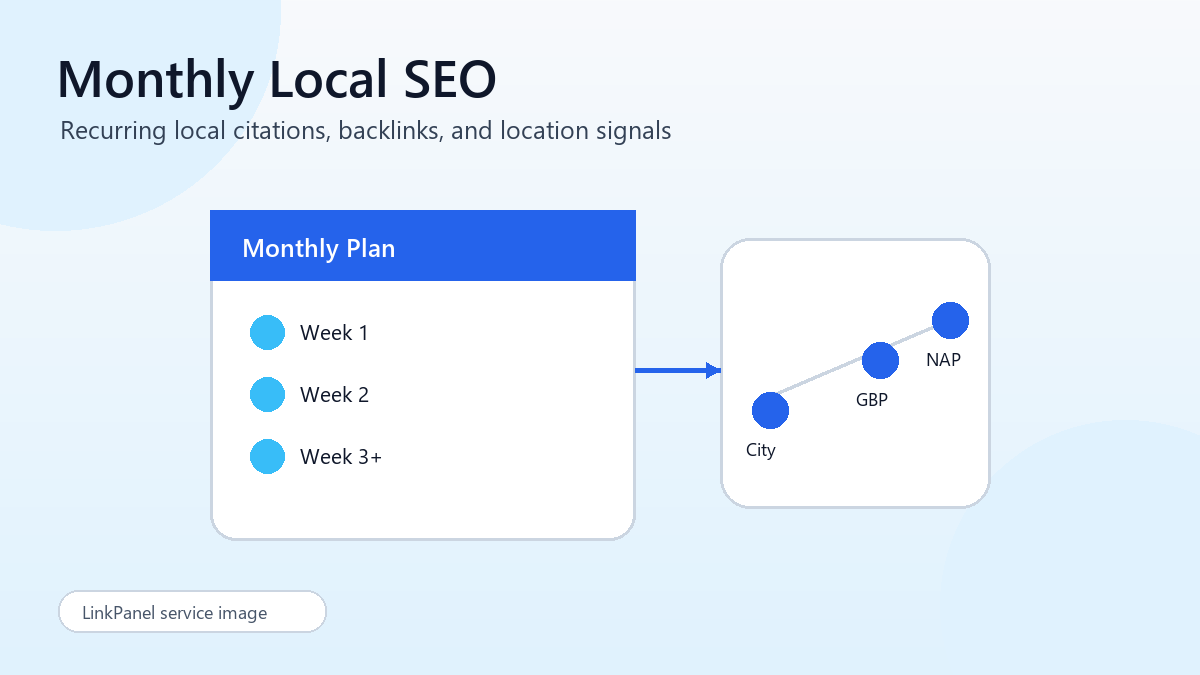
Your business name, address and phone number are often referred to as NAP details. Check that these details are accurate across your website, business profiles and relevant online directories.
Small differences do not automatically prevent a business from ranking, but outdated or conflicting information can confuse customers and make it harder to verify your details. Prioritise the directories and platforms that matter to your industry and local audience rather than submitting your business to every directory available.
Earn and respond to customer reviews
Reviews can help prospective customers decide whether to contact or visit your business. Ask customers for honest feedback after a genuine interaction, using a simple and appropriate process. Do not offer incentives in exchange for reviews or try to dictate what customers should write.
Respond professionally to both positive and negative reviews. A considerate reply shows that the business pays attention to customer feedback. If a review raises a problem, address it calmly and take the conversation offline when personal details or a detailed resolution are needed.
Build local authority
Links from relevant, reputable websites can help people discover your business and strengthen your online presence. Local links may come from community organisations, local news sites, business associations, event partners or suppliers.
Focus on genuine relationships and worthwhile contributions. Sponsoring a local event, sharing useful expertise or collaborating with a community group can lead to meaningful visibility and links. Avoid buying links or taking part in schemes designed solely to manipulate search rankings.
Make your website easy to use on mobile
Many local searches happen on mobile devices, often when someone is ready to call, book or visit. Your website should load reliably, display clearly on smaller screens and make essential information easy to find.
Check that visitors can quickly locate your phone number, address, opening hours, services and booking or contact options. A fast, accessible website supports a better customer experience and helps search engines access your content.
Measure results and improve over time
Local SEO is not a one-off task. Monitor changes in website visits, enquiries, calls, bookings and other outcomes that matter to your business. Google Search Console can help you understand how your site appears in Google Search, while analytics tools can show how visitors use your website.
Review your business profile insights and customer feedback as well. Rankings can vary by location and search, so avoid judging progress by a single search from one device. Look for sustained improvements in visibility and, most importantly, in relevant enquiries and customers.
Common local SEO mistakes to avoid
- Leaving business hours, addresses or phone numbers out of date.
- Creating thin location pages with little original value.
- Using misleading business details or adding keywords to a business name.
- Ignoring reviews or responding in an unprofessional manner.
- Buying links or using tactics that violate search engine guidelines.
- Focusing only on rankings instead of calls, bookings and sales.
Conclusion
The most useful takeaway from any local SEO guide, including resources people may find when searching for “Backlinko local SEO”, is to build a trustworthy and helpful online presence. Keep your business information accurate, create genuinely useful local pages, earn customer reviews and develop relationships with relevant local organisations.
Consistent improvements can help search engines understand your business and help nearby customers feel confident choosing it. Start with the basics, measure what matters and refine your approach as your business and local market change.
Top 18 Frequently Asked Questions About Backlinko and Local SEO
- Is link building still relevant to SEO?
- Who is the best local SEO company in the nation?
- Does local SEO work?
- How to do SEO for local listing?
- What is the difference between SEO and local SEO?
- What are black hat SEO techniques?
- What is local SEO ranking?
- Are backlinks important for local SEO?
- What are the steps of local SEO?
- What is local SEO Backlinko?
- What are the 4 types of SEO?
- What is technical SEO Backlinko?
- What is backlinks in local SEO?
- How do I master local SEO?
- How do I practice local SEO?
- What are the 3 types of SEO optimizations?
- What comes under local SEO?
- What does Backlinko do?
Is link building still relevant to SEO?
Yes, link building is still relevant to SEO, including local SEO, because links from credible, relevant websites can help people discover your business and provide search engines with useful context about its reputation. The emphasis should be on quality and relevance rather than the number of links: seek genuine mentions from local organisations, industry publications, community groups and trusted partners. Avoid buying links or using schemes designed to manipulate rankings, as these can damage your site’s credibility and may breach search engine guidelines.
Who is the best local SEO company in the nation?
There is no single “best” local SEO company for every business in the nation. The right choice depends on your location, industry, budget and goals. Look for an agency with relevant local SEO experience, clear reporting, realistic expectations and a strategy tailored to your business—not guaranteed rankings or vague promises. Ask for examples of past work, check independent reviews and make sure you understand the services, costs and measures of success before signing up.
Does local SEO work?
Yes, local SEO can work by helping your business appear in search results when people look for relevant products or services in a particular area. Results depend on factors such as how closely your business matches the search, the searcher’s location, your online prominence and the quality and accuracy of your business information. A well-maintained Google Business Profile, useful location-specific website content and genuine customer reviews can all support visibility. Local SEO is a gradual process, so measure its impact through meaningful outcomes such as calls, visits, bookings and enquiries—not rankings alone.
How to do SEO for local listing?
To optimise a local listing, claim and verify your Google Business Profile, then add accurate, up-to-date details such as your business name, address, phone number, opening hours, website and relevant categories. Keep these details consistent across your website and trusted directories, and use your profile to share useful updates and genuine photos. Encourage customers to leave honest reviews and respond to them professionally. Finally, make sure your website clearly describes your services and the areas you serve, and monitor calls, visits and enquiries to see what is working.
What is the difference between SEO and local SEO?
SEO aims to improve a website’s visibility in search results more broadly, often reaching people across a country or internationally. Local SEO focuses on appearing in searches connected to a specific place, such as “bakery in Bristol” or “plumber near me”. It uses locally relevant information—including an up-to-date Google Business Profile, consistent business details, customer reviews and location-specific website content—to help nearby people find and choose a business.
What are black hat SEO techniques?
Black hat SEO techniques are practices that try to manipulate search rankings in ways that violate search engine guidelines. Examples include keyword stuffing, cloaking, hidden text, buying links and using private blog networks. These tactics may sometimes produce short-term gains, but they can damage a site’s reputation and lead to ranking drops or manual penalties. A safer, more sustainable approach is to create useful content, improve the website experience and earn relevant links naturally.
What is local SEO ranking?
Local SEO ranking refers to where a business appears in search results for queries with local intent, such as “dentist near me” or “plumber in Bristol”. A business may rank in Google Maps, the local results section or the standard organic listings, and its position can vary depending on the searcher’s location and the query. Google considers factors including how relevant the business is to the search, its distance from the searcher and its prominence online. Keeping business details accurate, maintaining a useful Google Business Profile and earning genuine customer reviews can support local visibility.
Are backlinks important for local SEO?
Yes, backlinks can be important for local SEO because links from relevant, reputable websites may help strengthen your business’s authority and make it easier for local customers to discover you. Links from local news sites, community organisations, industry associations and trusted partners can be particularly useful. However, backlinks are only one part of local search visibility: accurate business information, a well-maintained Google Business Profile, positive customer reviews and useful website content also matter. Focus on earning genuine links through valuable relationships and contributions, rather than buying links or using schemes designed to manipulate rankings.
What are the steps of local SEO?
The main steps of local SEO are to define the areas you serve, optimise and verify your Google Business Profile, and make sure your business name, address and phone number are accurate and consistent online. Create useful website pages for your services and locations, ensure your site works well on mobile, and encourage genuine customer reviews. You can also build local visibility through relevant community links and listings. Finally, track local search performance, website visits and enquiries, then update your information and strategy regularly.
What is local SEO Backlinko?
Local SEO, as explained in Backlinko’s SEO guides, is the process of improving a business’s visibility in search results for people looking for products or services in a particular area. It involves keeping your business details accurate online, optimising your Google Business Profile and website, earning genuine customer reviews, and building relevant local links. These steps can help nearby customers find and choose your business.
What are the 4 types of SEO?
The four commonly recognised types of SEO are on-page, off-page, technical and local SEO. On-page SEO focuses on improving website content and page elements, such as headings and keywords; off-page SEO builds authority through signals from elsewhere online, including reputable backlinks; technical SEO helps search engines crawl, understand and index a site; and local SEO improves visibility for geographically relevant searches, such as “accountant near me”. These areas often overlap, so a balanced strategy considers all four.
What is technical SEO Backlinko?
Technical SEO, as explained in Backlinko’s SEO resources, focuses on improving the parts of a website that help search engines crawl, understand and index its pages. It can include making the site mobile-friendly and fast, using a clear site structure, fixing broken links, managing duplicate pages and adding structured data where appropriate. For local SEO, technical foundations help ensure that location and service pages can be found and used easily, but they work alongside other factors such as an accurate Google Business Profile, relevant local content and genuine customer reviews.
What is backlinks in local SEO?
In local SEO, backlinks are links from other websites to yours. They can help search engines discover your site and understand its relevance and reputation, particularly when they come from credible, locally relevant sources such as community organisations, local news outlets or industry associations. Focus on earning links through useful content, genuine partnerships and community involvement; avoid buying links or using schemes designed to manipulate rankings.
How do I master local SEO?
To master local SEO, start by keeping your Google Business Profile complete and up to date, with accurate contact details, opening hours, categories and service areas. Make your website useful for local customers by creating clear service and location pages, and keep your business name, address and phone number consistent across trusted directories. Encourage genuine customer reviews and respond to them professionally, while earning relevant local links through community partnerships and useful contributions. Finally, track calls, enquiries and website visits—not just rankings—and regularly update your approach based on what brings in customers.
How do I practice local SEO?
To practise local SEO, start by claiming and completing your Google Business Profile with accurate details, suitable categories, opening hours and photos. Make sure your business name, address and phone number are consistent across your website and relevant directories. Create useful website content about your services and the areas you genuinely serve, encourage customers to leave honest reviews, and respond to feedback professionally. You can also build local visibility through genuine relationships with community groups, industry organisations and local publications. Track calls, enquiries and website visits, then review your results regularly and improve what is not working.
What are the 3 types of SEO optimizations?
The three main types of SEO optimisation are on-page, off-page and technical SEO. On-page SEO focuses on the content and elements of your website, such as page titles, headings and relevant local keywords. Off-page SEO covers signals from elsewhere online, including reputable backlinks, local citations and customer reviews. Technical SEO improves how search engines crawl and understand your site, with attention to factors such as mobile usability, page speed, secure connections and structured data. For local SEO, all three work together to help your business appear in relevant local searches.
What comes under local SEO?
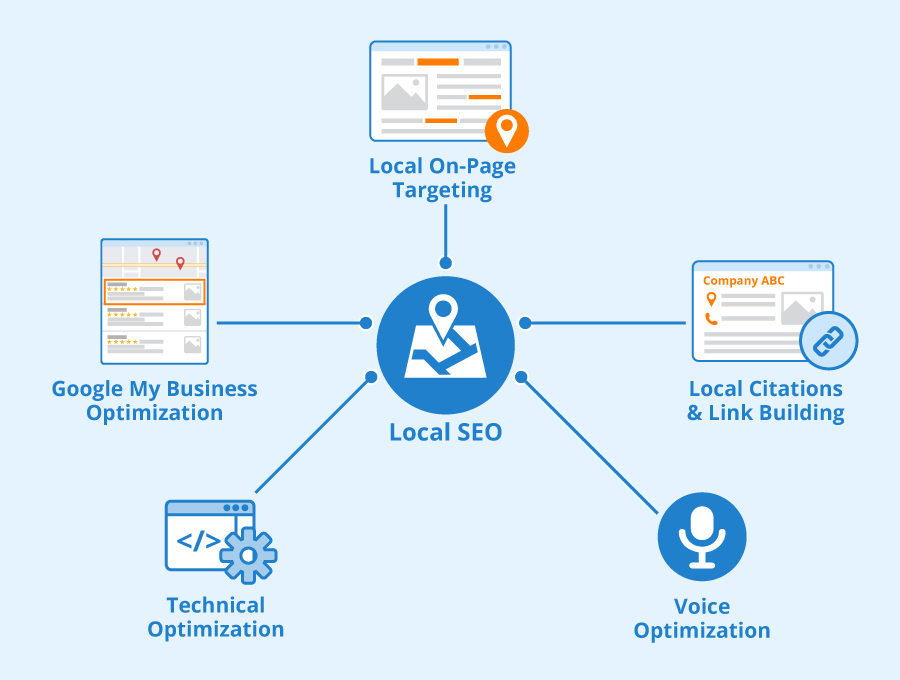
Local SEO covers the strategies that help a business appear in search results when people look for products or services in a particular area. This includes optimising your Google Business Profile, keeping your business name, address and phone number accurate and consistent online, targeting relevant local keywords, creating useful location-specific website content, earning and responding to customer reviews, and building links and citations from reputable local websites and directories. It also involves making your website mobile-friendly and tracking local visibility, visits and enquiries so you can improve your approach over time.
What does Backlinko do?
Backlinko is an online marketing education platform known for publishing guides, research and training on SEO and digital marketing. Its content covers topics such as keyword research, link building, content marketing and local SEO, with practical advice to help businesses and marketers improve their online visibility.