Local Presence SEO: A Practical Guide to Getting Found in Your Area
Local Presence SEO: How to Help Nearby Customers Find Your Business
When people search for a service or product nearby, they often want to act quickly. They may be looking for a café around the corner, a plumber in their area or a shop they can visit today. Local presence SEO helps businesses appear in these location-based searches and gives potential customers the information they need to choose and contact them.
Building a strong local presence involves more than adding a town name to a website. It means making your business details clear and consistent, creating useful local content and earning the trust of customers in the areas you serve.
What is local presence SEO?
Local presence SEO is the work of improving how visible a business is in search results for a particular place or service area. This can include searches such as “accountant in Bristol” or “coffee shop near me”. It also helps search engines understand where a business operates and which customers it serves.
Local results can appear in several places, including map listings, business profiles and standard website results. The exact results vary depending on the search, the user’s location and other factors.
Keep your business information accurate
Search engines and customers need reliable information. Check that your business name, address, phone number, website and opening hours are correct wherever they appear online. These details are often referred to as NAP information: name, address and phone number.
Use the same business name and contact details across your website, business profiles and relevant directories. If you move premises, change your phone number or alter your opening hours, update your listings promptly. Inconsistent or outdated information can confuse customers and make it harder for them to reach you.
Make the most of your Google Business Profile
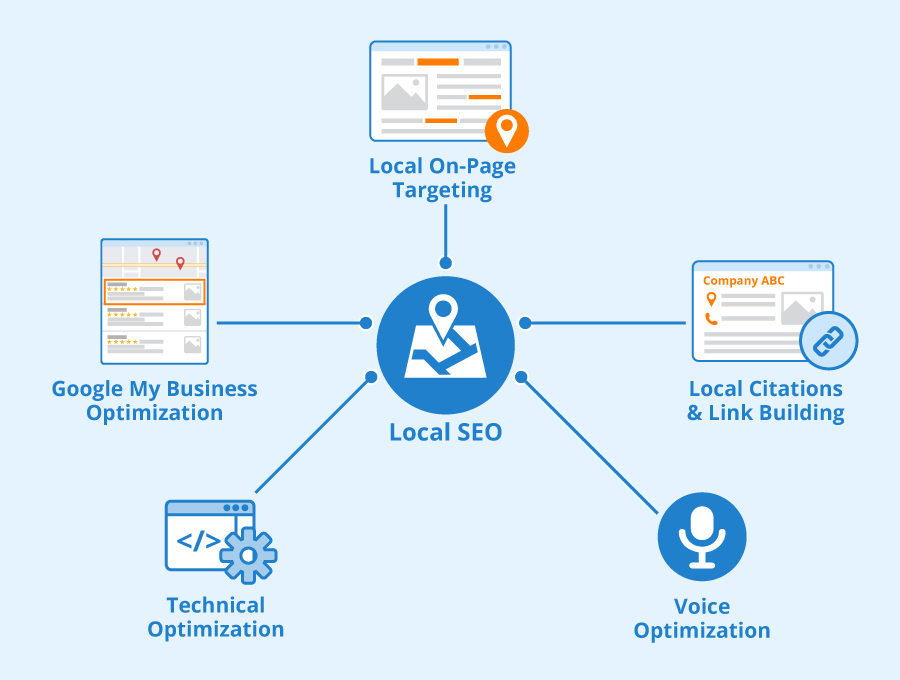
For many businesses, a Google Business Profile is an important part of local SEO. Complete the profile with accurate details, select relevant categories and describe your services in straightforward language. Add suitable photographs and keep your opening hours up to date, including any seasonal changes.
Use the profile to share useful updates where appropriate, such as new services, events or changes to your opening hours. Avoid adding information that is misleading or does not reflect what the business actually offers.
Create useful local website content
Your website should make it easy for visitors to understand what you do and where you do it. Include your service areas naturally on relevant pages, rather than repeating place names unnaturally throughout the site.
If you serve several locations, consider creating a dedicated page for each area where you genuinely operate. Each page should provide helpful, specific information, such as the services available, local contact details or what customers can expect. Avoid publishing near-identical pages that differ only by the name of a town; thin or repetitive content offers little value to visitors.
Local guides, project examples, community news and answers to common customer questions can also make your website more useful. Keep the focus on information your audience will genuinely find valuable.
Build trust through customer reviews
Reviews can help potential customers decide whether to contact your business. Invite customers to leave honest feedback after a genuine interaction, and make it easy for them to find the right review platform. Never buy reviews or offer incentives in exchange for positive ratings.
Respond professionally to reviews, including critical ones. A considerate response can show that you take feedback seriously. Do not share private customer information when replying.
Earn relevant local mentions
Links and mentions from reputable local organisations can help people discover your business and provide useful context about your community connections. Opportunities might include local business associations, community groups, event partners or relevant local publications.
Focus on genuine relationships and worthwhile contributions. A relevant mention is more valuable than a large number of low-quality directory listings created solely to influence rankings.
Make your website easy to use on mobile
Many local searches happen on mobile phones, often when someone is ready to call, get directions or compare nearby options. Make sure your website works well on smaller screens, loads efficiently and displays key information clearly.
Include easy-to-find contact details, opening hours and directions where relevant. Test forms and phone links to make sure they work as expected.
Measure what matters
Local SEO takes time, so track meaningful indicators rather than relying on a single ranking. Useful measures may include website visits from local searches, calls, direction requests, enquiries, bookings and visits to important service pages.
Review your results regularly and look for patterns. For example, you may find that one service page brings in more enquiries, or that customers often search for a particular service in a specific area. Use those insights to improve your website and business information.
Build your local presence consistently
Local presence SEO is an ongoing process. Accurate business details, helpful local content, positive customer experiences and a well-maintained website all contribute to a stronger online presence. By keeping these elements consistent and focusing on what local customers need, your business can become easier to find and easier to choose.
9 Essential Tips for Enhancing Your Local Presence SEO
- Claim and verify your Google Business Profile.
- Keep your business name, address and phone number consistent.
- Choose accurate business categories and services.
- Add clear, current photos of your premises and work.
- Keep opening hours updated, including bank holidays.
- Ask happy customers for honest reviews.
- Reply promptly and professionally to every review.
- Create local pages with useful, location-specific information.
- Earn links and mentions from trusted local organisations.
Claim and verify your Google Business Profile.
Claiming and verifying your Google Business Profile helps you manage how your business appears on Google Search and Maps. Once verified, you can keep essential details—such as your address, phone number, opening hours and services—accurate, add photos and respond to customer reviews. Complete, up-to-date information makes it easier for nearby customers to find and contact you, while helping Google understand your business and where it operates.
Keep your business name, address and phone number consistent.
Keep your business name, address and phone number (often called NAP details) consistent across your website, Google Business Profile and other online directories. Even small differences, such as an old phone number or an abbreviated street name, can confuse potential customers and make it harder for search engines to verify your details. Check your listings regularly and update them promptly whenever your contact information changes.
Choose accurate business categories and services.
Choose the most accurate business categories and services for your online listings so search engines and potential customers can quickly understand what you offer. Select a primary category that best describes your main business, then add relevant secondary categories and specific services where available. Avoid choosing categories simply because they seem popular: precise, honest information is more useful and helps your business appear for searches that genuinely match what you do.
Add clear, current photos of your premises and work.
Add clear, up-to-date photos of your premises and work to help potential customers know what to expect before they get in touch. Show your location, team, products or completed projects in good lighting, and replace outdated images when your business or services change. Make sure every photo is genuine, relevant and of good quality, so it builds trust and gives people a clearer sense of your local business.
Keep opening hours updated, including bank holidays.
Keep your opening hours accurate across your website and business listings, including changes for bank holidays and seasonal periods. Up-to-date hours help local customers know when they can visit or get in touch, prevent frustrating wasted journeys and give search engines reliable information about your business. Check your listings ahead of each holiday and update them as soon as your hours change.
Ask happy customers for honest reviews.
Ask happy customers to leave an honest review after a positive experience. Reviews can help people in your area feel more confident choosing your business and give you useful feedback on what you do well. Make it easy for customers to share their thoughts, but never pressure them, offer rewards for positive ratings or ask them to say anything they don’t genuinely believe. Respond courteously to all feedback to show that you value your customers.
Reply promptly and professionally to every review.
Replying promptly and professionally to every review shows customers that you value their feedback and take their experience seriously. Thank reviewers for positive comments, and respond to criticism calmly by acknowledging their concerns and offering a helpful next step. Keep replies courteous, personal and free of confidential information. Consistent, thoughtful responses can build trust with potential customers and strengthen your local reputation.
Create local pages with useful, location-specific information.
Create local pages that offer genuinely useful information for each area your business serves. Explain which services are available there, include relevant contact details and opening hours, and answer questions local customers are likely to have. You could also share local project examples or practical details about serving the area. Avoid simply swapping town names across near-identical pages; original, location-specific content is more helpful to visitors and gives search engines clearer context about your local presence.
Earn links and mentions from trusted local organisations.
Earn links and mentions from trusted local organisations to strengthen your local presence and help nearby customers discover your business. Build genuine relationships with community groups, business associations, charities, event organisers and local publications, and look for useful ways to contribute or collaborate. A relevant mention on a respected local website can bring visitors to your site and reinforce your connection to the area. Focus on authentic partnerships rather than collecting links for their own sake.