local seo ranking

Local SEO Ranking: How to Improve Your Visibility in Local Search Results

Local SEO Ranking: How to Improve Your Visibility in Local Search

When someone searches for a nearby service, such as “plumber near me” or “dentist in Manchester”, search engines aim to show useful local options. Appearing prominently in these results can help a business reach nearby customers at the moment they are looking to take action.

Local SEO is the process of improving a business’s visibility in location-based search results. These can include the local map results, often called the local pack, as well as standard organic listings. There is no single change that guarantees a top position, but consistent, relevant information and a strong online reputation can help improve your chances.

How local search rankings work

Google says local results are mainly based on three factors: relevance, distance and prominence.

  • Relevance refers to how closely a business matches what the person is searching for.
  • Distance considers how far the business is from the searcher or the location included in the search.
  • Prominence reflects how well-known and established a business appears to be, based on information Google can find online and elsewhere.

These factors can interact. A business may rank differently depending on the searcher’s location, the wording of the search and the level of competition nearby. That is why local SEO is an ongoing effort rather than a one-off task.

Optimise your Google Business Profile

A complete and accurate Google Business Profile is an important starting point for many local businesses. Check that your business name, address, phone number, website and opening hours are correct. Choose the most suitable primary category and add relevant additional categories where appropriate.

Describe your services clearly and keep details such as holiday opening hours up to date. Add genuine, high-quality photographs that help customers understand what you offer. If your profile includes features such as services, products, appointment links or questions and answers, use the ones that are relevant to your business.

Follow Google’s guidelines when creating or updating your profile. For example, use your real-world business name rather than adding extra keywords, and do not create multiple profiles for the same eligible location.

Make your website useful for local customers

Your website should make it easy for both visitors and search engines to understand what you do and where you operate. Include your business’s contact details and service information in clear, accessible places. Ensure the details match those on your Business Profile and other important listings.

If you serve several areas, create location pages only where they provide genuinely useful information. Each page should explain the services available in that area and offer relevant details, rather than simply swapping the place name in an otherwise identical block of text. Avoid creating thin or repetitive pages solely to target more locations.

It also helps to make sure your site works well on mobile devices, loads reliably and has clear navigation. Many local searches happen on phones, where people may want to call, request directions or make an appointment quickly.

Keep business information consistent

Business details are often described as NAP: name, address and phone number. Check that these details are accurate across your website, business directories, professional associations and social profiles. Small variations may be harmless in some cases, but outdated addresses or incorrect phone numbers can confuse potential customers.

Focus on reputable, relevant listings rather than submitting your details to every directory available. If your business moves or changes its phone number, update the most important profiles and directories promptly.

Earn and respond to customer reviews

Reviews help potential customers assess a business, and they can contribute to its online prominence. Make it easy for satisfied customers to leave an honest review by sharing a review link after a completed job or visit. Do not buy reviews, offer rewards in exchange for positive feedback or pressure customers to leave a particular rating.

Respond to reviews in a professional and considered way. Thank customers for positive feedback and address concerns without sharing private information. A thoughtful response can show that the business takes customer experience seriously.

Build local relevance and reputation

Useful local content can demonstrate your knowledge of the areas and customers you serve. Depending on your business, this might include practical guides, project examples, event information or answers to common local questions. The aim should be to help readers, not to repeat location keywords unnaturally.

Links and mentions from trusted local organisations can also support your online presence. Consider relevant opportunities such as local news coverage, business associations, community partnerships or professional directories. The value comes from genuine relevance and trust, not from collecting as many links as possible.

Measure local SEO performance

Track progress using more than a single ranking position. Local results can vary by searcher location, device and query, so one manual search will not show the full picture. Useful measures include:

  • Website visits from organic search
  • Calls, direction requests and website clicks from your Business Profile
  • Enquiries, bookings or sales from local landing pages
  • Review volume, quality and response activity
  • Visibility for relevant local searches across the areas you serve

Google Search Console and Google Business Profile performance data can help you understand how people discover and interact with your business. Use these insights to identify gaps, update inaccurate information and improve pages that are not meeting customer needs.

Common local SEO mistakes to avoid

  • Adding keywords or locations to a business name when they are not part of its real-world name
  • Creating duplicate or ineligible Business Profiles
  • Publishing near-identical pages for many towns or postcodes
  • Using inaccurate addresses, phone numbers or opening hours
  • Buying reviews or links
  • Focusing only on rankings instead of calls, enquiries and other meaningful outcomes

Build a steady local SEO strategy

Improving local SEO rankings starts with accurate business information, a well-maintained Google Business Profile and a website that clearly explains your services. Add a trustworthy reputation, useful local content and consistent measurement, then review your results regularly.

Local visibility can take time to improve, and no ethical SEO provider can guarantee a particular position. However, a clear, customer-focused approach can make your business easier to find and choose when people nearby are searching for what you offer.


7 Essential Tips to Boost Your Local SEO Rankings

  1. Keep your Google Business Profile accurate and complete.
  2. Use consistent business details across online directories.
  3. Add your town or area naturally to key website pages.
  4. Ask satisfied customers for honest reviews.
  5. Reply promptly to reviews and customer questions.
  6. Create useful pages for the areas you serve.
  7. Keep your website mobile-friendly and quick to load.

Keep your Google Business Profile accurate and complete.

Keep your Google Business Profile accurate and complete so customers can quickly find reliable information about your business. Check that your name, address, phone number, website, opening hours and service details are up to date, and choose the most relevant business categories. Add useful photos and update special hours or other changes promptly. A well-maintained profile helps search engines understand what you offer and where you operate, while making it easier for local customers to contact or visit you.

Use consistent business details across online directories.

Keep your business name, address and phone number consistent across online directories, your website and your Google Business Profile. Accurate, matching details help customers contact or visit you and make it easier for search engines to verify your business information. Review your listings regularly, update any changes promptly and prioritise reputable directories that are relevant to your business and location.

Add your town or area naturally to key website pages.

Include your town or service area naturally on key website pages, such as your homepage, contact page and relevant service pages. This helps visitors and search engines understand where you operate. Add location details where they’re genuinely useful—for example, describe the areas you cover or mention a local project—rather than repeating place names unnaturally or creating pages with little unique value.

Ask satisfied customers for honest reviews.

Ask satisfied customers to share an honest review of their experience. Reviews can help potential customers decide whether to choose your business and contribute to your online reputation. Make it easy by sharing a direct review link after a purchase or completed service, but never offer incentives for positive feedback or pressure customers to leave a particular rating. Respond to reviews professionally, thanking customers for their feedback and addressing any concerns appropriately.

Reply promptly to reviews and customer questions.

Reply promptly to reviews and customer questions to show that your business is attentive, trustworthy and engaged with its customers. Thank people for positive feedback, and respond to concerns politely and constructively without sharing private information. Timely, helpful replies can strengthen your reputation, encourage potential customers to choose your business and support a positive local presence.

Create useful pages for the areas you serve.

Create useful pages for the areas you serve by explaining which services are available locally and what customers can expect. Include genuinely relevant details, such as local projects, service coverage, travel arrangements or answers to common questions. Make each page distinct and helpful rather than creating near-identical pages that only swap one place name for another. This gives visitors useful information and helps search engines understand where your business operates.

Keep your website mobile-friendly and quick to load.

Keep your website mobile-friendly and quick to load so local customers can find what they need without frustration. Make sure pages display clearly on smaller screens, buttons and contact details are easy to use, and visitors can quickly call, get directions or make an enquiry. Compressing images, limiting unnecessary scripts and choosing reliable hosting can help pages load faster. A smooth mobile experience makes it easier for people to engage with your business and supports a stronger overall local SEO strategy.

local seo specialists

How Local SEO Specialists Help Businesses Get Found Nearby

Local SEO Specialists: Helping Your Business Get Found Nearby

When people need a nearby service, they often turn to a search engine. They might look for a café, solicitor, plumber or dentist and choose from the businesses that appear in local results. Local SEO specialists help businesses improve their visibility in these searches, so they can reach more potential customers in the areas they serve.

Local search engine optimisation is about more than adding a town name to a webpage. It combines accurate business information, useful local content, a well-optimised website and a strong online reputation. A specialist can bring these elements together in a practical strategy tailored to your business.

What does a local SEO specialist do?

A local SEO specialist works to improve how prominently a business appears in relevant searches with local intent. This may include searches that mention a location, such as “accountant in Bristol”, as well as searches where the search engine understands that the person is looking for a nearby option.

Depending on your needs, their work may include:

  • Google Business Profile optimisation: Reviewing your profile, choosing suitable categories, adding accurate details and helping you make the most of its features.
  • Local keyword research: Finding the phrases potential customers use when searching for your products or services in your area.
  • Website optimisation: Improving service pages, location pages, page titles, headings and internal links.
  • Local citations: Checking that your business name, address and phone number are accurate and consistent across relevant directories.
  • Review guidance: Helping you build a considered approach to requesting and responding to genuine customer reviews.
  • Local content: Planning useful content that reflects your services, local knowledge and customers’ needs.
  • Technical SEO: Identifying issues that could affect how search engines crawl, understand or display your website.
  • Reporting: Tracking agreed measures, such as local visibility, website visits, enquiries and calls.

Why local SEO matters

Local SEO can help connect your business with people who are actively looking for what you offer. Strong local visibility may increase the chances of customers finding your website, calling your business, requesting directions or making an enquiry.

It can also help smaller businesses compete more effectively. A well-maintained local presence gives search engines and customers clearer information about what you do, where you operate and why your business may be relevant.

Results depend on many factors, including competition, location, your website and the quality of your existing online presence. Local SEO is an ongoing process rather than a one-off fix, and no reputable specialist can guarantee a particular ranking.

What to look for when choosing a specialist

The right local SEO specialist should take time to understand your business, customers, service area and goals before recommending a plan. Look for someone who can explain their work in clear language and connect SEO activity to outcomes that matter to your business.

  • A tailored strategy: Your plan should reflect your market and objectives, rather than relying on a generic checklist.
  • Clear communication: You should understand what work is being done, why it matters and how progress will be reviewed.
  • Realistic expectations: Be wary of guaranteed rankings or claims of instant results.
  • Ethical methods: Avoid tactics that rely on fake reviews, misleading business details or unnatural link schemes.
  • Relevant experience: Ask about work with businesses of a similar type or in comparable local markets.
  • Useful reporting: Reports should explain performance and next steps, not simply present a collection of figures.

How a local SEO campaign usually works

Review your current visibility

A specialist will typically assess your website, business listings, Google Business Profile, local competitors and existing search performance. This helps identify opportunities and any issues that need attention first.

Set priorities

Based on the review, they can recommend a sequence of improvements. Priorities might include correcting business details, improving key service pages or strengthening your review process.

Make and monitor improvements

SEO work is implemented and monitored over time. Search visibility and customer behaviour can change, so regular reviews help determine what is working and where the strategy should adapt.

Is local SEO right for your business?

Local SEO is particularly relevant if you serve customers in a defined area, have a physical premises or travel to customers within specific locations. It can benefit independent businesses, multi-location organisations and professional service providers alike.

If your customers can find you through local searches, working with local SEO specialists may help you build a clearer, more consistent presence online. Start by defining what you want to achieve, whether that is more calls, more visits to your premises or more qualified enquiries. From there, you can assess whether a specialist’s approach is a good fit for your business.


8 Essential Tips for Choosing a Local SEO Specialist in the UK

  1. Choose a specialist with proven local SEO results.
  2. Check reviews and case studies from UK businesses.
  3. Ask how they improve Google Business Profiles.
  4. Make sure they target relevant local keywords.
  5. Confirm they build accurate local citations.
  6. Ask how they handle reviews and reputation.
  7. Avoid anyone promising instant rankings.
  8. Agree on clear goals and regular reporting.

Choose a specialist with proven local SEO results.

Choose a local SEO specialist with a track record of delivering results for businesses like yours. Ask for relevant case studies or examples, and look beyond ranking improvements to outcomes such as increased local enquiries, calls or website visits. A credible specialist will explain what they did, how success was measured and what results you can realistically expect—without promising guaranteed rankings.

Check reviews and case studies from UK businesses.

Before choosing a local SEO specialist, check reviews and case studies from UK businesses, particularly those in a similar industry or area. Look for specific examples of the work carried out and the results achieved, rather than vague claims or guaranteed rankings. Independent reviews can also give you a sense of how clearly the specialist communicates, reports progress and responds to challenges.

Ask how they improve Google Business Profiles.

Ask local SEO specialists how they improve Google Business Profiles and what work they’ll carry out. A good specialist should explain how they check your business details, choose relevant categories, add accurate services and keep information up to date. They may also advise on photos, posts and responding to customer reviews. Look for clear, practical recommendations tailored to your business, rather than promises of guaranteed rankings.

Make sure they target relevant local keywords.

A good local SEO specialist will research the terms your potential customers actually use, including relevant services and locations. Rather than targeting broad or popular phrases simply because they attract search volume, they should focus on keywords that reflect your offerings, service areas and customers’ intentions. This helps attract people who are more likely to need your business and makes your website content more useful and relevant.

Confirm they build accurate local citations.

Confirm that your local SEO specialist builds and maintains accurate local citations—mentions of your business name, address and phone number on relevant directories and websites. Consistent details help customers find and contact you, while reducing confusion for search engines. Ask how they check existing listings, correct errors and monitor important citations over time.

Ask how they handle reviews and reputation.

Ask local SEO specialists how they help businesses manage reviews and build a trustworthy online reputation. A good specialist should recommend ethical ways to encourage genuine customer feedback, explain how to respond professionally to positive and negative reviews, and monitor relevant review platforms. Be cautious of anyone offering fake reviews or promising to remove legitimate negative feedback, as these practices can damage trust and put your business at risk.

Avoid anyone promising instant rankings.

Avoid local SEO specialists who promise instant rankings. Search visibility takes time to build, and results depend on factors such as competition, your website and your online reputation. A trustworthy specialist will set realistic expectations, explain the work involved and report on progress without guaranteeing a particular position in search results.

Agree on clear goals and regular reporting.

Agree on clear goals and regular reporting before work begins. Decide what success means for your business, whether that’s more phone calls, enquiries, bookings or visits to your premises, and ask your local SEO specialist how progress will be measured. Regular reports should explain the results in plain English, highlight what’s working and set out the next steps, so you can see how the campaign is contributing to your goals.

local search seo services

Local Search SEO Services: A Guide to Reaching Nearby Customers

Local Search SEO Services: Helping Nearby Customers Find Your Business

When people need a nearby service, they often turn to a search engine. They might look for a plumber in their area, a café close to work or a solicitor in their town. Local search engine optimisation (SEO) helps businesses appear in relevant search results when potential customers are looking for products or services nearby.

Local search SEO services bring together website improvements, business listing management and location-focused content. The aim is to make it easier for search engines and customers to understand what your business offers, where it operates and how to get in touch.

What is local search SEO?

Local SEO is the process of improving a business’s visibility in searches with a local focus. These searches may include a place name, such as “accountant in Manchester”, or words that suggest the searcher wants something nearby, such as “coffee shop near me”.

Local results can appear in several places, including map listings, local business profiles and standard organic search results. Where and how a business appears depends on factors such as relevance, distance, prominence and the quality of its online information.

What do local search SEO services include?

Business profile optimisation

A well-maintained business profile can help customers find key details quickly. Local SEO services may review and improve your profile by checking that your business name, address, phone number, opening hours, website and service categories are accurate and consistent.

Adding useful photographs, describing your services clearly and responding professionally to customer reviews can also help create a complete and trustworthy profile. Information should always reflect the business accurately.

Local keyword research

Keyword research helps identify the phrases potential customers use when searching for your services. This may include service names, nearby towns, neighbourhoods and terms such as “near me”. An SEO specialist can use this research to guide your website content and page structure.

The goal is not to add place names wherever possible. Content should read naturally and provide information that is genuinely useful to people in the areas you serve.

Location and service pages

If your business serves several locations, dedicated pages can explain what you offer in each area. Effective pages provide relevant details, such as the services available, areas covered and practical information for local customers.

Simply creating multiple pages with nearly identical wording is unlikely to provide a good experience. Each page should have a clear purpose and offer value to its intended audience.

Website optimisation

Your website needs to be easy to use on mobile devices, load reliably and make important information easy to find. Local SEO work may include improving page titles and headings, adding clear contact details, strengthening internal links and making sure search engines can crawl and understand the site.

Structured data may also be used to provide search engines with information about a business, such as its address or opening hours. It needs to be implemented correctly and should match the visible information on the website.

Reviews and reputation management

Customer reviews can influence how people view a business and whether they decide to make contact. Local SEO services may help you establish a consistent process for inviting genuine feedback and responding to reviews in a timely, considered way.

Reviews should never be bought or fabricated. A professional approach focuses on making it straightforward for real customers to share their experiences and addressing concerns constructively.

Local citations and business information

A citation is a mention of your business’s key details on another website, such as a directory or industry listing. Accurate, consistent information can help customers and search engines identify your business. SEO providers may check important listings, correct outdated details and identify relevant directories.

Local link building

Links from relevant local organisations, publications, community groups or business partners can help people discover your website and strengthen your online presence. Quality and relevance matter more than the number of links. Any link-building activity should be transparent and focused on genuine relationships or useful information.

How local SEO can benefit your business

Local search SEO services can help your business:

  • Become more visible to people searching in your service area
  • Provide accurate information about your location, opening hours and services
  • Attract more relevant visits to your website or business profile
  • Build trust through helpful content and genuine customer feedback
  • Understand which locations, services and search terms are bringing people to your site

SEO is a long-term marketing activity, and results vary according to factors such as competition, location, website condition and the resources invested. No provider can responsibly guarantee a particular position in search results.

Choosing a local SEO provider

Look for a provider that takes time to understand your business, customers and service areas. A clear proposal should explain the work involved, how progress will be measured and what information you will receive. It should also set realistic expectations rather than promising instant results or guaranteed rankings.

Useful reporting may include changes in search visibility, website visits, calls, direction requests or enquiries. The most relevant measures depend on your business goals, so agree on these before work begins.

Getting started with local search SEO

Start by checking that your business details are accurate across your website and key online profiles. Consider the questions customers ask, the areas you serve and the services you want to promote. These basics provide a strong foundation for a more detailed local SEO strategy.

With consistent information, useful local content and ongoing attention to your website and business listings, local search SEO can help nearby customers discover and choose your business.


Enhance Local Business Success with Effective Local Search SEO Strategies

  1. Improves visibility in local search results.
  2. Helps nearby customers find your business.
  3. Drives relevant visits, calls and enquiries.
  4. Builds trust with accurate listings and reviews.
  5. Targets customers in the areas you serve.


Challenges of Local Search SEO Services: Time, Cost, Competition, and Uncertain Rankings

  1. Results can take time to appear.
  2. Ongoing work may be costly.
  3. Local competition can be intense.
  4. Rankings can change unexpectedly.
  5. Managing reviews takes effort.
  6. No provider can guarantee top rankings.

Improves visibility in local search results.

Local search SEO services can improve your visibility when nearby customers search online for the products or services you offer. By optimising your website, business listings and location information, they help search engines connect your business with relevant local searches. This makes it easier for potential customers to discover you in map listings and organic results, and find essential details such as your services, opening hours and contact information.

Helps nearby customers find your business.

Local search SEO services help nearby customers find your business when they’re looking for products or services in your area. By improving your visibility in local search results and map listings, they make it easier for potential customers to discover what you offer, check your opening hours and contact you.

Drives relevant visits, calls and enquiries.

Local search SEO services help your business reach people who are actively looking for the products or services you offer in your area. By improving your visibility in relevant local searches, they can attract more qualified visitors to your website and business profile, leading to more phone calls, appointment requests and customer enquiries.

Builds trust with accurate listings and reviews.

Local search SEO services help build trust by keeping your business information accurate and consistent across search engines and online directories. Clear details about your address, opening hours and contact information make it easier for customers to know what to expect. Encouraging genuine reviews and responding to them thoughtfully also shows that you value customer feedback, helping people feel more confident about choosing your business.

Targets customers in the areas you serve.

Local search SEO services help your business reach people in the areas you serve. By targeting relevant local searches and clearly highlighting your locations and services, they make it easier for nearby customers to find you when they’re ready to enquire, visit or make a purchase.

Results can take time to appear.

One drawback of local search SEO services is that results can take time to appear. Improvements to your website, business listings and local content may take weeks or months to influence search visibility, particularly in competitive areas. SEO is an ongoing process rather than an instant fix, so businesses should set realistic expectations and track progress over time instead of relying on immediate increases in enquiries.

Ongoing work may be costly.

One potential drawback of local search SEO services is the ongoing cost. Improving and maintaining local visibility takes regular work, such as updating business listings, creating useful content, monitoring performance and responding to changes in search results. These recurring fees may be difficult to justify for businesses with limited budgets, particularly as results can take time and are not guaranteed. Before committing, clarify what the service includes, how progress will be measured and whether the expected benefits make the ongoing investment worthwhile.

Local competition can be intense.

Local competition can be intense, particularly in crowded markets and popular areas where many businesses offer similar services. This can make it harder to appear prominently in local search results, even with a well-optimised website and business profile. Standing out often takes time and consistent effort, including useful local content, accurate business information and a strong reputation supported by genuine customer reviews.

Rankings can change unexpectedly.

Local search rankings can change unexpectedly, even when your business has a consistent SEO strategy in place. Search engines regularly update their systems, while competitors may improve their websites or business profiles and local demand can shift. As a result, your position in search results may rise or fall without warning. SEO services can help monitor these changes and adapt your approach, but they cannot guarantee a fixed ranking.

Managing reviews takes effort.

Managing reviews takes time and consistent effort. Businesses need to monitor feedback across relevant platforms, respond promptly and professionally, and address concerns constructively. While positive reviews can build trust, negative comments may require careful handling, so reputation management can become an ongoing responsibility alongside day-to-day operations.

No provider can guarantee top rankings.

One limitation of local search SEO services is that no provider can guarantee top rankings. Search results are influenced by changing algorithms, competitor activity, location and many other factors outside an agency’s control. A reputable provider can improve your website and local listings, explain the work being carried out and report on progress, but should avoid promising a specific position or instant results.

localseo

A Practical Guide to Reaching Nearby Customers

Local SEO: How to Help Nearby Customers Find Your Business

When people search online for a nearby service, shop or place to eat, they often want to take action soon. Local SEO helps businesses appear in relevant search results and makes it easier for potential customers in the area to find and contact them.

Whether you run a café, trades business, professional practice or shop, a clear local search strategy can improve your visibility to people looking for what you offer.

What is local SEO?

Local SEO, or local search engine optimisation, is the process of improving a business’s visibility in search results for location-based searches. These might include a town, neighbourhood or phrase such as “near me”.

Search engines use a range of signals to decide which businesses to show. These can include the searcher’s location, how closely a business matches the query, the accuracy of its online information and how prominent or well-regarded it appears online.

Local results may appear in standard search listings, on maps and in dedicated local business results. The exact layout varies according to the search and the device being used.

Why local SEO matters

Local SEO can help your business connect with people who are already looking for products or services in your area. A strong presence in local search may help you:

  • Reach potential customers searching in your service area
  • Make it easier for people to find your address, opening hours and contact details
  • Build trust through accurate information and genuine customer reviews
  • Attract visits, enquiries, bookings or calls from relevant searches
  • Compete more effectively with other businesses serving the same area

Local SEO is not a one-off task. Business details change, competitors update their websites and search engines adjust how results are displayed. Regular attention helps keep your online presence accurate and useful.

Key parts of a local SEO strategy

Set up and maintain your business profile

Claim and verify your business profile on Google, then complete it as fully as possible. Choose accurate business categories, add a clear description and provide up-to-date contact details, opening hours and service information.

Use good-quality photographs where appropriate, and keep the profile updated when your hours, services or location change. Avoid adding keywords or claims that do not accurately describe your business.

Keep your business details consistent

Your business name, address and phone number should be accurate wherever they appear online. Check your website, business profiles, directories and social pages for outdated or inconsistent details.

Consistency helps customers reach you and gives search engines clearer information about your business. If you move premises or change your phone number, update important listings promptly.

Make your website useful for local visitors

Your website should make it clear what you do, where you work and how customers can get in touch. Include your contact details and service area in an easy-to-find place, and make sure the site works well on mobile devices.

If you serve several locations, create genuinely useful pages for those areas. Each page should explain the services available there and provide information that is relevant to local customers. Avoid publishing multiple near-identical pages that simply swap one place name for another.

Use location information naturally

Include relevant place names in page titles, headings and website copy where they help explain your offering. For example, a plumber might describe the towns they serve on a service-area page.

Write for people first. Repeating a town name excessively or adding lists of unrelated locations can make content difficult to read and may undermine trust.

Encourage honest customer reviews

Reviews can help people decide whether to contact a business. Invite customers to leave honest feedback after a genuine interaction, and make it straightforward for them to do so. Respond courteously to reviews, including negative ones, while protecting customers’ privacy.

Do not buy reviews, offer rewards in exchange for positive feedback or post reviews on behalf of customers. Such practices can mislead the public and may breach platform policies.

Build relevant local links and mentions

Links and mentions from reputable local organisations can help people discover your business. Consider appropriate opportunities through trade associations, community groups, local events, suppliers or local news coverage.

Focus on genuine relationships and useful contributions rather than collecting links for their own sake. A relevant local mention is more valuable when it helps the audience understand who you are and what you offer.

How to measure local SEO progress

Track measures that connect search visibility with real business outcomes. Useful indicators may include:

  • Website visits from local searches
  • Search impressions and clicks for relevant local queries
  • Calls, direction requests, bookings or form enquiries
  • Visits to key service and location pages
  • The quality and volume of customer reviews

Rankings can vary by a person’s location, device and search history, so a single search from one place does not tell the whole story. Review performance over time and consider whether increased visibility is leading to useful enquiries.

Common local SEO mistakes

  • Leaving opening hours, addresses or phone numbers out of date
  • Creating thin or duplicate pages for multiple locations
  • Adding keywords unnaturally to business names or website copy
  • Ignoring customer reviews or responding defensively
  • Focusing only on rankings instead of enquiries and customer experience
  • Claiming to serve areas that the business does not actually cover

Getting started with local SEO

Start with the essentials: check that your business profile is verified, confirm that your contact details are correct across the web, and make sure your website clearly explains your services and service area. Then build a routine for updating information, responding to reviews and reviewing performance.

Local SEO works best when it reflects the real business: its services, location, expertise and relationships with the community. By providing accurate information and a helpful experience, you can make it easier for nearby customers to find you and choose your services.


Top 5 Benefits of Local SEO for Boosting Your Business

  1. Helps nearby customers find your business
  2. Increases visibility in local search results
  3. Can bring more relevant enquiries
  4. Builds trust with accurate details and reviews
  5. Supports footfall, calls and bookings


Challenges of Local SEO: Navigating Competition, Consistency, and Customer Engagement

  1. Results can take time to improve.
  2. Local competition may be intense.
  3. Business details need regular updates.
  4. Reviews require ongoing attention.
  5. Rankings can vary by location.
  6. Poor listings can confuse customers.
  7. SEO does not guarantee new enquiries.

Helps nearby customers find your business

Local SEO helps nearby customers find your business when they search online for products or services in their area. By keeping your contact details accurate and making your location and services clear, you can appear in relevant local results and make it easier for potential customers to visit, call or get in touch.

Increases visibility in local search results

Local SEO helps your business appear more prominently when nearby customers search online for the products or services you offer. By improving your local listings, website content and business information, you can increase the chances of being found in location-based searches and on maps. Greater visibility makes it easier for potential customers in your area to discover your business and get in touch.

Can bring more relevant enquiries

Local SEO can bring in more relevant enquiries by helping your business appear when nearby customers are actively searching for the products or services you provide. Because these people are looking for a solution in a specific area, they may be more likely to call, request a quote, book an appointment or visit your premises.

Builds trust with accurate details and reviews

Local SEO helps build trust by making sure customers can find accurate, consistent details about your business, including your address, opening hours and contact information. Genuine customer reviews add another layer of reassurance, offering insight into other people’s experiences. Keeping your details up to date and responding to feedback professionally can help potential customers feel more confident about choosing your business.

Supports footfall, calls and bookings

Local SEO can turn online searches into real-world action. By helping nearby customers find accurate details such as your location, opening hours and contact information, it can encourage more visits to your premises, phone enquiries and bookings. This makes it easier for people who are ready to buy or make an appointment to take the next step.

Results can take time to improve.

One drawback of local SEO is that results can take time to improve. Search engines need to discover and assess changes to your website and business profiles, while building local visibility and customer trust rarely happens overnight. The time needed can vary depending on your competition, location and starting point, so it’s important to be patient, make steady improvements and track progress over time.

Local competition may be intense.

Local competition can be intense, particularly in popular areas where many businesses offer similar services. Established competitors may already have strong search visibility, numerous customer reviews and links from trusted local websites, making it harder for a newer or smaller business to stand out. Building a noticeable presence takes time and consistent effort, so results from local SEO may not come quickly.

Business details need regular updates.

A drawback of local SEO is that business details need regular updates. Changes to opening hours, contact numbers, addresses or services should be reflected across your website and online listings; otherwise, customers may see outdated information and struggle to reach you. Keeping everything accurate takes time and ongoing attention.

Reviews require ongoing attention.

Customer reviews can build trust and influence local visibility, but managing them takes ongoing attention. Businesses need to regularly monitor new feedback, respond thoughtfully to both positive and negative comments, and address recurring concerns. Letting reviews go unanswered can make potential customers feel overlooked, while rushed or defensive replies may damage trust. It is important to set aside time to handle feedback consistently and professionally.

Rankings can vary by location.

One challenge of local SEO is that rankings can vary depending on where a search is made. A business may appear prominently to someone nearby but lower down for a searcher in another part of the town or service area. This makes it difficult to judge performance from a single search or location, so it’s better to monitor results across relevant areas and focus on trends in enquiries, calls and visits as well as rankings.

Poor listings can confuse customers.

Inaccurate or inconsistent business listings can confuse potential customers and damage their trust. If your address, phone number, opening hours or service details differ across websites, people may struggle to contact you or even visit the wrong location. Keep your listings up to date and consistent so customers know exactly where to find you and what to expect.

SEO does not guarantee new enquiries.

Local SEO can improve your visibility in nearby searches, but it cannot guarantee new enquiries. Search rankings are only one part of a customer’s decision: demand, competition, pricing, reviews, website usability and the relevance of your services can all affect whether someone gets in touch. Results may also take time, so it’s important to measure enquiries and conversions as well as rankings, and to treat local SEO as one part of a wider marketing strategy.

seo local seo

Unlocking the Power of Local SEO: Strategies for Boosting Your Business Locally

The Power of Local SEO: Boosting Your Business Visibility Locally

The Power of Local SEO: Boosting Your Business Visibility Locally

Local SEO, or search engine optimisation, is a vital strategy for businesses looking to enhance their visibility within a specific geographic area. In today’s digital age, where consumers rely heavily on search engines to find local products and services, having a strong local SEO presence can significantly impact your business’s success.

What is Local SEO?

Local SEO involves optimising your online presence to attract more business from relevant local searches. This includes targeting specific geographic regions, such as cities or neighbourhoods, and tailoring your website content and online profiles to rank higher in local search results.

The Benefits of Local SEO

Implementing a robust local SEO strategy offers numerous benefits for businesses:

  • Increased Visibility: By appearing in local search results, you can reach potential customers who are actively looking for products or services in your area.
  • Targeted Traffic: Local SEO helps attract highly targeted traffic to your website, resulting in higher conversion rates and increased sales.
  • Improved Online Reputation: Positive reviews and local citations can boost your credibility among local consumers and enhance your online reputation.
  • Competitive Edge: Outperforming competitors in local search results can give you a competitive edge and position your business as the go-to choice in your area.

Key Strategies for Local SEO Success

To maximise the impact of your local SEO efforts, consider implementing the following strategies:

  1. Optimise Your Google My Business Profile: Claim and verify your Google My Business listing, ensuring that all information is accurate and up-to-date.
  2. Create Localised Content: Develop content that is tailored to your target location, including locally relevant keywords and information.
  3. Obtain Local Citations: Ensure that your business information is consistent across online directories, review sites, and social platforms.
  4. Solicit Customer Reviews: Encourage satisfied customers to leave positive reviews on platforms like Google Reviews or Yelp to build trust with potential clients.
  5. Utilise Local Structured Data Markup: Implement structured data markup on your website to help search engines understand the context of your content in relation to local searches.

In Conclusion

In conclusion, investing in local SEO can have a significant impact on the success of your business by enhancing visibility within your target market. By implementing targeted strategies and optimising for local search queries, you can attract more qualified leads, increase conversions, and establish a strong foothold in the competitive landscape of today’s digital marketplace.


Top 5 Tips for Enhancing Local SEO: Boost Your Business’s Online Presence

  1. Optimize your website with local keywords and phrases relevant to your area.
  2. Claim and verify your Google My Business listing to improve local search visibility.
  3. Encourage customer reviews and respond to them promptly to build trust and credibility.
  4. Ensure your NAP (Name, Address, Phone number) information is consistent across all online platforms.
  5. Create locally focused content that resonates with your target audience in the region.

Optimize your website with local keywords and phrases relevant to your area.

To enhance your local SEO strategy, it is crucial to optimise your website with specific local keywords and phrases that are relevant to your area. By incorporating terms that reflect the geographic location of your business, you can increase the chances of appearing in local search results when potential customers are seeking products or services in your vicinity. This targeted approach not only improves your visibility within the local market but also helps attract qualified leads who are more likely to convert into loyal customers.

Claim and verify your Google My Business listing to improve local search visibility.

To enhance your local search visibility, a crucial tip is to claim and verify your Google My Business listing. By ensuring the accuracy and completeness of your business information on this platform, you not only establish credibility with potential customers but also improve your chances of appearing in local search results. Taking control of your Google My Business listing is a fundamental step towards boosting your online presence within your target geographic area and attracting more local traffic to your website.

Encourage customer reviews and respond to them promptly to build trust and credibility.

Encouraging customer reviews and promptly responding to them is a crucial tip in local SEO strategy. By actively engaging with feedback from satisfied customers, businesses can not only build trust and credibility but also enhance their online reputation. Responding promptly to reviews shows that you value customer feedback and are committed to addressing any concerns or issues raised. Positive reviews can influence potential customers’ purchasing decisions, while constructive responses to negative feedback demonstrate transparency and a willingness to improve. Overall, this practice not only boosts your local SEO efforts but also fosters strong relationships with your audience based on trust and authenticity.

Ensure your NAP (Name, Address, Phone number) information is consistent across all online platforms.

Ensuring consistency in your NAP (Name, Address, Phone number) information across all online platforms is a crucial aspect of local SEO. By maintaining accurate and uniform details on directories, review sites, and social media profiles, you establish trust with search engines and potential customers. Consistent NAP information not only improves your local search rankings but also enhances your business’s credibility and reliability in the eyes of consumers seeking your products or services within a specific geographic area.

Create locally focused content that resonates with your target audience in the region.

Creating locally focused content that resonates with your target audience in the region is a key tip for successful local SEO. By tailoring your content to address the specific needs, interests, and preferences of local consumers, you can establish a deeper connection with your target market and increase engagement on your website. Whether it’s incorporating local keywords, highlighting community events, or showcasing customer testimonials from the area, personalised content can help boost your visibility in local search results and drive meaningful interactions with potential customers in the region.

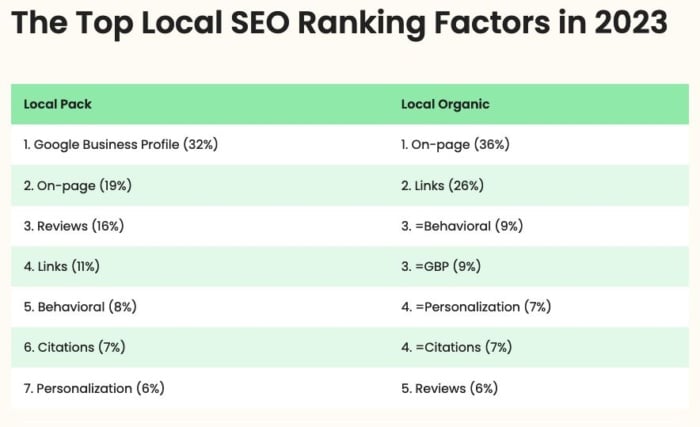
local seo ranking factors

Unlocking the Power of Local SEO Ranking Factors for Online Success

Local SEO Ranking Factors

The Key Local SEO Ranking Factors You Need to Know

Local SEO is essential for businesses looking to attract customers in their vicinity. To rank well in local search results, it’s crucial to understand the key factors that influence your visibility. Here are some of the most important local SEO ranking factors:

Google My Business Listing

Having a complete and accurate Google My Business profile is vital for local SEO success. Make sure your business name, address, and phone number (NAP) are consistent across all platforms.

Local Citations

Citations from reputable online directories help establish your business’s credibility and improve its local search rankings. Ensure your NAP information is consistent across all citations.

Online Reviews

Positive reviews on platforms like Google, Yelp, and Facebook can boost your local SEO rankings. Encourage satisfied customers to leave feedback and respond promptly to any negative reviews.

Website Quality and Relevance

Your website should be well-designed, mobile-friendly, and contain relevant local keywords. Optimise your site’s meta tags, headings, and content to improve its visibility in local search results.

Local Link Building

Earning backlinks from locally relevant websites can enhance your site’s authority and improve its local search rankings. Engage with other businesses in your area to build valuable links.

On-Page Optimisation

Optimise your website’s title tags, meta descriptions, and image alt text with local keywords to improve its relevance for local searches.

Social Signals

Your social media presence can also impact your local SEO rankings. Stay active on platforms like Facebook, Twitter, and Instagram to engage with local customers and boost your online visibility.

In conclusion, mastering these key local SEO ranking factors can significantly enhance your business’s visibility in local search results. By optimising these elements effectively, you can attract more customers from your target area and grow your business locally.


9 Essential Tips to Boost Your Local SEO Rankings

  1. Optimize your Google My Business listing with accurate information
  2. Include local keywords in your website content and meta tags
  3. Get listed in local directories and citation sites
  4. Encourage online reviews from satisfied customers
  5. Create location-specific landing pages on your website
  6. Ensure your website is mobile-friendly for local searchers
  7. Use structured data markup to help search engines understand your location information
  8. Engage with the local community through social media and events
  9. Monitor your local SEO performance regularly and make adjustments as needed

Optimize your Google My Business listing with accurate information

Optimising your Google My Business listing with accurate information is a crucial step in improving your local SEO rankings. By ensuring that your business name, address, and phone number are consistent and up-to-date, you increase the chances of being discovered by local customers searching for products or services in your area. A complete and accurate GMB profile not only boosts your visibility in local search results but also enhances your credibility as a trustworthy and reliable business in the eyes of potential customers.

Include local keywords in your website content and meta tags

To improve your local SEO ranking, it is crucial to incorporate local keywords strategically within your website content and meta tags. By including relevant local terms that reflect your business’s location and services, you can signal to search engines the geographical relevance of your website. This practice not only helps attract local customers searching for specific products or services in your area but also enhances the overall visibility of your site in local search results. Remember, integrating local keywords thoughtfully can make a significant difference in boosting your online presence and attracting target audiences within your vicinity.

Get listed in local directories and citation sites

Getting listed in local directories and citation sites is a crucial step in improving your local SEO rankings. By having your business information consistently displayed across reputable online directories, you not only increase your online visibility but also establish credibility with search engines. These directories and citation sites help local customers find and connect with your business more easily, ultimately boosting your chances of appearing higher in local search results. Therefore, ensuring that your business details are accurately listed on these platforms can significantly enhance your overall local SEO strategy and drive more organic traffic to your website.

Encourage online reviews from satisfied customers

Encouraging online reviews from satisfied customers is a powerful strategy to boost your local SEO rankings. Positive reviews not only enhance your business’s credibility but also signal to search engines that your business is trustworthy and reliable. By actively seeking feedback from happy customers and responding graciously to their reviews, you can build a positive online reputation that attracts more potential customers to your business. Remember, each glowing review serves as a valuable endorsement that can help elevate your business in local search results, ultimately driving more traffic and leads to your website.

Create location-specific landing pages on your website

Creating location-specific landing pages on your website is a crucial strategy to improve your local SEO ranking. By tailoring content to specific geographic areas, you can target local keywords and provide valuable information to users searching for businesses in those locations. These landing pages not only enhance the user experience but also signal to search engines the relevance of your website for local searches. By incorporating location-specific details, such as addresses, contact information, and testimonials from customers in that area, you can boost your visibility in local search results and attract more qualified leads to your business.

Ensure your website is mobile-friendly for local searchers

Ensuring that your website is mobile-friendly is a crucial tip for improving your local SEO ranking. With the increasing number of users conducting searches on mobile devices, having a responsive and mobile-optimised site is essential to cater to local searchers effectively. A mobile-friendly website not only provides a better user experience but also signals to search engines that your site is relevant and accessible to mobile users, which can positively impact your local search visibility and rankings. By prioritising mobile-friendliness, you can enhance your chances of reaching and engaging with local customers searching for businesses like yours on their smartphones or tablets.

Use structured data markup to help search engines understand your location information

Utilising structured data markup is a powerful strategy to aid search engines in comprehending your location information effectively. By incorporating structured data markup on your website, you provide search engines with clear and organised details about your business’s location, making it easier for them to index and display your site in local search results. This not only enhances the visibility of your business to local customers but also boosts your chances of ranking higher in local SEO, ultimately driving more relevant traffic to your website.

Engage with the local community through social media and events

One effective tip to improve your local SEO ranking is to actively engage with the local community through social media and events. By participating in local events and interacting with residents on platforms like Facebook, Twitter, and Instagram, you can enhance your brand visibility and build relationships with potential customers. This engagement not only boosts your online presence but also signals to search engines that your business is relevant to the local area, ultimately improving your chances of ranking higher in local search results.

Monitor your local SEO performance regularly and make adjustments as needed

Monitoring your local SEO performance regularly and making adjustments as needed is a crucial tip for maintaining and improving your online visibility. By tracking key metrics such as search rankings, website traffic, and customer engagement, you can identify areas that require attention and fine-tune your local SEO strategies accordingly. This proactive approach allows you to stay ahead of the competition, adapt to algorithm changes, and ensure that your business continues to attract local customers effectively. Regular monitoring and adjustments are essential for achieving long-term success in local search results.

google local business seo

Maximise Your Local Presence with Google Local Business SEO Strategies

Google Local Business SEO: Boost Your Online Presence Locally

Google Local Business SEO: Boost Your Online Presence Locally

In today’s digital age, having a strong online presence is crucial for businesses of all sizes. When it comes to local businesses, leveraging Google Local Business SEO can significantly enhance visibility and attract more customers in your area.

What is Google Local Business SEO?

Google Local Business SEO is the process of optimising your online presence to appear in local search results on Google. By implementing specific strategies tailored to your location, you can increase your chances of being found by potential customers searching for products or services in your area.

The Benefits of Google Local Business SEO

Optimising your business for local search on Google offers several benefits:

  • Increased Visibility: By appearing in local search results, you can reach customers who are actively looking for businesses like yours in their vicinity.
  • Targeted Traffic: Local SEO helps you attract relevant traffic from people who are more likely to convert into customers.
  • Improved Brand Awareness: Being visible in local searches enhances brand recognition and trust among local consumers.
  • Competitive Edge: Optimising for local SEO can help you stand out from competitors and capture a larger share of the local market.

Key Strategies for Google Local Business SEO

To improve your local search rankings on Google, consider implementing the following strategies:

  1. Optimise Your Google My Business Profile: Ensure your business information is accurate, complete, and up-to-date on Google My Business.
  2. Create Location-Specific Content: Develop content that is relevant to your local audience and includes location-specific keywords.
  3. Acquire Local Citations: Get listed on online directories and websites that mention your business name, address, and phone number (NAP).
  4. Solicit Customer Reviews: Encourage satisfied customers to leave positive reviews on your Google My Business profile.
  5. Optimise Your Website for Local Keywords: Include location-based keywords in your website content, meta tags, and headings.

In Conclusion

Incorporating Google Local Business SEO into your digital marketing strategy can have a significant impact on attracting local customers and growing your business. By following best practices and staying consistent with your efforts, you can boost your online visibility and stay ahead of the competition in the local market.


Top 7 FAQs About Enhancing Your Business with Google Local SEO

  1. What is Google Local Business SEO?
  2. Why is Google Local Business SEO important?
  3. How can I optimise my Google My Business profile for local SEO?
  4. What are some key strategies for improving local search rankings on Google?
  5. How long does it take to see results from Google Local Business SEO efforts?
  6. What are the benefits of acquiring customer reviews for my business’s Google My Business profile?
  7. Is it necessary to have a physical storefront or office location to benefit from Google Local Business SEO?

What is Google Local Business SEO?

Google Local Business SEO refers to the process of optimising a business’s online presence to improve its visibility in local search results on Google. This strategy involves tailoring specific SEO techniques to target a local audience, making it easier for potential customers in the vicinity to discover and engage with the business. By focusing on enhancing local search rankings, businesses can attract more relevant traffic, increase brand awareness within their community, and gain a competitive edge in capturing the attention of nearby consumers actively seeking products or services like theirs.

Why is Google Local Business SEO important?

Google Local Business SEO is crucial for businesses seeking to enhance their online visibility and attract local customers. Optimising for local search on Google can significantly impact a business’s success by increasing visibility in relevant search results, targeting potential customers in the local area, and building brand awareness among the local community. By prioritising Google Local Business SEO strategies, businesses can gain a competitive edge, establish credibility with local consumers, and ultimately drive more foot traffic and online conversions. In essence, Google Local Business SEO is essential for businesses looking to thrive in today’s digital landscape by connecting with their target audience on a local level.

How can I optimise my Google My Business profile for local SEO?

To optimise your Google My Business profile for local SEO, start by ensuring that all information, such as your business name, address, phone number (NAP), and business hours, is accurate and up-to-date. Add high-quality images of your business, products, or services to showcase what you offer visually. Utilise relevant keywords in your business description and include a link to your website for additional information. Encourage satisfied customers to leave positive reviews on your profile as this can boost credibility and attract more local customers. Regularly update posts and offers to engage with your audience and improve visibility in local search results. By following these steps, you can enhance your Google My Business profile’s effectiveness in attracting local customers and improving your overall online presence.

What are some key strategies for improving local search rankings on Google?

When it comes to enhancing local search rankings on Google, implementing key strategies is essential for businesses looking to boost their online visibility. Some effective tactics include optimising your Google My Business profile with accurate information, creating location-specific content that resonates with your local audience, acquiring local citations from reputable directories, encouraging positive customer reviews, and incorporating relevant local keywords throughout your website. By focusing on these strategies and maintaining consistency in your efforts, you can improve your local search rankings on Google and attract more potential customers in your area.

How long does it take to see results from Google Local Business SEO efforts?

When it comes to Google Local Business SEO efforts, one frequently asked question is, “How long does it take to see results?” The timeline for seeing tangible results from your local SEO strategies can vary depending on various factors such as the competitiveness of your industry, the current state of your online presence, and the effectiveness of your optimisation efforts. Generally, businesses may start noticing improvements in their local search rankings and online visibility within a few weeks to a few months after implementing targeted SEO strategies. Consistent monitoring, analysis, and adjustments to your approach can help accelerate the progress and ensure long-term success in local search results.

What are the benefits of acquiring customer reviews for my business’s Google My Business profile?

Acquiring customer reviews for your business’s Google My Business profile offers a multitude of benefits. Positive reviews not only enhance your credibility and reputation but also play a crucial role in influencing potential customers’ purchasing decisions. By showcasing authentic feedback from satisfied clients, you can establish trust and build a positive brand image within your local community. Moreover, Google considers customer reviews as a ranking factor, meaning that businesses with a higher number of positive reviews are more likely to appear prominently in local search results, thereby increasing visibility and attracting more organic traffic to your website or physical location. In essence, customer reviews on your Google My Business profile serve as powerful testimonials that can drive growth and success for your business in the competitive digital landscape.

Is it necessary to have a physical storefront or office location to benefit from Google Local Business SEO?

For businesses wondering about the necessity of having a physical storefront or office location to reap the benefits of Google Local Business SEO, the answer lies in the nature of local search visibility. While having a physical location can certainly enhance your local SEO efforts by providing a point of contact for customers and reinforcing your local presence, it is not always a strict requirement. Businesses without a physical storefront can still benefit from Google Local Business SEO by focusing on other aspects such as service areas, customer testimonials, and building a strong online presence through website optimisation and local citations. Ultimately, while a physical location can be advantageous, businesses can leverage various strategies to improve their visibility in local search results even without one.

local seo expert

Unlocking Success: The Essential Role of a Local SEO Expert in Boosting Your Business

Local SEO Expert

The Role of a Local SEO Expert in Boosting Your Business

In today’s digital age, having a strong online presence is crucial for businesses looking to attract local customers. This is where a Local SEO Expert comes into play. A Local SEO Expert is a professional who specialises in optimising a business’s online visibility for local searches.

Local SEO focuses on improving a business’s visibility in local search results, making it easier for potential customers in the area to find and engage with the business. A Local SEO Expert understands the nuances of local search algorithms and knows how to tailor strategies to target specific geographic locations.

Key Responsibilities of a Local SEO Expert:

  • Keyword Research: Identifying relevant keywords that local customers are using to search for businesses like yours.
  • Google My Business Optimization: Creating and optimising your Google My Business profile to enhance your presence in local search results.
  • Local Citations: Ensuring consistent and accurate business information across online directories and listings.
  • On-Page Optimisation: Optimising website content, meta tags, and images for local keywords.
  • Local Link Building: Building high-quality backlinks from locally relevant websites to improve your site’s authority.
  • Monitoring and Reporting: Tracking performance metrics and providing regular reports on the effectiveness of local SEO efforts.

A skilled Local SEO Expert can help your business stand out in local search results, drive targeted traffic to your website, and increase foot traffic to your physical location. By implementing tailored strategies that resonate with your local audience, a Local SEO Expert can give your business the competitive edge it needs to succeed in today’s digital landscape.

If you’re looking to enhance your online visibility within your community and attract more local customers, partnering with a knowledgeable Local SEO Expert could be the key to unlocking new opportunities for growth and success.


Top 7 Tips for Boosting Your Local SEO Expertise

  1. Optimise your Google My Business listing with accurate information.
  2. Use local keywords in your website content and meta tags.
  3. Get listed in local business directories and citation sites.
  4. Encourage online reviews from satisfied customers to build credibility.
  5. Create location-specific content to attract local audiences.
  6. Ensure your website is mobile-friendly for users searching on-the-go.
  7. Engage with the local community through events, sponsorships, or partnerships.

Optimise your Google My Business listing with accurate information.

To maximise your local SEO impact, it is crucial to optimise your Google My Business listing with precise and up-to-date information. Providing accurate details such as your business address, phone number, opening hours, and website URL not only helps potential customers find you easily but also boosts your credibility in local search results. A Local SEO Expert can ensure that your Google My Business profile is fully optimised to enhance your online visibility and attract more local customers to your business.

Use local keywords in your website content and meta tags.

To enhance your local SEO strategy, it is essential to incorporate local keywords into your website content and meta tags. By including specific terms that are relevant to your geographic location, you can increase the visibility of your business in local search results. Utilising local keywords not only helps search engines understand the context of your website but also signals to potential customers that your business is a relevant and trustworthy option in their area. This simple yet effective tip can significantly boost your online presence and attract more local traffic to your website.

Get listed in local business directories and citation sites.

To enhance your local SEO efforts, it is essential to get listed in local business directories and citation sites. By ensuring that your business information is accurate and consistent across these platforms, you not only improve your online visibility but also establish credibility with search engines. Being listed in reputable directories and citation sites can help potential customers find your business more easily when searching for local products or services, ultimately driving more targeted traffic to your website and physical location.

Encourage online reviews from satisfied customers to build credibility.

Encouraging online reviews from satisfied customers is a valuable strategy employed by Local SEO Experts to build credibility for businesses. Positive reviews not only enhance a business’s reputation but also play a significant role in influencing potential customers’ decisions. By showcasing authentic feedback from happy clients, businesses can establish trust and credibility within their local community, ultimately boosting their visibility in local search results. This approach not only helps attract new customers but also reinforces the brand’s reliability and quality of service, making it a key aspect of successful local SEO campaigns.

Create location-specific content to attract local audiences.

Creating location-specific content is a powerful strategy employed by Local SEO Experts to attract and engage local audiences effectively. By tailoring your content to address the unique needs, interests, and preferences of your target audience in specific geographic locations, you can establish a strong connection with local customers. This approach not only helps improve your visibility in local search results but also enhances your credibility as a business that understands and caters to the local community. Through location-specific content, a Local SEO Expert can drive organic traffic to your website and increase conversions by delivering relevant and valuable information that resonates with your local audience.

Ensure your website is mobile-friendly for users searching on-the-go.

In the realm of local SEO expertise, it is crucial to ensure that your website is optimised for mobile users who are searching on-the-go. With the increasing reliance on smartphones and tablets for online searches, having a mobile-friendly website not only enhances user experience but also plays a significant role in improving your local search rankings. By catering to the needs of mobile users with responsive design and fast loading times, a Local SEO Expert can help your business capture the attention of potential customers who are actively seeking local products or services while on their mobile devices.

Engage with the local community through events, sponsorships, or partnerships.

To maximise the impact of your local SEO efforts, it is essential to engage with the local community through events, sponsorships, or partnerships. By actively participating in community events, sponsoring local initiatives, or forming partnerships with other businesses in the area, you not only strengthen your brand’s presence but also build valuable connections with potential customers. This proactive approach not only enhances your visibility within the community but also demonstrates your commitment to supporting and being a part of the local fabric, which can significantly boost your credibility and trustworthiness among local audiences.

Mastering Google SEO for Local Business Success in the UK

Google SEO Local: Boost Your Business with Local Search

Google SEO Local: Boost Your Business with Local Search

In today’s digital age, having a strong online presence is crucial for businesses of all sizes. One effective way to reach potential customers in your area is through Google SEO Local. This strategy focuses on optimising your website to appear in local search results when users look for products or services near them.

What is Google SEO Local?

Google SEO Local is a branch of search engine optimisation that targets local searches. When users use location-specific keywords such as “near me” or include a city name in their search queries, Google displays relevant local businesses in the search results. By implementing Google SEO Local strategies, you can increase your visibility to potential customers in your vicinity.

Benefits of Google SEO Local

Targeted Audience: By appearing in local search results, you can connect with users who are actively seeking products or services in your area.

Increased Traffic: Optimising your website for local search can drive more targeted traffic to your site, leading to higher conversion rates.

Competitive Advantage: Stand out from competitors by appearing at the top of local search results and attracting nearby customers.

How to Improve Your Google SEO Local Ranking

To enhance your presence in local searches on Google, consider the following strategies:

  • Create a Google My Business account: Claiming and optimising your Google My Business listing is essential for local SEO success.
  • Include location-specific keywords: Incorporate city names, neighbourhoods, or other location identifiers in your website content and meta tags.
  • Build local citations: Ensure that your business information (name, address, phone number) is consistent across online directories and listings.
  • Solicit customer reviews: Encourage satisfied customers to leave positive reviews on platforms like Google My Business to boost credibility and rankings.
  • Create locally-focused content: Produce blog posts or landing pages that address topics relevant to your local audience.

In Conclusion

Incorporating Google SEO Local strategies into your digital marketing efforts can significantly benefit your business by attracting nearby customers and increasing foot traffic to your physical location. By optimising for local search, you can improve brand visibility and establish a strong online presence within your community.


Top 9 FAQs About Google SEO Local: A Guide to Boosting Your Business Visibility

  1. What is Google SEO Local?
  2. Why is Google SEO Local important for businesses?
  3. How does Google SEO Local differ from traditional SEO?
  4. What are the benefits of implementing Google SEO Local strategies?
  5. How can I improve my local ranking on Google?
  6. Is having a Google My Business listing necessary for local SEO?
  7. Do customer reviews impact local search rankings on Google?
  8. What role do location-specific keywords play in Google SEO Local?
  9. Are there any tools or platforms that can help with managing local SEO efforts on Google?

What is Google SEO Local?

Google SEO Local refers to a specialised approach within search engine optimisation that focuses on enhancing a business’s visibility in local search results on Google. When users perform location-specific searches, such as including a city name or “near me” in their query, Google displays relevant businesses that match the search criteria. By implementing Google SEO Local strategies, businesses can increase their chances of appearing prominently in these local search results, thereby connecting with potential customers in their geographical vicinity. This targeted approach helps businesses attract local traffic, improve brand visibility within the community, and gain a competitive edge in reaching nearby consumers actively seeking products or services.

Why is Google SEO Local important for businesses?

Google SEO Local is crucial for businesses because it enables them to target a specific audience in their local area, increasing the likelihood of connecting with potential customers who are actively searching for products or services nearby. By optimising for local search, businesses can enhance their visibility in Google search results when users include location-specific keywords such as “near me” or city names. This targeted approach not only drives more relevant traffic to their websites but also helps businesses stand out from competitors and gain a competitive edge in attracting nearby customers. Ultimately, Google SEO Local plays a vital role in boosting brand awareness, driving foot traffic to physical locations, and improving overall business growth within the local community.

How does Google SEO Local differ from traditional SEO?

Google SEO Local differs from traditional SEO in its focus on geographically targeted search results. While traditional SEO aims to improve a website’s visibility on a global scale, Google SEO Local specifically targets users searching for products or services within a specific location. By optimising for local search queries and incorporating location-specific keywords, businesses can enhance their chances of appearing in the coveted local pack and map listings on Google. This hyper-local approach allows businesses to connect with nearby customers who are actively seeking relevant offerings in their vicinity, making Google SEO Local an essential strategy for brick-and-mortar establishments looking to boost their online visibility within their community.

What are the benefits of implementing Google SEO Local strategies?

Implementing Google SEO Local strategies offers numerous benefits for businesses looking to enhance their online presence and connect with local customers effectively. By focusing on local search optimisation, businesses can target a specific audience actively seeking products or services in their area, leading to higher conversion rates and increased website traffic. Additionally, appearing in local search results provides a competitive advantage by standing out from competitors and attracting nearby customers who are more likely to engage with the business. Overall, implementing Google SEO Local strategies can significantly improve brand visibility, drive targeted traffic, and establish a strong online presence within the local community.

How can I improve my local ranking on Google?

To enhance your local ranking on Google, it is essential to focus on several key strategies. Firstly, ensure that your Google My Business listing is accurate and optimised with relevant information about your business. Incorporate location-specific keywords in your website content and meta tags to signal to Google the areas you serve. Building local citations across online directories can also boost your credibility and visibility in local searches. Encourage satisfied customers to leave positive reviews on platforms like Google My Business, as these reviews can influence your ranking. Lastly, creating locally-focused content that resonates with your target audience can further improve your local SEO performance on Google. By implementing these tactics consistently, you can strengthen your position in local search results and attract more nearby customers to your business.

Is having a Google My Business listing necessary for local SEO?

Having a Google My Business listing is essential for local SEO success. This free tool provided by Google allows businesses to manage their online presence and appear in local search results. By claiming and optimising your Google My Business listing, you can ensure that accurate information about your business, such as address, phone number, and operating hours, is readily available to potential customers. Moreover, having a verified listing can improve your visibility on Google Maps and increase trust among users searching for local products or services. In essence, utilising Google My Business is a fundamental step in enhancing your local SEO efforts and connecting with nearby customers effectively.

Do customer reviews impact local search rankings on Google?

Customer reviews play a crucial role in influencing local search rankings on Google. Positive reviews not only enhance your business’s credibility and reputation but also signal to search engines that your business is trustworthy and provides quality products or services. Google values authentic customer feedback, and businesses with a higher volume of positive reviews are likely to rank higher in local search results. Encouraging customers to leave reviews on platforms like Google My Business can have a significant impact on your local SEO performance, helping you stand out among competitors and attract more local customers to your business.

What role do location-specific keywords play in Google SEO Local?

Location-specific keywords play a crucial role in Google SEO Local by helping businesses target users searching for products or services in their vicinity. By incorporating city names, neighbourhoods, or other location identifiers into website content and meta tags, businesses can improve their visibility in local search results. These keywords signal to search engines like Google that a business is relevant to users in a specific geographic area, increasing the likelihood of appearing in local search queries and attracting nearby customers. In essence, location-specific keywords are a key component of Google SEO Local strategies that enable businesses to connect with their target audience at a local level.

Are there any tools or platforms that can help with managing local SEO efforts on Google?

When it comes to managing local SEO efforts on Google, there are several tools and platforms available to streamline the process and maximise results. Tools such as Google My Business, Moz Local, BrightLocal, and Yext can assist businesses in managing their local SEO campaigns effectively. These platforms offer features like local listing management, review monitoring, citation building, and performance tracking to help businesses enhance their online visibility in local search results. By utilising these tools, businesses can simplify the management of their local SEO efforts on Google and improve their chances of reaching potential customers in their area.

local search engine

Unlocking the Potential of Local Search Engine Optimisation in the UK

The Power of Local Search Engine Optimisation

The Power of Local Search Engine Optimisation

Local search engine optimisation (SEO) is a crucial strategy for businesses looking to attract customers within their specific geographical area. With the increasing use of mobile devices and voice search, local SEO has become more important than ever in connecting businesses with local consumers.

What is Local SEO?

Local SEO involves optimising your online presence to improve visibility in local search results. This includes creating and optimising Google My Business profiles, local citations, and ensuring consistency in NAP (Name, Address, Phone Number) information across all online platforms.

The Benefits of Local SEO

Implementing a strong local SEO strategy can have numerous benefits for businesses:

  • Increased Visibility: By appearing in local search results, your business can reach potential customers who are actively looking for products or services in your area.
  • Targeted Traffic: Local SEO helps attract relevant traffic from nearby consumers who are more likely to convert into customers.
  • Improved Reputation: Positive reviews and high local rankings can enhance your business’s reputation and credibility within the community.
  • Competitive Advantage: Optimising for local search can give you an edge over competitors who may not have prioritised their local online presence.

Key Strategies for Local SEO Success

To maximise the impact of your local SEO efforts, consider implementing the following strategies:

  1. Optimise Your Google My Business Profile: Ensure that your GMB profile is complete and accurate with relevant information about your business.
  2. Create Local Content: Develop content that is tailored to your local audience, including location-specific keywords and information.
  3. Get Listed in Online Directories: Claim and optimise listings on popular online directories such as Yelp, Yellow Pages, and TripAdvisor.
  4. Solicit Customer Reviews: Encourage satisfied customers to leave positive reviews on platforms like Google and Facebook to build trust with potential customers.

In Conclusion

In today’s digital age, leveraging the power of local SEO is essential for businesses seeking to connect with nearby consumers and drive foot traffic to physical locations. By implementing targeted strategies and optimising your online presence for local search, you can position your business for success in the competitive marketplace.


Understanding Local Search: Strategy, Engines, and Top Platforms Explained

  1. What is local search strategy?
  2. What is a local search engine?
  3. What is local search in digital marketing?
  4. What is meant by local search?
  5. Which is India’s local search engine?
  6. What is a local search in SEO?
  7. Which are the top 10 search engines?

What is local search strategy?

A local search strategy refers to a targeted approach that businesses adopt to enhance their visibility in local search engine results. This strategy involves optimising various online elements, such as Google My Business profiles, local citations, and location-specific keywords, to ensure that the business appears prominently when users search for products or services within a specific geographic area. By focusing on local search strategy, businesses can attract nearby customers, drive foot traffic to physical locations, and establish a strong online presence within their community.

What is a local search engine?

A local search engine is a specialised online platform that enables users to find businesses, products, or services within a specific geographic area. Unlike traditional search engines that provide global results, local search engines focus on delivering relevant information based on the user’s location or specified region. By utilising local search engines, individuals can easily discover nearby businesses, read reviews, access contact details, and obtain directions, making it a valuable tool for connecting consumers with local businesses in their community.

What is local search in digital marketing?

Local search in digital marketing refers to the process of users seeking information, products, or services within a specific geographic area using online search engines. It involves optimising online content to target local consumers and improve visibility in search engine results for location-based queries. Local search plays a vital role in connecting businesses with nearby customers and enhancing their online presence within their target market. By focusing on local SEO strategies such as Google My Business optimisation, citation management, and localised content creation, businesses can effectively reach their local audience and drive foot traffic to physical locations.

Local search refers to the process of users conducting online searches with the intent of finding products, services, or information within a specific geographic area. It involves querying search engines for local businesses, establishments, or events that are relevant to their location. Local search results are tailored to the user’s proximity and provide them with relevant and geographically targeted information. This type of search is particularly valuable for businesses looking to attract nearby customers and establish a strong presence within their local community.

Which is India’s local search engine?

When it comes to local search engines in India, one of the most prominent platforms is Justdial. Justdial is a popular local search engine that provides users with information on a wide range of businesses, services, and products across various cities in India. With its user-friendly interface and comprehensive database, Justdial serves as a go-to resource for individuals looking to find local businesses and services in their vicinity.

What is a local search in SEO?

A local search in SEO refers to the process of users seeking information, products, or services within a specific geographic area. When individuals conduct a local search, they are looking for businesses or resources that are physically close to them. Local search engine optimisation (SEO) focuses on improving a website’s visibility in these local search results, ensuring that businesses can connect with nearby customers who are actively seeking their offerings. By implementing local SEO strategies such as optimising Google My Business profiles and local citations, businesses can enhance their online presence and attract targeted traffic from their local community.

Which are the top 10 search engines?

When it comes to search engines, the landscape is diverse and constantly evolving. While Google remains the dominant player in the search engine market, there are several other popular search engines that cater to specific niches or regions. Some of the top 10 search engines besides Google include Bing, Yahoo, Baidu, Yandex, DuckDuckGo, Ask.com, AOL Search, Internet Archive, and Ecosia. Each of these search engines offers unique features and functionalities, providing users with a variety of options when it comes to conducting online searches.