top seo agencies

Top SEO Agencies in the UK: How to Choose the Right Partner

Top SEO Agencies in the UK: How to Find the Right Partner

Choosing an SEO agency can be a significant decision for any business. The right partner can help improve your visibility in search results, attract more relevant visitors and support sustainable growth. The wrong fit, however, may leave you with unclear reports, unsuitable tactics or expectations that were never realistic in the first place.

There is no single agency that is best for every organisation. The right choice depends on your goals, budget, sector and in-house resources. This guide introduces several established UK agencies and explains what to look for when comparing SEO providers.

What makes a top SEO agency?

A strong SEO agency should begin by understanding your business, audience and commercial objectives. Rather than promising a quick ranking boost, it should explain how its recommendations connect to meaningful outcomes, such as qualified enquiries, online sales or increased visibility for important services.

Look for an agency that can demonstrate:

  • A clear strategy: Recommendations should reflect your website, market and priorities, rather than relying on a generic checklist.
  • Sound technical knowledge: The team should be able to identify issues affecting crawling, indexing, site structure, page experience and performance.
  • Useful content expertise: Effective SEO involves creating and improving content that answers genuine customer needs.
  • Transparent reporting: Reports should explain progress in plain language and distinguish activity from results.
  • Ethical practices: Be cautious of guaranteed rankings, secret methods or link-building promises that sound too good to be true.
  • Relevant experience: Experience with businesses of a similar size, business model or sector can be valuable.

Notable SEO agencies in the UK

The agencies below are examples of established providers operating in the UK. This is not a definitive ranking: services, teams and areas of specialism can change, so check each agency’s current offering and speak with its team before making a decision.

Impression

Impression is a digital marketing agency with SEO among its services. It may be worth considering if you want to explore SEO alongside other digital channels, such as paid media or digital PR. Ask how its teams coordinate activity and how performance is measured across channels.

The SEO Works

The SEO Works provides search marketing services to businesses across different sectors. When assessing the agency, ask about its approach to technical SEO, content and link acquisition, and request examples that are relevant to your own business goals.

Blue Array

Blue Array focuses on SEO and organic search consultancy. A specialist provider may suit organisations looking for dedicated search expertise or support alongside an existing marketing team. Clarify whether you need strategic advice, implementation or a combination of both.

Reboot Online

Reboot Online offers SEO and digital marketing services, including work connected with digital PR and content. If these areas are important to your strategy, ask how campaigns are planned, how quality is assessed and how outcomes are reported.

Rise at Seven

Rise at Seven works across search, content and digital PR. It may be relevant to brands looking for creative campaigns designed to build awareness as well as organic visibility. Discuss how campaign ideas will support your target audience and longer-term search performance.

Aira

Aira is a digital marketing agency offering services that include SEO and content-related work. Businesses considering an integrated approach can ask how SEO fits with their wider marketing activity and which specialists would be involved in their account.

Hallam

Hallam provides digital marketing services, including SEO. It may be a useful option for businesses comparing agencies that can support several areas of digital marketing. Make sure the proposed scope gives SEO enough attention if organic search is a main priority.

Brainlabs

Brainlabs is a digital marketing company with services spanning multiple channels. Larger organisations or brands with more complex marketing requirements may wish to explore whether its capabilities match their needs, team structure and budget.

How to choose the right SEO agency

Define your goals first

Be clear about what you want SEO to achieve. You might be looking to increase online sales, generate local leads, grow non-branded traffic or improve the visibility of a particular service. Clear objectives make it easier to compare proposals fairly.

Ask what the work will involve

Request a straightforward explanation of the proposed work during the first few months. This might include a technical review, keyword and competitor research, content recommendations, improvements to existing pages or digital PR. The plan should be specific enough to understand, while allowing for findings to shape priorities.

Understand how success is measured

Rankings can be useful indicators, but they do not tell the whole story. Ask how the agency will report on traffic quality, enquiries, conversions and revenue where suitable tracking is in place. Agree how progress will be reviewed and what information you will need to provide.

Check the contract and account team

Before signing, review the contract length, notice period, fees and any additional costs. Find out who will manage your account, how often you will meet and who will carry out the work. Make sure the arrangement suits your organisation’s pace and internal capacity.

Look for realistic expectations

SEO is an ongoing process, and results depend on factors such as competition, website condition, budget and the time required to implement changes. A trustworthy agency will discuss uncertainty and likely priorities rather than guarantee a particular position in search results.

Questions to ask before hiring an SEO agency

  • What would you prioritise for a business like ours, and why?
  • Which parts of the work will your team deliver, and which will require our input?
  • How do you approach technical SEO, content and link acquisition?
  • How will you measure and report on progress?
  • Who will be responsible for our account?
  • Can you share relevant examples or references?
  • What would you consider a realistic timeframe for our objectives?

Final thoughts

The top SEO agency for your business is not necessarily the biggest or most widely known. It is the one that understands your objectives, communicates clearly and can provide a credible plan for improving your organic search performance. Compare several proposals, ask detailed questions and choose a partner whose approach is transparent, realistic and suited to your needs.


Top SEO Agencies: 9 Benefits to Boost Your Online Presence and Drive Sales

  1. Improve visibility in search results
  2. Attract more relevant website visitors
  3. Build a tailored SEO strategy
  4. Strengthen technical website performance
  5. Create useful, search-focused content
  6. Support sustainable organic growth
  7. Provide clear performance reporting
  8. Offer specialist industry expertise
  9. Help turn traffic into enquiries and sales


Considerations When Choosing Top SEO Agencies: Cost, Timing, and Specialisation

  1. Top agencies can be expensive.
  2. Results may take months to appear.
  3. Some specialise in certain industries or services.

Improve visibility in search results

Top SEO agencies can help improve your visibility in search results by making your website easier for search engines to understand and more useful to potential customers. Through careful keyword research, technical improvements and relevant, high-quality content, they can help your pages appear for searches related to your products or services. Greater visibility can bring more qualified visitors to your website and help your business reach people who are actively looking for what you offer.

Attract more relevant website visitors

Top SEO agencies help attract more relevant website visitors by making it easier for people actively searching for your products or services to find you. Through careful keyword research, useful content and technical improvements, they help your website appear for searches that match your audience’s needs. This can bring in visitors who are more likely to engage, make an enquiry or become customers—not simply increase traffic for its own sake.

Build a tailored SEO strategy

A key advantage of working with a top SEO agency is the development of a strategy tailored to your business. Rather than relying on a standard checklist, experienced specialists consider your goals, audience, industry, competitors and website to identify the most valuable opportunities. This helps ensure that technical improvements, content and other SEO activity are prioritised around your needs, making your investment more focused and measurable.

Strengthen technical website performance

Top SEO agencies can strengthen your website’s technical performance by identifying and addressing issues that make it harder for search engines to crawl, index and understand your pages. This may include improving site speed and mobile usability, fixing broken links and redirect errors, refining site structure and resolving duplicate-content or indexing problems. A technically sound website can make it easier for visitors to find and use your content, while giving search engines clearer signals about what each page offers.

Create useful, search-focused content

Top SEO agencies create useful, search-focused content that meets the needs of both your audience and search engines. They research the questions, topics and search terms relevant to your customers, then use those insights to shape clear, informative pages. This helps potential customers find answers and understand your products or services, while giving search engines a better picture of what your website offers. The result is content designed to attract relevant visitors and support your wider business goals—not simply pages written to include keywords.

Support sustainable organic growth

Top SEO agencies support sustainable organic growth by building a strong foundation for long-term visibility, rather than relying on short-lived tactics. Through technical improvements, useful content and a clear understanding of what your audience is searching for, they can help your website attract relevant visitors over time. This steady approach can strengthen your online presence and generate valuable enquiries or sales well beyond a single campaign.

Provide clear performance reporting

Top SEO agencies provide clear performance reporting, helping you understand what is being done and whether it is making a difference. Regular reports should explain key measures such as organic traffic, search visibility, enquiries and conversions in straightforward language, with context on what has changed and why. This transparency makes it easier to track progress, spot opportunities and agree on the next steps with your agency.

Offer specialist industry expertise

Top SEO agencies often bring specialist industry expertise, helping them understand the customers, competition and search trends that shape your market. This insight can inform more relevant keyword research, content recommendations and SEO strategies, while helping avoid a one-size-fits-all approach. An agency familiar with your sector may also identify opportunities and challenges more quickly, although it is still important to check that its experience matches your business and goals.

Help turn traffic into enquiries and sales

Top SEO agencies look beyond increasing website traffic: they focus on attracting people who are more likely to become customers. By targeting relevant searches, improving landing pages and making it easier for visitors to take the next step, they can help turn organic visits into enquiries and sales. Regular performance analysis also helps identify what is working and where the customer journey could be improved.

Top agencies can be expensive.

Top SEO agencies can be expensive, particularly for small businesses or organisations with limited marketing budgets. Their fees may reflect specialist expertise, larger teams and a broad range of services, but that does not always mean they are the right fit for every company. Before committing, compare proposals, check exactly what is included and consider whether a smaller specialist agency or consultant could provide the support you need at a more manageable cost.

Results may take months to appear.

One drawback of working with a top SEO agency is that results may take months to appear. SEO involves research, technical improvements, content development and earning authority over time, while search engines need time to assess and reflect those changes. This means businesses seeking immediate leads or sales may find the wait challenging, and should agree realistic milestones with their agency rather than expect overnight results.

Some specialise in certain industries or services.

Some top SEO agencies specialise in particular industries or services, which can limit their suitability for businesses with different needs. Their experience may not translate directly to your market, and they may lack the knowledge required for your audience, competitors or regulatory requirements. Before choosing an agency, check that its expertise matches your sector and goals, and ask how it would adapt its approach to your business.
best seo firms

Best SEO Firms: How to Choose the Right Agency for Your Business

How to Choose the Best SEO Firm for Your Business

Finding the best SEO firm can make a meaningful difference to your business’s visibility, website traffic and enquiries. But there is no single agency that is right for every organisation. The best choice depends on your goals, budget, industry and the expertise your website needs.

Rather than relying on a league table or bold promises, look for an SEO partner that understands your business, explains its approach clearly and can show how its work supports measurable outcomes.

What does an SEO firm do?

An SEO firm helps improve how a website performs in organic search results. Its work may include technical improvements, keyword research, content planning, on-page optimisation, digital PR and link acquisition. Some firms also provide local SEO, e-commerce SEO or international SEO.

A reputable agency will tailor its recommendations to your website and audience. It should not simply apply the same package to every client.

What makes an SEO firm one of the best?

A strategy built around your goals

SEO should support wider business objectives, such as increasing qualified enquiries, sales or visits to a local branch. Before recommending a plan, an agency should ask about your customers, competitors, services and current performance.

Clear, evidence-led recommendations

Good SEO decisions are based on research and analysis. Ask how the firm identifies opportunities, measures progress and decides what to prioritise. Recommendations should be explained in plain English, with a clear link to your objectives.

Transparent reporting

Reports should show more than rankings. Useful measures may include organic traffic, conversions, leads, revenue and progress on agreed tasks. A good firm will explain what the numbers mean and where further work is needed.

Relevant experience

Experience in your sector can be useful, particularly if your market is highly competitive or regulated. However, sector experience is not the only measure of quality. Look for evidence that the firm can understand your audience and solve problems relevant to your website.

Ethical, sustainable methods

Search engine optimisation is a long-term investment. The firm should be willing to explain how it earns links, develops content and improves your site. Be cautious of tactics that rely on manipulative link schemes, copied content or guarantees of rapid rankings.

Types of SEO firms

SEO providers vary in size and specialism. Understanding the differences can help you create a shortlist:

  • Full-service digital agencies: Offer SEO alongside services such as paid search, web design and social media marketing.
  • SEO specialists: Focus primarily on organic search and may offer deeper expertise in technical SEO, content or digital PR.
  • Local SEO agencies: Help businesses improve visibility in local searches, including map results and location-based queries.
  • E-commerce SEO firms: Work with online shops on product pages, category structures, site speed and other platform-specific challenges.
  • Consultants and smaller teams: May offer direct access to senior specialists and a more tailored service.

The right model depends on the support you need. A business looking for a complete digital marketing service may prefer a full-service agency, while a company with an in-house marketing team might need a specialist SEO partner.

Questions to ask before hiring an SEO firm

Use an initial conversation to understand how the agency works. Consider asking:

  • How would you assess our website and identify priorities?
  • Who would manage our account and carry out the work?
  • What would you measure, and how often would you report on progress?
  • Can you share relevant case studies and explain the work behind the results?
  • What will you need from our team?
  • How are fees structured, and what is included?
  • How do you respond to changes in search engine guidance?

Look for thoughtful answers rather than a guaranteed ranking or a one-size-fits-all proposal. SEO takes time, and results depend on factors such as competition, the condition of your website and the resources available to implement recommendations.

Warning signs to look out for

Be cautious if an SEO firm promises a specific position in Google, guarantees fast results or refuses to explain its methods. Other warning signs include vague reporting, unclear fees, large numbers of low-quality links and pressure to sign a lengthy contract before the agency has understood your needs.

It is also worth clarifying ownership. Your business should retain access to its website, analytics accounts, Google Business Profile and other essential platforms.

How much does an SEO firm cost?

SEO fees vary according to the scope of work, the competitiveness of your market and the expertise required. Some firms charge a monthly retainer, while others offer fixed-scope projects or consultancy by the hour. Compare proposals by looking at the work, expertise and reporting included—not just the headline price.

A lower-cost service may be suitable for a straightforward project, but ongoing SEO often requires consistent technical, content and promotional work. Ask each provider to set out the expected deliverables and explain how they relate to your priorities.

Finding the right SEO partner

The best SEO firm is not necessarily the largest or the one with the most impressive claims. It is the partner that understands your goals, sets realistic expectations and gives you a clear plan for improving your organic performance.

Shortlist a few providers, compare their recommendations and speak to the people who would work on your account. With the right questions and a focus on evidence, you can choose an SEO partner equipped to support sustainable growth.


Top 7 FAQs on Selecting the Best SEO Firm in the UK

  1. How do I choose the best SEO firm for my business?
  2. What services should the best SEO firms offer?
  3. How much does it cost to hire an SEO firm in the UK?
  4. How long does it take for an SEO firm to deliver results?
  5. How can I check whether an SEO firm is reputable?
  6. Can an SEO firm guarantee first-page rankings on Google?
  7. What should I expect from an SEO firm’s reports and communication?

How do I choose the best SEO firm for my business?

To choose the best SEO firm for your business, start by defining your goals, target audience and budget, then look for a provider with relevant experience and a clear, tailored strategy. Ask how they measure results, what work they will carry out, who will manage your account and how often they report on progress. Compare proposals for their methods and deliverables—not just their price—and check references or case studies where available. Choose a firm that communicates openly, sets realistic expectations and avoids guarantees of specific rankings or overnight results.

What services should the best SEO firms offer?

The best SEO firms should offer a tailored mix of services based on your business goals and website, rather than a one-size-fits-all package. This may include technical SEO, keyword research, on-page optimisation, content strategy, local or international SEO, link earning and digital PR, plus regular performance tracking and clear reporting. A strong firm will explain which services matter most for your situation, how the work will be carried out and how success will be measured.

How much does it cost to hire an SEO firm in the UK?

The cost of hiring an SEO firm in the UK varies depending on your website, industry, goals and the level of support required. Many agencies charge a monthly retainer, while others offer one-off audits or project-based work. Fees can range from a few hundred pounds a month for limited support to several thousand pounds for a comprehensive campaign. When comparing quotes, check what’s included—such as technical SEO, content, digital PR and reporting—and focus on the value and expertise offered rather than price alone.

How long does it take for an SEO firm to deliver results?

An SEO firm may begin making improvements within the first few weeks, but meaningful results often take around three to six months to emerge, and competitive markets can take longer. The timescale depends on factors such as your website’s current condition, the level of competition, the work involved and how quickly recommendations are implemented. A reputable firm will set realistic expectations, track progress using relevant measures such as qualified traffic and enquiries, and explain that SEO is an ongoing process rather than a one-off fix.

How can I check whether an SEO firm is reputable?

To check whether an SEO firm is reputable, look for clear evidence of its experience, such as relevant case studies, client references and transparent explanations of the work it carries out. Ask how it measures results, who will manage your account and what its fees include. A trustworthy firm will set realistic expectations, explain its methods in plain English and follow search engine guidelines. Be wary of guaranteed rankings, promises of instant results or reluctance to discuss its approach.

Can an SEO firm guarantee first-page rankings on Google?

No reputable SEO firm can guarantee first-page rankings on Google. Search results are influenced by many factors, including competition, your website’s condition and changes to Google’s algorithms, and no agency controls them all. Be wary of firms promising specific rankings or fast results. A trustworthy SEO partner will set realistic expectations, explain its approach and focus on sustainable improvements, such as stronger organic visibility, relevant traffic and more enquiries or sales.

What should I expect from an SEO firm’s reports and communication?

An SEO firm’s reports should clearly show the work completed, progress towards agreed goals and the results that matter to your business, such as relevant organic traffic, enquiries or sales—not just keyword rankings. Expect regular updates in plain English, with context on what the data means, any challenges or changes in search performance, and the next steps. Your agency should also be easy to contact, respond within an agreed timeframe and be open about what is working, what is not, and why.

affordable seo companies

Affordable SEO Companies: How to Choose the Right Partner

Affordable SEO Companies: How to Find the Right Partner

For many small businesses, search engine optimisation (SEO) is an important way to reach potential customers online. But with limited budgets, finding an affordable SEO company can feel like a balancing act: you want to keep costs manageable without compromising on quality.

The good news is that affordable SEO does not have to mean ineffective SEO. The key is to understand what a provider offers, how its work supports your goals and whether its approach is transparent and sustainable.

What Does “Affordable SEO” Mean?

There is no single price for SEO. Costs vary according to factors such as the size of your website, the competitiveness of your industry, your target locations and the work required. A local service business may need a different level of support from a large online retailer or a company competing nationally.

An affordable SEO company should offer a service that fits your priorities and budget, with clear information about what is included. Rather than choosing solely by the lowest fee, consider the value of the work and whether it addresses the challenges your business actually faces.

What Should an SEO Company Include?

SEO is made up of several connected activities. Depending on your needs, a provider may offer:

  • SEO audits: Reviewing your website to identify technical issues and opportunities.
  • Keyword research: Finding relevant search terms used by your prospective customers.
  • On-page optimisation: Improving page titles, headings, content and internal links.
  • Technical SEO: Addressing issues that may affect how search engines access and understand your site.
  • Content guidance: Planning or improving useful pages that match your audience’s needs.
  • Local SEO: Helping a business improve its visibility in relevant local searches.
  • Reporting: Tracking agreed measures, such as organic traffic, rankings or enquiries.

You may not need every service at once. A good provider should explain what matters most, prioritise the work and be clear about any tasks that remain your responsibility.

How to Assess an Affordable SEO Provider

Look for a clear plan

Before work begins, ask what the company intends to do and why. The plan should relate to your business, audience and website, rather than relying on a generic list of activities. You should also understand how progress will be reviewed.

Ask for transparent reporting

Reports should explain what has been done and what the results mean. Rankings can be useful to monitor, but they are only one part of the picture. Depending on your objectives, you may also want to review relevant website visits, enquiries, sales or visibility in local search results.

Check how the company earns links

Links from other websites can contribute to SEO, but link-building methods matter. Be cautious of providers promising large numbers of links quickly or refusing to explain their approach. Ask how they assess the relevance and quality of websites they work with.

Understand the contract

Check the proposed contract length, cancellation terms and ownership of accounts, content and website access. Make sure you retain control of your website and analytics accounts, and that the provider explains any additional costs before work is carried out.

Warning Signs to Watch For

Some claims may sound attractive, but no company can guarantee a particular position in Google’s organic search results. Be wary of promises of instant rankings, secret techniques or a fixed number-one result.

Other reasons to ask further questions include:

  • Unclear pricing or vague descriptions of the work involved.
  • Pressure to sign a long contract before the company has understood your needs.
  • Reports that show activity but do not explain outcomes.
  • Advice to publish large amounts of low-quality content.
  • Practices that appear manipulative or conflict with search engine guidelines.

Questions to Ask Before You Choose

  • What work would you prioritise for my website, and why?
  • How will you measure progress against my business goals?
  • Who will carry out the work and who will be my main contact?
  • What information or access will you need from me?
  • Are there any costs beyond the quoted fee?
  • How do you approach link-building and content creation?
  • What happens if I decide to end the agreement?

Getting More from Your SEO Budget

If your budget is limited, focus on the work most likely to address your current needs. This could mean fixing important technical issues, improving key service pages or making your business information more consistent across local listings. A focused project may be a better starting point than paying for a broad package that includes work you do not need.

It can also help to agree on realistic priorities and timescales. SEO is generally a longer-term activity, and results depend on factors such as competition, website condition and the quality of implementation. Regular communication and practical reporting can help you judge whether the work remains worthwhile.

Choose Value, Not Just the Lowest Price

The right affordable SEO company will be open about its methods, realistic about what it can achieve and focused on work that supports your business. Compare providers based on their understanding of your needs, the clarity of their proposals and the quality of their communication—not price alone.

With clear goals and a well-defined plan, SEO can be a considered investment for businesses of different sizes. Take time to ask questions, review the details and choose a partner whose approach you understand and trust.


27 Common Questions About Affordable SEO Companies: Costs, Value, and DIY Options

  1. Can I do SEO for free?
  2. What is affordable vs cheap SEO?
  3. What is a good budget for SEO?
  4. Is it worth it to pay for SEO?
  5. How much does an average SEO consultant cost?
  6. How much does it cost to hire a SEO?
  7. Which SEO company is best?
  8. Which is the best company for SEO services?
  9. How much should SEO cost?
  10. How much does it cost to have someone do SEO?
  11. How much is SEO for small business?
  12. How much does small business SEO cost?
  13. How much is SEO per month?
  14. How much does SEO cost Philippines?
  15. How much it will cost for SEO?
  16. How can I do SEO for cheap?
  17. What is the most affordable SEO tool?
  18. Can I do SEO by my self?
  19. What is the best SEO for a small business?
  20. What do you mean by affordable SEO services?
  21. How much does SEO cost per month?
  22. Is SEO worth it for small businesses?
  23. What is a reasonable price for SEO?
  24. Is it worth paying for SEO services?
  25. How much does SEO cost in South Africa 2022?
  26. What are SEO services for small business?
  27. Can ChatGPT do SEO?

Can I do SEO for free?

Yes, you can do some SEO for free. Tasks such as researching search terms, improving page titles and content, setting up a Google Business Profile and checking your site’s performance with free tools can all help. However, SEO takes time and ongoing effort, and more complex work—such as technical fixes, content production or link-building—may require specialist skills or paid tools. If you have the time and confidence, start with the basics; otherwise, an affordable SEO company can help you prioritise the work and avoid costly mistakes.

What is affordable vs cheap SEO?

Affordable SEO offers a clear, tailored service at a price that fits your budget, with realistic goals, ethical methods and transparent reporting. Cheap SEO may cost less upfront but can rely on generic work, unclear promises or risky tactics that waste money and potentially harm your website’s visibility. When comparing providers, look beyond the price and check what’s included, how success will be measured and whether the proposed approach supports your business goals.

What is a good budget for SEO?

A good SEO budget depends on your goals, industry, website and level of competition. Small businesses may start with a focused monthly budget for essentials such as technical improvements, local SEO and key-page optimisation, while more competitive markets often require greater investment. Rather than choosing the cheapest package, ask providers to explain what the fee covers, how they will prioritise work and how progress will be measured. A suitable budget should be affordable for your business and support consistent, worthwhile activity over time.

Is it worth it to pay for SEO?

Paying for SEO can be worthwhile if it helps your business attract relevant visitors, enquiries or sales over time. A reputable company will explain what work it plans to do, how it will measure progress and what results are realistic—without guaranteeing specific rankings. Before committing, compare the cost with your goals, check the provider’s methods and make sure the proposed service suits your budget. SEO is a longer-term investment, so it may take time to see meaningful results.

How much does an average SEO consultant cost?

In the UK, an SEO consultant typically charges around £50–£150 per hour, while ongoing support may cost roughly £500–£2,000 or more per month. Fees vary depending on the consultant’s experience, the competitiveness of your industry and the work required, so ask for a clear breakdown of services and costs before agreeing to a package.

How much does it cost to hire a SEO?

The cost of hiring an SEO professional or company varies depending on your website, goals, location and the level of support required. Some charge an hourly rate, while others offer a fixed-price project or a monthly retainer. A smaller business may need only a focused audit or local SEO support, whereas a larger or more competitive website may require ongoing work. Ask for a clear breakdown of what’s included, any additional fees and how progress will be measured, rather than choosing based on price alone.

Which SEO company is best?

There is no single SEO company that is best for every business. The right choice depends on your goals, budget, industry and the support you need. Look for a company that explains its approach clearly, recommends work tailored to your website, provides transparent reporting and sets realistic expectations—rather than guaranteeing instant rankings or results. Compare proposals, ask about contract terms and choose a provider whose methods and communication you trust.

Which is the best company for SEO services?

There is no single best company for SEO services; the right choice depends on your goals, industry, location and budget. Look for an affordable SEO company that takes time to understand your business, explains its recommendations clearly, uses ethical methods and provides transparent reporting. Compare proposals and case studies, ask what work is included and be wary of guaranteed rankings or promises of instant results.

How much should SEO cost?

SEO costs vary depending on your website, industry, competition and the amount of work required. A small business may need a modest monthly budget for focused local SEO, while a larger or more competitive website may require a greater investment. Ask what the fee includes, how the work will be prioritised and how progress will be reported. Rather than choosing the cheapest option, look for a clear, tailored proposal and be wary of guaranteed rankings or unusually low prices paired with vague promises.

How much does it cost to have someone do SEO?

The cost of hiring someone to do SEO varies depending on your website, industry, goals and the level of support you need. Some providers charge an hourly rate or a one-off fee for an SEO audit, while ongoing services are often billed monthly. A smaller local business may need a more focused package than a large or highly competitive website. Ask for a clear breakdown of the work, fees and any additional costs, and compare providers on the value and suitability of their approach rather than price alone.

How much is SEO for small business?

The cost of SEO for a small business depends on your website, industry, location and the level of support you need. In the UK, ongoing SEO services may range from a few hundred pounds to over £1,000 per month, while one-off audits or projects are priced separately. Ask providers for a clear breakdown of what’s included, how they’ll measure progress and whether any additional costs apply; the cheapest option may not offer the work your business needs.

How much does small business SEO cost?

The cost of SEO for a small business varies depending on your goals, industry, location and the amount of work required. A focused local SEO campaign may cost less than a national campaign or a project involving a large, technically complex website. Providers may charge a monthly retainer, a one-off project fee or an hourly rate, so compare what each quote includes rather than focusing only on the price. Ask for a clear scope of work, transparent reporting and realistic expectations, and be cautious of unusually cheap offers that promise guaranteed rankings.

How much is SEO per month?

The cost of SEO per month varies depending on your website, industry, goals and the level of support required. A small local business may need a focused, lower-cost service, while a competitive industry or larger website may require a bigger investment. Ask for a clear breakdown of what is included, how progress will be measured and whether there are any extra fees. Be cautious of unusually cheap packages that promise guaranteed rankings, as SEO takes time and no company can guarantee a specific position in search results.

How much does SEO cost Philippines?

SEO costs in the Philippines vary according to your website, industry, competition and the amount of work required. As a rough guide, smaller local SEO campaigns may cost around ₱10,000–₱30,000 per month, while broader or more competitive campaigns can range from ₱30,000 to ₱100,000 or more. One-off services, such as an SEO audit, may be priced separately. When comparing affordable SEO companies, check exactly what is included, how results will be measured and whether there are extra fees; the cheapest package may not offer the right support for your goals.

How much it will cost for SEO?

The cost of SEO varies depending on your website, industry, goals and the level of support you need. A small local business may require a more focused service than a larger company competing in a crowded market. When comparing affordable SEO companies, ask for a clear breakdown of what is included, any additional fees and how progress will be measured. Rather than choosing by price alone, look for a plan that fits your budget and prioritises work that supports your business goals.

How can I do SEO for cheap?

You can keep SEO costs down by starting with practical tasks you can manage yourself: research the phrases your customers use, improve your page titles and headings, create useful content, make sure your website works well on mobile and keep your business details consistent across local listings. Free tools from search engines can help you check performance and spot basic issues. Focus on the pages and improvements most relevant to your goals, and avoid shortcuts such as buying bulk links or promising instant rankings. If you need professional support, consider a one-off audit or a clearly scoped project before committing to an ongoing package.

What is the most affordable SEO tool?

The most affordable SEO tool depends on what you need it for. Google Search Console and Google Analytics are free and provide useful insights into search performance and website traffic, while tools such as Google Keyword Planner offer basic keyword research at no cost. For more advanced features, many SEO platforms provide free plans or limited trials, with paid options varying in price. Start with free tools and consider upgrading only when you need specific features that support your SEO goals.

Can I do SEO by my self?

Yes, you can do SEO yourself, particularly if you have a small website and are willing to learn. You can start with the basics: researching the phrases your customers use, writing useful and original content, improving page titles and headings, and keeping your website easy to use on mobile. Free tools and guides can help you monitor performance and spot issues. However, SEO takes time, and technical problems or a highly competitive market may require specialist support. An affordable SEO company can help with a specific task or provide ongoing guidance, while you handle the work that suits your skills and schedule.

What is the best SEO for a small business?

The best SEO for a small business is a focused, sustainable strategy built around its customers, services and location. This usually includes researching relevant search terms, improving key website pages, ensuring the site works well on mobile and loads reliably, and keeping business details accurate across local listings. Helpful, original content and genuine customer reviews can also strengthen visibility and trust. An affordable SEO company should prioritise the work most likely to support your goals, explain its approach clearly and report on meaningful outcomes such as relevant visits and enquiries—without promising guaranteed rankings.

What do you mean by affordable SEO services?

Affordable SEO services are search engine optimisation solutions designed to fit a business’s budget while focusing on the work most likely to improve its online visibility. They may include an SEO audit, keyword research, on-page improvements, technical recommendations, content guidance or local SEO. The exact services and price will vary according to your website and goals, so it is important to check what is included and choose a clear, realistic plan rather than judging by cost alone.

How much does SEO cost per month?

The cost of SEO per month varies depending on your website, industry, competition and the level of support you need. A small local business may need a more focused service than a large online shop targeting customers nationwide. When comparing affordable SEO companies, check exactly what the monthly fee includes, how results will be reported and whether there are any extra costs. Rather than choosing the cheapest option, look for a clear, tailored plan that fits your budget and business goals.

Is SEO worth it for small businesses?

Yes, SEO can be worthwhile for small businesses, particularly when potential customers use search engines to find local services or products. A focused strategy can help improve your visibility, attract relevant visitors and generate enquiries over time. Results are not instant or guaranteed, so it’s important to set realistic goals and choose affordable SEO support that fits your budget, targets your audience and reports clearly on progress.

What is a reasonable price for SEO?

A reasonable price for SEO depends on your website, competition, location and the amount of work required. In the UK, small businesses may pay a few hundred pounds a month for focused support, while more competitive campaigns can cost considerably more. One-off audits or projects are often priced separately. Compare what each quote includes—such as technical improvements, content, local SEO and reporting—rather than choosing on price alone. Be cautious of unusually cheap offers or guaranteed rankings, as effective SEO takes time and no provider can promise a specific position in search results.

Is it worth paying for SEO services?

Paying for SEO services can be worthwhile if they help your business attract relevant visitors, enquiries or sales over time. A reputable provider can identify opportunities, improve your website and develop a strategy suited to your goals—but SEO is rarely an instant fix, and results are not guaranteed. Before committing, ask what work is included, how progress will be measured and whether the approach fits your budget. Look for clear communication and realistic expectations, rather than promises of guaranteed rankings.

How much does SEO cost in South Africa 2022?

In 2022, SEO costs in South Africa varied according to the website’s size, competition, goals and the services required. As a rough guide, small businesses might have paid around R3,000–R10,000 per month for ongoing SEO, while more competitive campaigns or broader agency services could cost R10,000–R30,000 or more per month. One-off audits and projects were priced differently. These figures are indicative rather than fixed, so it was worth comparing clear proposals and checking exactly what each provider included.

What are SEO services for small business?

SEO services for small businesses help improve a website’s visibility in search engine results and attract relevant potential customers. They may include keyword research, on-page and technical optimisation, useful content, local SEO and performance reporting. The right services depend on the business’s goals, location, website and budget, so a provider should explain what work is recommended and how progress will be measured.

Can ChatGPT do SEO?

While ChatGPT can assist with various aspects of SEO, such as generating content ideas, suggesting keywords, and providing guidance on best practices, it is not a substitute for a comprehensive SEO strategy or the expertise of an SEO professional. ChatGPT can help draft blog posts or optimise meta descriptions, but effective SEO typically requires a nuanced understanding of technical elements, ongoing analysis, and strategic planning that involves human insight and experience. Therefore, while AI tools like ChatGPT can support certain SEO tasks, they should be used in conjunction with expert advice from affordable SEO companies to achieve optimal results.

online seo service

Online SEO Service: A Practical Guide to Growing Your Business Visibility

Online SEO Services: How They Help Your Business Grow

When people search online for a product, service or answer, appearing prominently in search results can make a real difference to which businesses they consider. An online SEO service helps improve a website’s visibility in search engines, making it easier for potential customers to find and explore your business.

SEO, or search engine optimisation, is the process of improving a website so that it can attract relevant organic traffic. Unlike paid advertising, organic search listings are not charged per click. However, SEO takes time, expertise and ongoing work to deliver sustainable results.

What does an online SEO service include?

SEO is not a single task. A good service takes a considered approach to the different factors that influence how search engines understand and rank a website. The work may include:

  • SEO audits: Reviewing a website’s structure, content and technical health to identify issues and opportunities.
  • Keyword research: Finding the search terms potential customers use, and understanding what they want when they search.
  • On-page optimisation: Improving page titles, headings, copy, internal links and other elements so pages are clear and relevant.
  • Technical SEO: Addressing factors such as site speed, mobile usability, indexing, redirects and structured data.
  • Content planning: Creating or improving useful pages that respond to real questions and support the customer journey.
  • Local SEO: Helping businesses appear in location-based searches through accurate business details and relevant local content.
  • Performance reporting: Tracking visibility, website traffic and other agreed measures to understand progress.

Why use an online SEO service?

Search engine optimisation brings together technical, creative and analytical skills. Working with an experienced provider can help businesses build a clear plan, prioritise the most important improvements and avoid spending time on changes that are unlikely to make a difference.

An online service can also make collaboration straightforward. Businesses can discuss goals, share information and review progress remotely, without needing to be in the same location as their SEO provider. This can be useful for companies serving customers across a city, the UK or international markets.

Choosing the right SEO provider

SEO providers vary in their methods, experience and approach to communication. Before choosing a service, consider whether the provider:

  • Explains its recommendations in clear, straightforward language.
  • Tailors its approach to your website, audience and business objectives.
  • Sets realistic expectations and does not promise guaranteed rankings.
  • Uses ethical, search-engine-compliant techniques.
  • Provides clear reporting and explains what the results mean.
  • Agrees the scope of work, timescales and fees in advance.

Be cautious of claims that a website can reach the top of search results overnight. Rankings depend on many factors, including competition, the condition of a website and changes in search behaviour. Responsible SEO focuses on steady improvements and long-term value rather than shortcuts.

How to measure SEO progress

Rankings are one part of the picture, but they do not tell the whole story. Useful measures may include organic traffic, visibility for relevant searches, enquiries, sales and the performance of key landing pages. The right measures depend on what the business wants its website to achieve.

It is also important to allow enough time for SEO work to take effect. Some technical improvements may be noticed relatively quickly, while building visibility for competitive searches can take longer. Regular reviews help show what is working and where the strategy may need to adapt.

Make SEO part of your wider digital strategy

SEO works best when it supports a useful, accessible website and a positive customer experience. Clear information, helpful content, simple navigation and a mobile-friendly design can all contribute to making a site more effective for visitors as well as search engines.

Whether you run a local business, an online shop or a growing service company, an online SEO service can help you identify opportunities to improve your search visibility. Start with clear business goals, choose a provider you trust and focus on delivering genuine value to the people you want to reach.


7 Essential Tips for Choosing the Right Online SEO Service

  1. Set clear SEO goals before choosing a service.
  2. Check the provider’s reviews and case studies.
  3. Ask for a tailored strategy, not a one-size-fits-all package.
  4. Prioritise useful content and relevant keywords.
  5. Make sure technical SEO and mobile usability are covered.
  6. Request regular reports with clear results.
  7. Avoid providers promising instant rankings.

Set clear SEO goals before choosing a service.

Before choosing an online SEO service, decide what you want SEO to achieve for your business. You might aim to increase relevant website visits, attract more local enquiries, improve sales from organic search or build visibility for specific products and services. Clear goals make it easier to compare providers, agree on the right strategy and measure progress using meaningful results—not just rankings or traffic alone.

Check the provider’s reviews and case studies.

Before choosing an online SEO service, take time to check the provider’s reviews and case studies. Reviews can offer insight into how the company communicates and works with clients, while case studies may show how it has approached challenges and measured results. Look for examples relevant to your industry or goals, and consider whether the outcomes are explained clearly and credibly. Remember that past performance cannot guarantee future results, so use this information alongside a conversation about your own needs and expectations.

Ask for a tailored strategy, not a one-size-fits-all package.

Ask for a tailored SEO strategy rather than a one-size-fits-all package. Every business has different goals, customers, competitors and website needs, so an effective plan should reflect your specific situation. A reputable provider will take time to understand your business, assess your website and explain which activities are most likely to support your objectives. This helps ensure your budget is focused on relevant work, with clear priorities and measures of progress.

Prioritise useful content and relevant keywords.

Prioritise useful content and relevant keywords by creating pages that answer your audience’s questions and address their needs. Research the terms potential customers actually use, then include them naturally in headings, page titles and copy. Avoid keyword stuffing: clear, helpful content is more valuable to readers and gives search engines a better understanding of each page.

Make sure technical SEO and mobile usability are covered.

Make sure your online SEO service covers both technical SEO and mobile usability. A technically sound website is easier for search engines to crawl and index, while fast loading times, secure connections and a clear site structure help create a better experience for visitors. As many people browse on smartphones, your site should also be responsive, easy to navigate and simple to use on smaller screens. Regular checks can uncover problems early and help ensure your website works well for both search engines and potential customers.

Request regular reports with clear results.

Request regular SEO reports that clearly show what work has been completed and how it is performing. Look for meaningful measures such as organic traffic, visibility for relevant search terms, enquiries and sales—not just rankings. A good report should explain the results in plain English, highlight progress and challenges, and set out the next steps so you can see how the service is contributing to your business goals.

Avoid providers promising instant rankings.

Avoid SEO providers that promise instant rankings or guaranteed positions in search results. Search performance depends on many factors, including your website, competition and ongoing changes to search engines, so meaningful improvements usually take time. A trustworthy provider will set realistic expectations, explain their approach clearly and focus on sustainable progress—such as attracting relevant visitors and generating more enquiries—rather than quick fixes.

seo ranking service

SEO Ranking Service: A Practical Guide to Improving Your Search Visibility

SEO Ranking Service: A Practical Guide to Improving Your Search Visibility

A strong presence in search results can help potential customers discover your business when they are looking for products or services like yours. An SEO ranking service aims to improve that visibility by making a website more useful, accessible and relevant to both search engines and visitors.

SEO is not a quick fix or a guarantee of a particular position. It is an ongoing process that combines research, technical improvements and high-quality content. Understanding what a service should include can help you choose the right approach for your business.

What is an SEO ranking service?

An SEO ranking service is a set of activities designed to help a website perform better in organic search results. Organic results are the unpaid listings shown by search engines in response to a query.

Rather than focusing only on rankings, a good service considers the wider purpose of SEO: attracting relevant visitors, helping them find what they need and supporting meaningful business outcomes. This may include enquiries, bookings, sales or other valuable actions.

What does an SEO ranking service include?

The exact work depends on a website’s condition, industry and goals. A tailored service may include the following:

  • SEO audit: A review of a website’s technical health, content, structure and current search performance.
  • Keyword research: Identifying the searches that matter to your audience, including the intent behind those searches.
  • On-page optimisation: Improving page titles, headings, internal links, content and other elements to make pages clearer and more relevant.
  • Technical SEO: Addressing issues that can affect crawling, indexing, site speed, mobile usability and website structure.
  • Content planning: Creating or improving useful pages that answer customers’ questions and reflect their needs.
  • Local SEO: Helping a business improve its visibility in location-based searches, where appropriate.
  • Performance reporting: Tracking progress through measures such as organic traffic, search impressions, enquiries and conversions.

Why rankings are only part of the picture

Search positions can provide a useful indication of visibility, but they do not tell the whole story. A page may rank well for a search that brings few relevant visitors, while another page may generate valuable enquiries from a more specific query.

For this reason, SEO should be measured against business objectives as well as rankings. Useful reporting explains what has changed, what the results mean and what work is planned next. It should also distinguish between increased visibility and outcomes such as leads or sales.

How long does SEO take?

SEO usually takes time. Results depend on factors such as competition, the age and condition of a website, the quality of existing content and the scale of work required. Some technical improvements may have an impact sooner, while building authority and earning stronger visibility can take longer.

A trustworthy provider will avoid promising instant results or guaranteed rankings. Instead, they should explain the likely priorities, how progress will be assessed and why the proposed work is suitable for your website.

Choosing an SEO ranking service

Before choosing a provider, ask how they will assess your website and what their recommendations are based on. A dependable service should be transparent about its methods, communicate in clear language and tailor its work to your goals.

It is also worth asking:

  • What work will be carried out, and who will carry it out?
  • How will success be measured?
  • How often will you receive updates and reports?
  • Will you retain access to your website, analytics and search accounts?
  • Are any proposed tactics risky or against search engine guidelines?

Be cautious of guaranteed first-page rankings, unexplained link packages or promises of a large number of backlinks in a short period. SEO should support a website’s long-term quality rather than rely on tactics that could put its visibility at risk.

Make SEO work for your business

An effective SEO ranking service begins with understanding your audience and your business. It then uses research, practical improvements and consistent measurement to help your website become more visible for relevant searches.

With realistic expectations and a clear strategy, SEO can become a valuable part of your wider digital marketing. The goal is not simply to climb the rankings, but to make it easier for the right people to find your business and take the next step.


7 Essential Tips for Choosing an SEO Ranking Service

  1. Choose a service that follows search engine guidelines.
  2. Check for transparent methods and regular reports.
  3. Avoid guaranteed rankings or instant results.
  4. Prioritise useful content for your audience.
  5. Make sure technical SEO is included.
  6. Review real case studies and references.
  7. Track traffic, leads and rankings over time.

Choose a service that follows search engine guidelines.

Choose an SEO ranking service that follows search engine guidelines and focuses on sustainable, ethical techniques. This means improving your website’s technical performance, creating useful content and earning relevant links naturally, rather than relying on shortcuts such as link schemes or misleading tactics. Following these guidelines can help protect your site from search penalties and build lasting visibility, although no reputable provider can guarantee a particular ranking.

Check for transparent methods and regular reports.

When choosing an SEO ranking service, look for a provider that explains its methods clearly and gives you regular, easy-to-understand reports. You should know what work is being carried out, how progress is measured and what the results mean for your business. Transparent communication helps you spot genuine improvements, ask informed questions and avoid vague promises or risky tactics.

Avoid guaranteed rankings or instant results.

Be wary of any SEO ranking service that guarantees a specific position or promises instant results. Search rankings are influenced by many factors, including competition and search engine updates, so no reputable provider can guarantee where a website will appear or exactly when changes will take effect. SEO takes time, and a trustworthy service will set realistic expectations, explain its approach and measure progress through meaningful improvements in visibility, relevant traffic and enquiries.

Prioritise useful content for your audience.

Prioritise useful content that addresses your audience’s questions, needs and search intent. Rather than writing simply to include keywords, offer clear, accurate information that helps readers make decisions or solve problems. Well-organised content that is easy to understand can improve the visitor experience, encourage people to explore your website and support your SEO efforts over time.

Make sure technical SEO is included.

Make sure technical SEO is included in any SEO ranking service you choose. It helps search engines crawl and understand your website, while making it easier for visitors to use. A technical review should consider factors such as site speed, mobile usability, indexing, broken links and website structure. Fixing these issues can support your wider SEO work and help ensure that useful content has the best chance of appearing in search results.

Review real case studies and references.

Reviewing real case studies and references can help you judge whether an SEO ranking service delivers meaningful results. Look for examples from businesses with similar goals or challenges, and check how performance was measured—not just whether rankings improved, but whether relevant traffic, enquiries or sales increased. Ask for client references where possible, and be wary of vague claims or results without context.

Track traffic, leads and rankings over time.

Track traffic, leads and rankings over time to understand whether your SEO ranking service is delivering meaningful results. Search positions can fluctuate, so look at longer-term trends alongside organic visits, enquiries and sales. Reviewing these measures regularly helps you identify what is working, spot areas that need attention and make informed decisions about your next SEO priorities.

organic seo services

Organic SEO Services: A Practical Guide to Sustainable Search Growth

Organic SEO Services: A Guide to Sustainable Search Growth

When people search online for a product, service or answer, they often begin with a search engine. Organic SEO services help businesses improve their visibility in unpaid search results, making it easier for potential customers to find relevant pages on their website.

Unlike paid search advertising, organic search traffic is not purchased through a fee for each click. Instead, it is earned over time by making a website useful, accessible and relevant to both visitors and search engines. Results are not instant, but a well-planned SEO strategy can support sustainable growth.

What are organic SEO services?

Organic SEO services are the activities used to improve a website’s position and visibility in non-paid search results. They combine technical improvements, helpful content and website authority to make pages easier to discover and more valuable to visitors.

Services are usually tailored to a business’s audience, objectives, competition and current website performance. They may include:

  • SEO audits: Reviewing a website to identify technical issues, content gaps and opportunities to improve.
  • Keyword research: Understanding the terms people use when looking for a business’s products, services or expertise.
  • On-page optimisation: Improving page titles, headings, copy, internal links and other elements so each page clearly addresses its subject.
  • Technical SEO: Helping search engines access, crawl and understand a website, while improving factors such as mobile usability and page performance.
  • Content strategy: Planning and creating useful, original content that answers genuine questions and supports the customer journey.
  • Local SEO: Improving visibility for relevant searches in a particular town, city or region.
  • Digital PR and link earning: Building a website’s reputation through relevant coverage, references and links from credible sources.
  • Measurement and reporting: Tracking meaningful indicators such as organic visits, enquiries, sales and search visibility.

Why invest in organic SEO?

Organic SEO can help a business reach people who are actively searching for information or services related to its offering. When a website appears prominently for relevant searches, it can attract more qualified visitors and give potential customers useful information at the moment they need it.

SEO can also improve the website itself. Clear navigation, well-structured pages, accessible content and faster-loading experiences benefit visitors as well as supporting search performance. Over time, valuable content can continue to attract traffic beyond the initial publication date.

However, SEO is not a guaranteed route to a particular ranking or a fixed volume of sales. Search results change, competitors improve their websites and customer behaviour evolves. Effective optimisation is an ongoing process rather than a one-off task.

How organic SEO works

Search engines aim to show results that are useful and relevant to a person’s query. To do this, they discover and assess web pages, considering a range of signals. Organic SEO helps ensure that a website can be found, understood and trusted, while making its content a strong match for the audience’s needs.

A typical campaign begins with research and a review of the website. The SEO team then agrees priorities, makes improvements and measures the results. Depending on the findings, the work may focus on resolving technical barriers, improving important service pages, creating new content or strengthening the site’s authority.

What to look for in an SEO service

Choosing an SEO provider is about more than comparing a list of deliverables. Look for a team that takes time to understand your business, explains its recommendations clearly and connects its work to your objectives.

  • A tailored strategy: Recommendations should reflect your website, audience and market, rather than rely on a generic package.
  • Clear communication: You should understand what work is being done, why it matters and how progress will be reviewed.
  • Realistic expectations: A responsible provider will not promise guaranteed rankings or overnight results.
  • Ethical methods: Avoid tactics designed to manipulate search engines, such as buying links or publishing low-quality, repetitive content.
  • Useful reporting: Reports should explain performance in plain language and focus on outcomes that matter to your business.

How long does organic SEO take?

There is no universal timeframe. Progress depends on factors such as the website’s starting condition, the competitiveness of its market, the quality of existing content and the resources available to make improvements. Technical fixes may be completed relatively quickly, while building visibility and authority often takes longer.

A good SEO programme sets priorities, establishes a performance baseline and reviews results regularly. It should also adapt as new information becomes available, rather than follow a rigid plan regardless of what the data shows.

Make organic search part of your growth strategy

Organic SEO services can help businesses build a stronger presence in search, attract relevant visitors and create a better experience on their website. The strongest results come from consistent work that puts users first: understanding what they need, providing clear answers and making those answers easy to find.

Whether you are starting from scratch or improving an established website, a considered SEO strategy can help you make better use of organic search as part of your wider digital marketing activity.


8 Essential Tips for Choosing Effective Organic SEO Services

  1. Choose an SEO provider with proven results.
  2. Set clear goals before work begins.
  3. Prioritise useful, original content.
  4. Research relevant search terms.
  5. Improve page speed and mobile usability.
  6. Earn links from trusted websites.
  7. Track rankings, traffic and conversions.
  8. Avoid providers promising instant results.

Choose an SEO provider with proven results.

Choose an SEO provider with proven results, and ask for evidence that their work has delivered meaningful outcomes for businesses with similar goals or challenges. Look beyond ranking claims: useful proof may include improvements in relevant organic traffic, qualified enquiries, sales or visibility. A reputable provider should explain what they did, how success was measured and what factors influenced the results, while being clear that SEO cannot guarantee specific rankings or outcomes.

Set clear goals before work begins.

Before organic SEO work begins, set clear goals that link to your wider business objectives. Decide what success should look like, whether that means increasing relevant website visits, generating more enquiries, growing online sales or improving visibility for priority services. Clear goals help guide the strategy, focus resources on the most valuable opportunities and make it easier to measure progress over time. They also ensure that you and your SEO provider share the same expectations from the outset.

Prioritise useful, original content.

Prioritise useful, original content that answers your audience’s questions and helps them make informed decisions. Rather than creating pages simply to include keywords, focus on sharing accurate, relevant information in a clear and engaging way. This gives visitors a better experience, helps your website stand out and supports organic SEO by showing search engines what each page offers. Keep content up to date, and make sure it reflects your expertise and the needs of your customers.

Research relevant search terms.

Researching relevant search terms is a key first step in organic SEO. Find out what your potential customers are searching for, including the questions they ask and the language they use to describe your products or services. Choose terms that match your offering and the intent behind each search, then use them naturally in useful page titles, headings and content. This helps search engines understand your pages and gives visitors information that is genuinely relevant to their needs.

Improve page speed and mobile usability.

Improving page speed and mobile usability can make a real difference to both user experience and organic search performance. Pages that load quickly and work smoothly on smartphones help visitors find what they need without frustration, making them more likely to stay and take action. Compressing images, reducing unnecessary code and checking that text, buttons and navigation display clearly on smaller screens are practical ways to improve your website. Regular testing across different devices can help identify issues before they affect your visitors.

Earn links from trusted websites by creating genuinely useful content that others want to reference, and by building relationships with relevant organisations, publications and industry experts. Quality matters more than quantity: links from reputable, relevant sources can help people discover your website and strengthen its credibility. Avoid buying links or using schemes designed to manipulate search rankings, as these can put your site at risk.

Track rankings, traffic and conversions.

Track rankings, organic traffic and conversions to understand whether your SEO activity is delivering meaningful results. Rankings can show how your pages perform for target searches, while traffic reveals whether more people are finding your website through search. Most importantly, monitor conversions—such as enquiries, bookings or sales—to see whether those visits are contributing to your business goals. Reviewing these measures regularly helps you identify what is working and where your organic SEO strategy may need adjusting.

Avoid providers promising instant results.

Avoid SEO providers promising instant results or guaranteed top rankings. Organic SEO takes time because improvements need to be implemented, indexed and assessed by search engines, and progress depends on factors such as competition and your website’s starting point. A trustworthy provider will set realistic expectations, explain its approach and report on meaningful progress rather than offer quick fixes that may put your website’s reputation at risk.

seo and social media

SEO and Social Media: How to Make Them Work Together

SEO and Social Media: How They Work Together

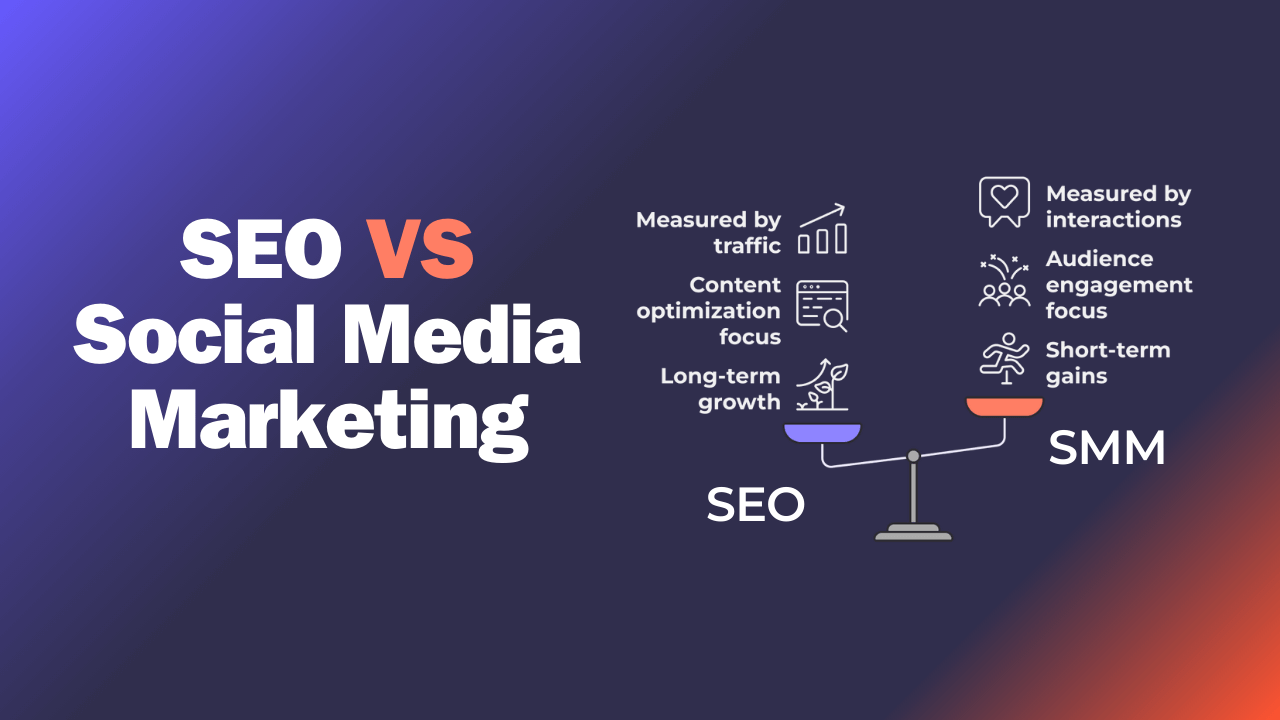
Search engine optimisation (SEO) and social media are often treated as separate parts of digital marketing. In practice, they can support one another. SEO helps people find your website through search engines, while social media gives you ways to share useful content, connect with your audience and build awareness of your brand.

Social media activity is not generally a direct ranking factor in traditional search results. However, it can contribute to SEO indirectly by helping your content reach more people, attract attention and earn links or mentions. A joined-up approach can therefore strengthen your overall online presence.

What SEO and social media each do

SEO focuses on improving a website’s visibility in unpaid search results. It includes work such as researching search terms, creating helpful content, improving site structure and ensuring pages can be crawled and understood by search engines.

Social media marketing uses platforms such as Instagram, LinkedIn, TikTok, Facebook and YouTube to publish content and engage with an audience. Each platform has its own discovery features, so social posts can help people find a business even when they are not actively searching for it on Google or another search engine.

How social media can support SEO

It can extend the reach of your content

Publishing a useful article is only part of content marketing. Sharing it through relevant social channels can put it in front of more potential readers. Those readers may visit your website, share the article, refer to it in their own content or link to it from another website.

Social shares do not automatically improve search rankings. Their value is that they can increase exposure and create opportunities for the kinds of attention and references that may support a site’s authority over time.

It can help you understand your audience

Comments, questions, direct messages and engagement patterns can reveal what your audience wants to know. Use these insights to identify topics, concerns and language that could inform your SEO content plan.

For example, if customers repeatedly ask how a service works or how much it costs, those questions may inspire a detailed website guide or a useful FAQ page. Search data can then help you understand how people phrase similar questions in search engines.

It can build brand awareness

Consistent, helpful activity on social media can make your brand more familiar to potential customers. Someone who sees your posts may later search for your business by name, visit your website directly or choose your result over an unfamiliar alternative.

Brand awareness is difficult to measure with one metric, but it can be assessed through indicators such as branded search activity, website visits, enquiries and engagement with your content.

It can highlight content that deserves further investment

Social engagement can offer early feedback on topics and formats that resonate with your audience. A post that attracts thoughtful questions or is widely shared may point to a subject worth developing into a comprehensive guide, video or landing page.

Social performance is not a substitute for keyword research or search analytics, but it can add another useful source of insight.

How to align your SEO and social media strategies

  1. Start with shared goals. Decide what you want to achieve, such as increasing relevant website visits, generating enquiries or improving awareness of a particular service.
  2. Plan content around audience needs. Use keyword research, customer questions and social conversations to choose topics that are genuinely useful.
  3. Create content for each channel. Share the main idea in a format that suits the platform. A detailed website article might become a short video, a LinkedIn post or a series of social updates.
  4. Make it easy to visit your website. Add clear links where appropriate and make sure the destination page matches what the post promises.
  5. Use consistent branding and information. Keep your business name, descriptions and contact details accurate across your website and social profiles.
  6. Measure results across channels. Track social engagement alongside website visits, search visibility, leads and sales. Use analytics tools and campaign tracking parameters to understand which activity is contributing to results.

Common mistakes to avoid

  • Chasing likes instead of business outcomes. High engagement can be encouraging, but it does not necessarily mean more qualified visitors or customers.
  • Posting links without context. Explain why a piece of content is useful and who it is for, rather than simply dropping a link into a feed.
  • Duplicating the same post everywhere. Adapt the wording, format and call to action to suit each platform and its audience.
  • Expecting immediate ranking gains. SEO takes time, and social activity should not be treated as a shortcut to higher search positions.
  • Ignoring accessibility. Use descriptive link text, captions for video and alternative text for meaningful images where the platform allows it.

Measuring what matters

The right measures depend on your objectives. For SEO, you might monitor organic impressions, clicks, rankings for relevant searches and conversions from organic traffic. For social media, useful measures may include reach, engagement, referral visits and enquiries.

Look for connections between the channels rather than relying on a single figure. For example, a social campaign may bring new visitors to a guide, while search data later shows that the guide is gaining visibility for relevant queries. Regular reporting can help you understand what is working and where to refine your approach.

Conclusion

SEO and social media have different roles, but they can be more effective when planned together. Social media can help your content reach people, reveal audience interests and build familiarity with your brand. SEO can make your most useful website content easier to discover through search. By focusing on helpful content, a consistent brand experience and meaningful measurement, businesses can make both channels work towards shared goals.


Understanding the Interplay Between SEO and Social Media: 24 Key Questions Answered

  1. Is SEO and social media the same?
  2. How social media affects SEO?
  3. Can we use SEO for social media?
  4. What is the relationship between social media and SEO?
  5. How do SEO and social media work together?
  6. Why is social media optimization important to SEO?
  7. Does social media Affect Your SEO?
  8. Do you need social media for SEO?
  9. Does social media posting help SEO?
  10. Do links from social media help SEO?
  11. What is the role of SEO in social media marketing?
  12. Is SEO being phased out?
  13. Does SEO affect social media?
  14. What is the 80 20 rule of SEO?
  15. What is SEO for social media?
  16. What is SEO on social media?
  17. How social media impacts your SEO?
  18. What is the difference between social media and SEO?
  19. Is SEO needed for social media?
  20. How does SEO affect social media?
  21. What does SEO mean social media?
  22. How do I incorporate social media into SEO strategy?
  23. Can social media affect SEO?
  24. How important is SEO for social media?

Is SEO and social media the same?

No, SEO and social media marketing are not the same, although they can support each other. SEO helps your website appear in unpaid search engine results, while social media marketing uses platforms such as Instagram, LinkedIn and Facebook to share content and engage with audiences. Social activity can increase the reach of your content and build brand awareness, which may indirectly support your SEO, but social media engagement does not automatically improve search rankings.

How social media affects SEO?

Social media does not usually affect search rankings directly, but it can support SEO in several indirect ways. Sharing useful content can increase its reach, bring visitors to your website and encourage others to mention or link to it. Social conversations can also reveal the questions and topics your audience cares about, helping you create more relevant website content. Together, these benefits can strengthen brand awareness and contribute to a stronger online presence over time.

Can we use SEO for social media?

Yes. SEO principles can help people discover your social media content, although each platform has its own search and recommendation systems. Use clear, relevant keywords in profile descriptions, video titles, captions and post text, and make sure your business name and details are consistent across your profiles. Creating useful, well-structured content and adding accurate captions or hashtags can also improve discoverability. Social media SEO is different from optimising a website, so tailor your approach to the platform and the way your audience searches there.

What is the relationship between social media and SEO?

Social media and SEO support each other, although social media activity is not generally a direct ranking factor in search results. Sharing useful content on social platforms can increase its reach, bring visitors to your website and help build brand awareness. This exposure may lead to links, mentions and branded searches, which can contribute to your wider SEO efforts. Social conversations can also reveal the questions and topics your audience cares about, helping you create more relevant website content.

How do SEO and social media work together?

SEO and social media work together by helping people discover and engage with your brand in different ways. SEO improves your visibility in search results, while social media helps you share useful content, reach new audiences and learn what they care about. Social shares are not usually a direct search ranking factor, but wider exposure can encourage visits, brand searches and natural links to your website—all of which can support your wider SEO efforts.

Why is social media optimization important to SEO?

Social media optimisation is important to SEO because it helps your content reach a wider audience and encourages people to engage with your brand. Social signals such as likes and shares are not generally direct Google ranking factors, but greater visibility can lead to more website visits, brand searches and natural links or mentions—all of which may support your wider SEO efforts. An active, consistent social presence can also help you understand what your audience cares about, so you can create more relevant content for your website.

Does social media Affect Your SEO?

Social media does not usually affect search rankings directly, as likes, shares and follower numbers are not standard ranking factors. However, it can support SEO indirectly by helping your content reach a wider audience, attract website visits and earn links or brand mentions. Social platforms can also offer useful insight into the topics and questions your audience cares about. For the best results, use social media to share helpful content and build awareness, alongside a strong SEO strategy for your website.

Do you need social media for SEO?

No, you don’t need social media for SEO, and social media activity is not generally a direct Google ranking factor. However, it can support your SEO efforts by helping more people discover and share your content, increasing brand awareness and potentially attracting links to your website. Treat social media as a complementary channel: focus on useful content, an accessible website and sound SEO practices, then use social platforms to reach and engage your audience.

Does social media posting help SEO?

Social media posting does not usually improve search rankings directly, but it can support SEO in other ways. Sharing useful content can increase its reach, bring visitors to your website and help more people discover your brand. This exposure may lead to mentions or links from other websites, which can benefit your wider SEO efforts. Social platforms can also reveal the questions and topics your audience cares about, helping you plan relevant website content.

Links shared on social media can help people discover your website and may lead to visits, shares or links from other sites, but they do not usually improve search rankings directly. Search engines generally treat most social media links as “nofollow” or otherwise exclude them from passing ranking value. Their SEO benefit is indirect: sharing useful content can increase its reach, build brand awareness and create more opportunities for people to reference it elsewhere.

What is the role of SEO in social media marketing?

SEO supports social media marketing by helping you understand what your audience is searching for and shaping content around those interests. While social media activity does not directly determine traditional search rankings, optimising social profiles and sharing useful, relevant content can improve discoverability, drive visitors to your website and build brand awareness. Together, SEO and social media can help your content reach the right people across different channels.

Is SEO being phased out?

No, SEO is not being phased out; it is changing as search engines evolve and people discover information through more channels, including social platforms and AI-powered tools. The fundamentals still matter: creating useful, reliable content, making your website accessible and technically sound, and helping the right audience find it. Businesses may need to adapt their approach, but SEO remains an important way to build visibility and attract relevant visitors over time.

Does SEO affect social media?

SEO can support your social media strategy, and social media can help your SEO efforts, but neither directly controls the other. Social posts can increase the reach of your website content, introduce your brand to new audiences and provide insights into the topics people care about. This may lead to more website visits, brand searches or links from other websites. However, likes and shares are not generally direct ranking factors in traditional search results, so focus on useful content and a consistent experience across both channels.

What is the 80 20 rule of SEO?

The 80/20 rule of SEO applies the Pareto principle: a relatively small share of your SEO activities may drive most of your results. For example, a few high-performing pages, valuable search terms or important technical improvements could account for much of your organic traffic and enquiries. Use performance data to identify these priorities, then focus your time and resources on improving them. It is a useful way to guide decisions, rather than a guaranteed ratio or fixed rule.

What is SEO for social media?

SEO for social media means optimising your profiles and content so people can find them through searches on social platforms and, where relevant, search engines. This can include using clear profile descriptions, relevant keywords, accurate business details, descriptive captions and accessible text for images and videos. Social media SEO is distinct from website SEO, but both benefit from useful, well-structured content that matches what your audience is looking for.

What is SEO on social media?

SEO on social media means optimising your profiles and posts so people can find them more easily through a platform’s search and discovery features. This can include using relevant keywords in your profile name, bio and captions, adding accurate descriptions and hashtags, and publishing useful content that encourages genuine engagement. Social media SEO is different from website SEO, but it can help your content reach a wider audience and support your overall online visibility.

How social media impacts your SEO?

Social media activity does not usually directly affect your rankings in traditional search results, but it can support SEO in valuable ways. Sharing useful content can increase its reach, attract visitors and encourage other websites to mention or link to it. Social platforms can also help you understand your audience’s interests and questions, giving you ideas for content that meets their needs. Together, these benefits can strengthen brand awareness and create more opportunities for people to discover your website through search.

What is the difference between social media and SEO?

Social media focuses on connecting with audiences and sharing content on platforms such as Instagram, LinkedIn and Facebook, while SEO aims to improve a website’s visibility in unpaid search engine results. Social media can help build awareness, encourage engagement and bring visitors to your website; SEO helps people find relevant pages when they search for information, products or services. Although they use different channels and tactics, they can work together to strengthen your online presence.

Is SEO needed for social media?

SEO isn’t essential for posting on social media, but it can help people discover your profiles and content. Use clear, relevant wording in your profile details, captions and video titles, and include keywords naturally where they fit. Each platform has its own search and recommendation systems, so tailor your approach to the channel. Social media SEO is separate from website SEO, but both can support your wider online visibility.

How does SEO affect social media?

SEO can support your social media activity by helping you understand the words and topics your audience searches for, which can inform your posts, captions and profile descriptions. Optimised social profiles and useful, discoverable content may also appear in search engine results, helping more people find your brand. Social media engagement is not generally a direct ranking factor for traditional search results, but sharing content can increase its reach and create opportunities for website visits, brand mentions and links that may indirectly support SEO.

What does SEO mean social media?

When people ask “What does SEO mean on social media?”, they usually mean using search engine optimisation principles to make social profiles and posts easier to discover. This can include using relevant keywords in profile descriptions, captions, video titles and hashtags, as well as publishing useful content that matches what your audience is looking for. Social media SEO can help content appear in searches within a platform and, in some cases, in external search results. It is related to traditional SEO, but each social platform has its own search and recommendation systems.

How do I incorporate social media into SEO strategy?

Incorporate social media into your SEO strategy by using it to share helpful website content, reach relevant audiences and learn what questions your customers care about. Turn popular discussions and recurring questions into useful pages or articles, and tailor each social post to its platform with a clear link to the relevant content. Keep your brand details consistent across your website and social profiles, and track referral visits, engagement and conversions to see what is working. Social signals are not generally a direct search-ranking factor, but social activity can broaden your content’s reach and create opportunities for visits, mentions and links.

Can social media affect SEO?

Social media activity does not usually directly influence search rankings, but it can support SEO in several indirect ways. Sharing useful content can increase its reach, bring visitors to your website and encourage others to mention or link to it. Social platforms can also help you understand your audience’s interests and build brand awareness, which may lead people to search for your business by name. Treat social media as a way to strengthen your wider online presence, rather than as a shortcut to higher rankings.

How important is SEO for social media?

SEO is important for social media because it helps your profiles and content become easier to discover, both within social platforms and through search engines. Use relevant keywords naturally in profile descriptions, captions, titles and hashtags, and make sure your business information is accurate and consistent. Social media activity does not usually directly improve search rankings, but sharing useful content can increase its reach, attract website visitors and encourage links or brand mentions. Treat SEO and social media as complementary parts of your digital marketing strategy.

search engine optimization and social media

How Search Engine Optimization and Social Media Work Together

Search Engine Optimisation and Social Media: How They Work Together

Search engine optimisation (SEO) and social media are often treated as separate parts of digital marketing. In practice, they can support one another. SEO helps people find your website through search engines, while social media gives you ways to share useful content, build relationships and introduce your brand to new audiences.

Social media activity is not generally considered a direct Google ranking factor. However, it can contribute to outcomes that support SEO, such as greater awareness, more visits to your website and increased opportunities for people to discover and link to your content.

What SEO and social media each do

SEO involves improving your website so that it can be discovered, understood and used by people searching online. This includes creating helpful content, improving site structure and addressing technical issues that affect crawling, indexing or page experience.

Social media marketing focuses on publishing and sharing content on platforms such as LinkedIn, Instagram, Facebook and TikTok. It can help businesses engage with customers, answer questions and reach communities that may not yet know about their products or services.

Although their methods differ, both disciplines benefit from a clear understanding of your audience and the information they are looking for.

How social media can support SEO

It helps your content reach more people

Publishing a useful article on your website is only one step. Sharing it through relevant social channels can put it in front of a wider audience. More people may visit the page, discuss its ideas or share it with others. This can increase the likelihood of your content being discovered by publishers, bloggers or businesses that may choose to reference it.

Social shares themselves should not be treated as a guaranteed route to higher rankings. Their value lies in helping content travel further and creating opportunities for genuine attention and links.

It can strengthen brand awareness

Regular, useful activity on social media can help people become familiar with your brand. If they later search for your business by name, or recognise your website in search results, that familiarity may encourage them to visit. A consistent brand presence can also make your business easier to remember and recommend.

It provides insight into your audience

Comments, questions and conversations on social platforms can reveal what your audience cares about. These insights can inform keyword research and content planning. For example, repeated questions about delivery, pricing or product comparisons may point to topics worth addressing on your website.

Social media is not a replacement for proper keyword research, but it can be a useful source of real-world language and ideas.

It can help you identify content opportunities

When a post receives thoughtful discussion or strong engagement, consider whether the topic deserves a more detailed treatment on your website. You could develop it into a guide, a frequently asked questions page or a case study. The aim is to provide a lasting, searchable resource that answers the audience’s needs in greater depth.

How SEO can improve your social media strategy

SEO research can also make social media planning more effective. Search queries show the questions and problems people are actively exploring. By using these insights, you can create social posts that are more relevant and useful.

Your website content can also provide material for ongoing social activity. A single in-depth article might become several short posts, a video outline, an infographic or a series of tips. Adapt the content to suit each platform rather than simply copying and pasting the same message everywhere.

Practical ways to bring SEO and social media together

  • Start with audience needs: Identify the questions your customers ask and the problems they want to solve.
  • Create valuable website content: Publish accurate, original pages that offer a clear benefit to readers.
  • Share content thoughtfully: Choose platforms that suit your audience and adapt each post to the platform’s format.
  • Use clear titles and descriptions: Make it easy for people to understand what a shared link contains.
  • Encourage discussion: Respond to comments and use genuine feedback to shape future content.
  • Make sharing easy: Use descriptive page titles, suitable images and clear calls to action.
  • Measure the right outcomes: Track organic search performance separately from social referrals, engagement and conversions.

Measuring success

SEO and social media should each have clear objectives. For SEO, useful measures may include organic clicks, relevant keyword visibility, qualified enquiries and sales. For social media, consider reach, meaningful engagement, referral visits and conversions.

Analytics tools can help show whether social posts are sending visitors to your website and what those visitors do next. Use campaign tracking links where appropriate, and assess performance over time rather than judging a strategy by a single post or short-term change.

Common mistakes to avoid

  • Expecting social shares to directly improve rankings: Social activity can support visibility, but it does not guarantee better search positions.
  • Posting without a purpose: Every post should offer value, start a relevant conversation or guide people towards a useful resource.
  • Chasing vanity metrics: A large number of likes does not necessarily mean more relevant website visits or business results.
  • Ignoring the website experience: If a page is slow, confusing or difficult to use on mobile, social traffic may not convert.
  • Using the same approach on every platform: Different audiences and formats call for different types of content.

Conclusion

SEO and social media are most effective when they work towards shared business goals. Social platforms can help your content reach people, build brand familiarity and uncover audience questions. SEO can help turn those insights into useful website content that people can find through search.

Rather than treating social media as a shortcut to better rankings, use it as part of a broader strategy: create genuinely helpful content, share it with the right audiences and measure whether it contributes to meaningful results.


9 Advantages of SEO and Social Media: Enhancing Brand Visibility and Engagement

  1. Boosts brand visibility across search and social platforms.
  2. Helps content reach a wider audience.
  3. Drives relevant visitors to your website.
  4. Builds trust through consistent, useful content.
  5. Reveals audience interests and questions.
  6. Creates more opportunities for content sharing.
  7. Supports stronger brand recognition.
  8. Turns customer feedback into content ideas.
  9. Helps measure engagement and website visits.


Challenges of Balancing SEO and Social Media: Limited Impact on Rankings, Time Demands, and Conversion Issues

  1. Social media shares do not directly guarantee higher search rankings.
  2. Managing both channels can be time-consuming.
  3. Likes and followers may not translate into website traffic or sales.

Boosts brand visibility across search and social platforms.

A key benefit of combining search engine optimisation and social media is increased brand visibility across multiple platforms. SEO helps your website appear when people search for relevant products, services or information, while social media introduces your brand to audiences as they browse and share content. This wider presence makes it easier for potential customers to discover and recognise your business, helping to build familiarity and trust over time.

Helps content reach a wider audience.

SEO and social media can work together to help content reach a wider audience. Optimising a webpage makes it easier for people to find through search engines, while sharing it on relevant social platforms can introduce it to new communities. As more people discover and engage with useful content, they may share it further or link to it from their own websites, extending its reach and creating more opportunities for potential customers to find your brand.

Drives relevant visitors to your website.

SEO and social media can work together to drive relevant visitors to your website. SEO helps your pages appear when people search for products, services or information related to your business, while social media lets you share useful content with audiences who are likely to be interested. By targeting the right topics and platforms, you can attract visitors who are more likely to engage with your content and take action.

Builds trust through consistent, useful content.

Consistently sharing useful, accurate content across your website and social media helps build trust with your audience. SEO makes that content easier to find when people are searching for answers, while social media gives you a way to share it, respond to questions and stay connected. Over time, this reliable presence can show that your business understands its customers and is committed to helping them.

Reveals audience interests and questions.

Search engine optimisation and social media can reveal what your audience is interested in and the questions they want answered. Search data highlights the terms people use to find information, while comments, messages and discussions on social platforms offer insight into their concerns and opinions. By combining these signals, businesses can create more relevant content, address common questions and better match their products or services to what their audience needs.

Creates more opportunities for content sharing.

Combining search engine optimisation with social media creates more opportunities for useful content to reach the right people. SEO helps your content appear in relevant search results, while social platforms make it easy to share articles, guides and resources with wider audiences. As more people discover and discuss your content, it may attract further shares, visits and natural links from other websites, extending its reach and supporting your wider digital marketing efforts.

Supports stronger brand recognition.

SEO and social media can work together to build stronger brand recognition. A consistent presence in search results helps people discover your business when they are looking for relevant products, services or information, while social media gives you regular opportunities to share useful content and engage with your audience. Over time, seeing your brand across these channels can make it more familiar, memorable and trusted.

Turns customer feedback into content ideas.

Customer feedback on social media can be a valuable source of ideas for your website content. Questions, comments and recurring concerns reveal what your audience wants to know, helping you create useful blog posts, guides and FAQs that address real needs. By answering these questions clearly, you can improve the experience for potential customers and create content that is relevant to the search terms they use.

Helps measure engagement and website visits.

SEO and social media analytics help you understand how people engage with your content and whether that engagement leads to visits to your website. By tracking measures such as clicks, comments, shares, organic traffic and conversions, you can see which topics and channels are attracting the most interest. These insights make it easier to refine your content and focus your efforts on what works.

Social media shares do not directly guarantee higher search rankings.

Social media shares can help your content reach a wider audience, but they do not directly guarantee higher search rankings. Search engines use many factors to assess and rank pages, and a post receiving likes or shares is not, by itself, proof that the page deserves a higher position. Treat social media as a way to build awareness, attract visitors and create opportunities for people to discover and link to your content—not as a shortcut to improved rankings.

Managing both channels can be time-consuming.

Managing SEO and social media together can be time-consuming, as both require regular planning, content creation, monitoring and analysis. SEO often involves ongoing technical improvements and tracking search performance, while social media calls for consistent posting and responding to comments and messages. Without a clear schedule and shared content plan, the workload can quickly grow and make it harder to maintain quality across both channels.

Likes and followers may not translate into website traffic or sales.

A large number of likes and followers can look impressive, but they do not necessarily lead to more website visits or sales. Social media users may engage with a post without clicking through, and those who do visit may not be ready to make a purchase. For this reason, businesses should look beyond follower counts and likes, and track meaningful outcomes such as referral traffic, enquiries and conversions.

search engine consultant

How a Search Engine Consultant Can Help Your Business Grow

What Does a Search Engine Consultant Do?

A search engine consultant helps businesses improve how they appear in search results. By assessing a website and its wider digital presence, they identify opportunities to attract relevant visitors, make pages easier for search engines to understand and support business goals such as generating enquiries or increasing sales.

Search engine optimisation (SEO) is an ongoing process rather than a one-off fix. Search engines change how they rank pages, competitors update their websites, and customers’ needs evolve. A consultant can help a business respond to these changes with a clear, practical strategy.

What a Search Engine Consultant Can Help With

The work will vary depending on a business’s website, industry and objectives. Common areas of support include:

  • SEO audits: Reviewing a website to identify technical issues, content gaps and opportunities to improve its visibility.
  • Keyword research: Finding the search terms potential customers use and understanding the intent behind them.
  • Technical SEO: Advising on factors such as site speed, mobile usability, crawlability, indexing and website structure.
  • Content strategy: Planning useful, relevant pages that answer customer questions and reflect the services or products a business offers.
  • On-page optimisation: Improving page titles, headings, internal links and other elements that help users and search engines understand a page.
  • Local SEO: Helping eligible businesses improve their visibility in local searches, including the accuracy and completeness of their business information.
  • Performance reporting: Tracking progress using meaningful measures, such as organic traffic, search visibility, enquiries and sales.

How the Consulting Process Works

A good engagement usually begins with a conversation about the business. The consultant will want to understand its audience, services, priorities and existing marketing activity. They may then review the website, search performance and competitors to establish a baseline.

From there, the consultant can set out recommendations in order of importance. Some changes may be straightforward, while others could require input from developers, writers or marketing teams. A useful strategy explains what needs to be done, why it matters and how its impact will be assessed.

SEO results rarely appear overnight. The time required depends on factors such as the website’s current condition, the competitiveness of its market and the scale of the work. A consultant should set realistic expectations and report honestly on progress, including areas where results are still developing.

Why Hire a Search Engine Consultant?

Businesses may seek consultancy when they lack in-house SEO expertise, are planning a new website or want an independent view of their current approach. A consultant can also help teams focus their resources by distinguishing high-priority improvements from less urgent tasks.

For businesses with an existing marketing team, a consultant can provide specialist guidance without replacing the team’s wider knowledge of the brand and its customers. Depending on the arrangement, they may offer strategic advice, practical implementation or support for internal staff.

Choosing the Right Consultant

When considering a search engine consultant, look for someone who takes time to understand your business rather than offering the same package to every client. They should be able to explain their recommendations clearly, describe how success will be measured and provide a realistic view of the work involved.

It is also worth asking how they approach reporting, communication and collaboration with your team. Be cautious of guaranteed rankings or claims of instant results. Search engines control their results, and no consultant can promise a specific position for every search.

SEO That Supports Your Business

A search engine consultant can bring structure and specialist knowledge to a business’s SEO efforts. The most effective work connects technical improvements, useful content and a clear understanding of customer needs. With realistic goals and consistent measurement, SEO can become a valuable part of a broader digital marketing strategy.


9 Essential Tips for Choosing the Right Search Engine Consultant

  1. Set clear goals before hiring a search engine consultant.
  2. Check their SEO experience and client results.
  3. Ask for references and case studies.
  4. Choose someone who explains their methods clearly.
  5. Agree on deliverables, timelines and fees.
  6. Ensure they follow search engine guidelines.
  7. Request regular reports on progress and results.
  8. Avoid anyone promising guaranteed rankings.
  9. Review the strategy together regularly.

Set clear goals before hiring a search engine consultant.

Before hiring a search engine consultant, decide what you want to achieve. Your goals might include attracting more relevant visitors, increasing local enquiries, improving online sales or resolving technical issues. Clear objectives help the consultant recommend the right strategy, set realistic expectations and measure progress against outcomes that matter to your business.

Check their SEO experience and client results.

When choosing a search engine consultant, check their SEO experience and ask for examples of results they have achieved for clients. Look for relevant case studies, testimonials or references, and find out what the consultant actually did to improve visibility, traffic or enquiries. Results will vary between businesses and industries, so focus on evidence of a thoughtful, transparent approach rather than promises of guaranteed rankings.

Ask for references and case studies.

Ask potential search engine consultants for references and case studies to understand the results they have achieved for other clients. Look for examples relevant to your industry, business size or goals, and ask how the consultant contributed to the outcomes. Case studies should explain the work carried out and the measures used to assess progress, while references can offer insight into communication and reliability. Remember that past results are useful evidence, but they cannot guarantee the same results for your business.

Choose someone who explains their methods clearly.

Choose a search engine consultant who explains their methods clearly and can show how their recommendations support your business goals. They should be able to outline what they plan to do, why it matters and how progress will be measured, using straightforward language rather than jargon. Clear communication helps you make informed decisions, understand what to expect and spot unrealistic promises, such as guaranteed rankings or instant results.

Agree on deliverables, timelines and fees.

Before work begins, agree exactly what the search engine consultant will deliver, when each milestone is due and how much the work will cost. Set out the scope in writing, including any reports, audits or recommendations, and clarify whether implementation is included or charged separately. Clear expectations help prevent misunderstandings, keep the project on track and make it easier to assess the value of the work.

Ensure they follow search engine guidelines.

Choose a search engine consultant who follows search engine guidelines and focuses on sustainable, ethical SEO practices. They should be able to explain their recommendations clearly and avoid risky tactics such as spammy link-building, hidden text or keyword stuffing, which could harm your website’s visibility. Following established guidelines helps build a strong online presence over time and reduces the risk of search engine penalties.

Request regular reports on progress and results.

Ask your search engine consultant for regular reports that clearly show progress and results. Reports should cover meaningful measures such as organic traffic, search visibility, enquiries or sales, and explain what has changed and why. A consistent reporting schedule helps you understand whether the SEO work is supporting your business goals, identify areas that need attention and agree on the next steps.

Avoid anyone promising guaranteed rankings.

Be cautious of any search engine consultant who guarantees specific rankings. Search results are influenced by many factors and are controlled by search engines, so no consultant can promise a particular position. A trustworthy professional will explain what they can improve, set realistic expectations and measure progress using meaningful results such as relevant traffic, enquiries and sales.

Review the strategy together regularly.

Reviewing your SEO strategy together regularly helps ensure it still reflects your business goals, customers and the changing search landscape. Set aside time with your search engine consultant to discuss progress, review meaningful performance data and agree on any priorities or adjustments. Regular check-ins also give you the chance to raise concerns, share new business developments and make sure everyone understands the next steps.

SEO Company Websites: What Makes Them Effective?

SEO Company Websites: What Makes Them Effective?

An SEO company website has two important jobs: it needs to attract the right visitors from search engines and persuade potential clients that the company can help their business grow. A strong site does both by combining useful content, clear messaging, sound technical foundations and an easy-to-use design.

Whether you are building a website for an SEO agency or looking for an agency to work with, understanding these elements can help you recognise what makes a site effective.

Clear services and a clear message

Visitors should quickly understand what an SEO company does, who it works with and how its services can help. Avoid vague claims such as “we deliver digital excellence” unless they are supported by specific information.

Service pages can explain offerings such as technical SEO, local SEO, content strategy, keyword research and digital PR. Each page should describe the work involved, the problems it addresses and the types of businesses that may benefit. Clear calls to action, such as “Discuss your SEO goals”, give visitors a straightforward next step.

Useful, original content

Content can help an SEO company demonstrate its knowledge and attract people researching search marketing. Helpful articles, guides and case studies may cover topics such as improving local visibility, understanding organic traffic or preparing for a website migration.

Content should be written for people first. It needs to answer real questions accurately, use plain language and offer practical insight. Publishing large volumes of repetitive pages or articles created mainly to include keywords is unlikely to build trust with readers.

Evidence that builds trust

Choosing an SEO partner involves trust. A company website can support that trust by explaining its approach and sharing evidence of its work. Case studies are especially useful when they set out the client’s challenge, the strategy used and the results achieved, with relevant context.

Testimonials, team profiles, industry experience and clear contact details can also help visitors assess whether an agency is a suitable partner. Results should be presented honestly: SEO outcomes depend on factors such as competition, the website’s starting point and the time available.

A sound technical foundation

Even well-written content can struggle if a website is difficult for people or search engines to use. SEO company websites should be fast, secure and accessible across mobile devices. Important technical considerations include:

  • Logical navigation and a clear page structure
  • Descriptive page titles and headings
  • Readable URLs and working internal links
  • Mobile-friendly layouts and quick loading times
  • Accessible text, forms and navigation
  • Accurate indexing and XML sitemap settings

Technical optimisation is not a one-off task. Websites change over time, so regular checks can help identify broken links, indexing issues and performance problems.

Local relevance without keyword stuffing

For agencies serving particular areas, local SEO can help connect the business with nearby clients. A location page should provide genuinely useful information about the service and the area, rather than simply repeating place names.

Consistent business details, a well-maintained Google Business Profile and relevant local references can support a company’s local presence. Location pages are most effective when they reflect real expertise or service coverage.

Design that supports the user journey

A professional design should make information easy to find, not distract from it. Visitors should be able to move naturally from learning about a service to reviewing evidence and making an enquiry. Keep forms simple, use clear labels and make contact options easy to spot.

Good design also includes accessibility. Sufficient colour contrast, descriptive link text, keyboard-friendly navigation and meaningful image descriptions help make a website usable by more people.

How to assess an SEO company website

If you are comparing agencies, look beyond the site’s position in search results. Search rankings alone do not prove that an agency will be right for your business. Consider whether its website:

  • Explains its services and process clearly
  • Shows relevant experience and credible examples
  • Publishes useful, well-maintained information
  • Sets realistic expectations about SEO
  • Makes it easy to ask questions or arrange a conversation

It is also worth asking how the agency measures progress, what information it needs from you and how often it reports on work and outcomes. A good working relationship depends on clear communication as well as technical expertise.

Bringing it all together

The best SEO company websites are built around their visitors. They explain services plainly, offer useful information, demonstrate credibility and make the next step clear. Behind the scenes, they are supported by a fast, accessible and well-structured website.

These principles apply whether you are improving an agency’s own site or choosing an SEO partner. Focus on usefulness, transparency and a good experience for the people you want to reach.


Essential Tips for Enhancing Your SEO Company Website: Showcasing Services, Results, and Building Trust

  1. Show clear SEO services and specialisms.
  2. Use case studies with measurable results.
  3. Make contact details easy to find.
  4. Write useful, original content for clients.
  5. Optimise pages for relevant search terms.
  6. Ensure the website loads quickly on mobile.
  7. Add client testimonials and trust signals.

Show clear SEO services and specialisms.

Show clear SEO services and specialisms so potential clients can quickly see how your company can help. Describe each service in straightforward terms, such as technical SEO, local SEO, content strategy or digital PR, and explain who it is suited to and what it aims to achieve. If you focus on particular industries, locations or types of business, make that clear too. Specific, honest descriptions help visitors find the right information and understand what sets your company apart.

Use case studies with measurable results.

Use case studies with measurable results to show prospective clients what your SEO company can achieve. Explain the client’s challenge, the work carried out and the outcomes—such as growth in organic traffic, improved rankings for relevant search terms or more enquiries—while including the timeframe and any important context. Clear, credible evidence helps visitors understand your approach and builds trust without promising that every campaign will deliver identical results.

Make contact details easy to find.

Make your contact details easy to find on every page of your SEO company website. Include clear options such as a telephone number, email address or enquiry form in your header, footer or contact page, and make sure they work well on mobile devices. When potential clients can quickly get in touch, they are less likely to abandon their search and more likely to take the next step.

Write useful, original content for clients.

Write useful, original content that answers the questions your clients actually ask. Share practical advice, explain SEO concepts in plain English and create guides or case studies that reflect your experience. This helps visitors find relevant information, understand how you work and decide whether your services are right for them. Focus on accuracy and genuine value rather than repeating keywords or publishing content simply to fill your website.

Optimise pages for relevant search terms.

Optimise each page of your SEO company website for search terms that reflect its topic and what your potential clients are looking for. Choose a relevant primary phrase for each page, then use it naturally in the page title, main heading, copy and URL where appropriate. Include related terms and answer common questions, but avoid forcing keywords into the text. Clear, helpful content that matches search intent is more useful to visitors—and more sustainable—than keyword stuffing.

Ensure the website loads quickly on mobile.

Ensure your website loads quickly on mobile, where visitors may be browsing on slower connections or while on the move. Compress images, reduce unnecessary scripts and choose reliable hosting to improve loading times. A faster site makes it easier for potential clients to explore your services and can support a better user experience.

Add client testimonials and trust signals.

Add client testimonials and trust signals to help prospective customers feel confident about choosing your SEO company. Genuine reviews, detailed case studies, industry accreditations and clear information about your team can show how you work and the value you bring. Where possible, include specific outcomes and the context behind them, and always get permission before sharing a client’s name, logo or feedback. Avoid vague or unverified claims: honest, relevant evidence is more persuasive and helps set realistic expectations.